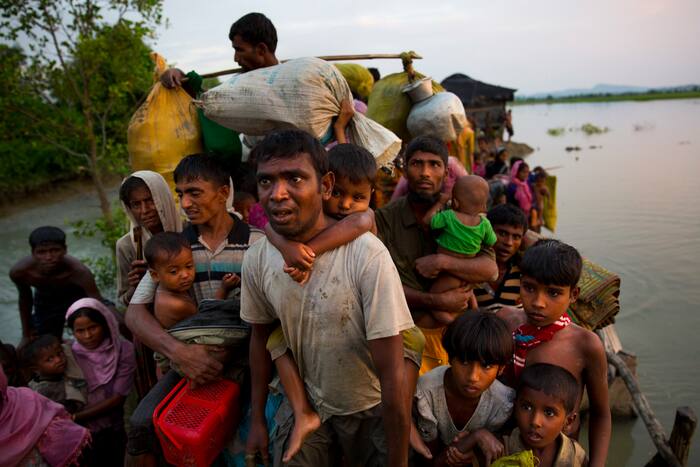

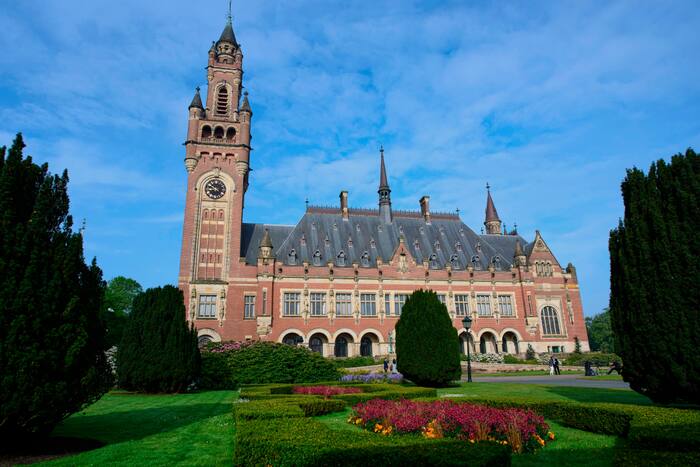
THE HAGUE – The United Nations’ highest court is set to rule Thursday on whether Myanmar committed genocide during a military crackdown against the Rohingya nearly a decade ago, an operation that drove hundreds of thousands of the predominantly Muslim minority into neighboring Bangladesh.
Gambia, a Muslim-majority country in West Africa, brought the case before the International Court of Justice in 2019. It has asked the court to determine that Myanmar violated the 1948 Genocide Convention, order an end to abuses against the Rohingya and require accountability for those responsible.
Myanmar rejects the allegations, maintaining that its military operation was a lawful counterterrorism campaign and did not constitute genocide.
The decision arrives as the World Court considers other genocide-related cases tied to the war in Gaza and Russia’s invasion of Ukraine, giving the ruling significance well beyond Myanmar.
“Genocides have similarities in how they are committed, so this decision will have an impact on other cases,” said Melanie O’Brien, a professor of international law at the University of Western Australia.
Myanmar’s military launched what it described as a clearance operation in northern Rakhine state in August 2017, following an assault by a Rohingya insurgent group. Human rights investigators subsequently accused security forces of mass killings, widespread sexual violence and the destruction of thousands of homes.
To determine whether genocide took place under the 1948 convention, judges must establish that Myanmar’s actions were carried out with the intent to destroy the Rohingya “in whole or in part.”
Approximately 1.2 million Rohingya refugees now reside in Bangladesh, most of them in densely populated camps in Cox’s Bazar. Life there is marked by fire risks, infectious disease, monsoon-triggered landslides, poor sanitation and severe limits on the ability to work.
Gambia is also seeking reparations for the Rohingya, including an order requiring Myanmar to provide full citizenship and allow refugees to return safely to their homeland.
International Court of Justice rulings are final and legally binding. However, the court has no direct enforcement mechanism; if a country refuses to comply, the matter can be referred to the U.N. Security Council.
A ruling that genocide occurred would mark the first time the International Court of Justice has reached that conclusion. In 2007, the court found that Serbia had “violated the obligation to prevent genocide” in connection with the 1995 Srebrenica massacre, in which Bosnian Serb forces killed about 8,000 mostly Muslim men and boys.
The Hague-based judges are also examining other cases involving alleged violations of the Genocide Convention.
South Africa has accused Israel of violating the convention through its military campaign in Gaza, an allegation Israel strongly denies. That proceeding is expected to take years to conclude.
Ukraine has separately brought a case against Russia. Following Moscow’s full-scale invasion in February 2022, Kyiv alleged that Russia had falsely accused Ukraine of genocide as a pretext for launching the war.
Yasmin Ullah, a Rohingya human rights activist who escaped Myanmar with her mother as a young child in the 1990s, said the case reflects her community’s long-standing demand for recognition, justice and dignity.
“Because so far, we’ve just been pushed around into this limbo state,” she said. “It’s been almost 10 years now that Rohingya have been living in very, very precarious conditions across the Asia-Pacific.”
___
Associated Press writer Grant Peck in Bangkok contributed to this report.


