
Share this @internewscast.com

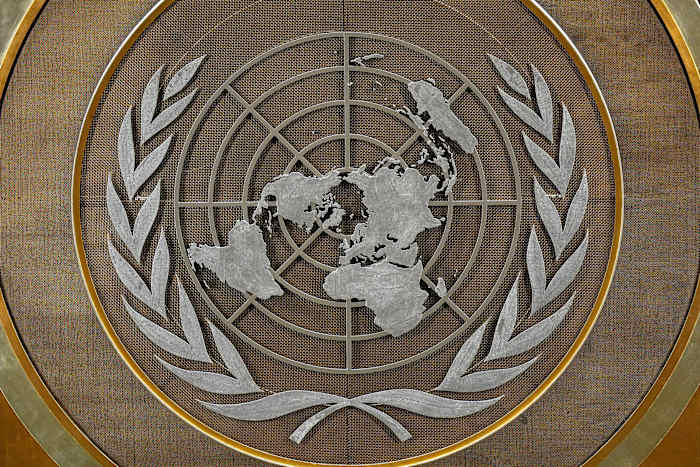
TANZANIA – On Tuesday, the United Nations Security Council is set to cast a decisive vote on a resolution focused on reopening the critical Strait of Hormuz. This proposal, driven by Bahrain, has been subject to repeated compromises due to resistance from Russia and China. The looming question remains whether these two nations will ultimately exercise their veto power against it.
The timing of the vote is crucial, occurring just hours before the deadline set by U.S. President Donald Trump. Trump has issued a stark ultimatum to Iran, demanding the reopening of this vital waterway by 8 p.m. Eastern time or face potential military strikes on its power infrastructure and bridges. The Strait of Hormuz is a significant global chokepoint, with one-fifth of the world’s oil supply passing through it. Iran’s control during the ongoing conflict has caused energy prices to spike dramatically.
Despite these high stakes, the resolution’s potential impact on the conflict, now in its fifth week, remains uncertain. To garner support from Russia and China—key members of the 15-member Security Council with veto power—the resolution has already been substantially diluted.
Initially, Bahrain’s draft resolution included provisions for countries to use “all necessary means,” a term encompassing military intervention, to ensure safe passage through the Strait and to prevent its closure. However, the opposition from Russia, China, and France, who also hold veto power, led to the removal of any language that could imply offensive military action. The revised proposal instead advocated for “all defensive means necessary.”
A vote was initially anticipated for Saturday, but delays ensued as the resolution underwent further revisions. The latest draft has stripped any mention of direct Security Council authorization for action, narrowing its focus exclusively to the Strait of Hormuz, whereas earlier versions had also covered surrounding waters.
But instead the resolution was further weakened to eliminate any reference to Security Council authorization — which is an order for action — and limit its provisions to the Strait of Hormuz. Previous drafts had included adjacent waters.
The resolution to be voted on Tuesday “strongly encourages states interested in the use of commercial maritime routes in the Strait of Hormuz to coordinate efforts, defensive in nature, commensurate with the circumstances, to contribute to ensuring the safety and security of navigation across the Strait of Hormuz.”
This should include escorting merchant and commercial vessels, and deterring attempts to close, obstruct or interfere with international navigation through the strait, it says.
The resolution also demands that Iran immediately halt attacks on merchant and commercial vessels and stop impeding their freedom of navigation through the Strait of Hormuz and attacking civilian infrastructure.
In response to the U.S. and Israeli attacks beginning on Feb. 28, Iran has targeted hotels, airports, residential buildings and other civilian infrastructure in more than 10 countries, including the Islamic Republic’s Gulf neighbors, some of the world’s major exporters of oil and natural gas.
Iran’s blockade in the strait is seen by Gulf nations as an existential threat. Bahrain, a Gulf nation that hosts the U.S. Fifth Fleet and is the Security Council’s Arab representative and its president this month, has been pressing for U.N. action.
At the same time, Trump on Monday demanded again that Iran reopen the Strait of Hormuz after heaping praise on the U.S. military for the daring rescue of two crewmen of a fighter jet shot down in Iran. The Republican president warned Iran that the “entire country can be taken out in one night, and that might be tomorrow night.”
He repeated the warning on Tuesday, saying a “whole civilization will die tonight” if Tehran does not meet his deadline to agree to a deal that includes reopening the Strait of Hormuz.
Russia’s U.N. Ambassador Vassily Nebenzia and China’s U.N. Ambassador Fu Cong have blamed the U.S. and Israel for starting the war and sparking an expanding global crisis. They told the Security Council last week that the most urgent priority now is to end military operations immediately.
In response to Iran’s strikes against its Gulf neighbors, the Security Council adopted a Bahrain-sponsored resolution on March 11 condemning the “egregious attacks” and calling for Tehran to immediately halt its strikes.
That resolution, adopted by a vote of 13-0 with Russia and China abstaining, also condemned Iran’s actions in the Strait of Hormuz as a threat to international peace and security and called for an immediate end to all actions blocking shipping.
Copyright 2026 The Associated Press. All rights reserved. This material may not be published, broadcast, rewritten or redistributed without permission.