
WASHINGTON – The world is falling further behind in the effort to curb climate change, with new United Nations projections showing that global temperatures are likely to rise more than scientists anticipated a year ago. The United States is a major factor behind the worsening outlook, according to the report.
Even if every country fulfills its current emissions-cutting pledges, Earth would still warm by roughly 2.2 degrees Fahrenheit (1.2 degrees Celsius) above today’s temperatures, the United Nations Environment Programme said in an updated climate assessment released Wednesday. That estimate is about two-tenths of a degree Fahrenheit (0.1 degrees Celsius) higher than the projection issued by the same team last year.
“This is a worse outcome than expected last year, as a result of the formal withdrawal of the United States of America from the Paris Agreement and revised estimates of historical emissions,” the report said. It also pointed to rising U.S. emissions in the past year, noting that the other 20 largest economies either cut their carbon pollution or slowed the growth of emissions from burning coal, oil and gas.
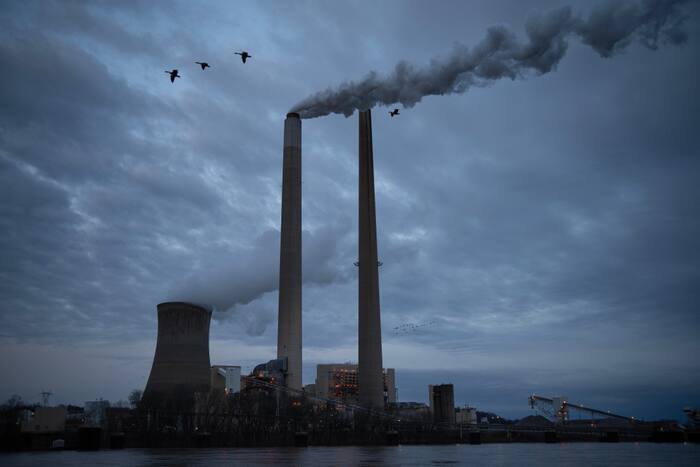
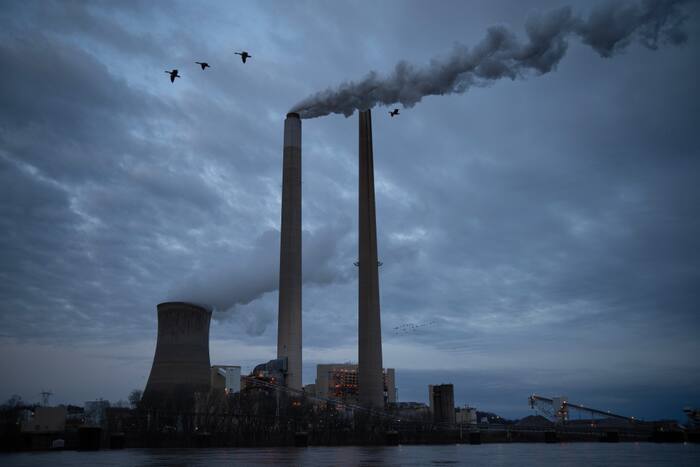
The increase in U.S. emissions — 133 megatons of carbon dioxide equivalent — “far exceeded that of all other countries,” the report said. It was driven by greater demand for electricity and a resurgence in coal-fired power generation. In 2025, the 124 countries that recorded higher emissions, excluding the 63 that reduced them, including most European nations, collectively added 189 million tons of carbon dioxide. The United States accounted for 70% of that increase, according to the report.
The United States is going “hell-for-leather trying to block renewables while actively promoting and subsidizing dirty coal — and its diplomacy is trying to make other countries also pull back on action. It is looking at the fire, denying there is a fire, and then pouring more petrol on it,” said Australian climate scientist Bill Hare, chief executive of Climate Analytics, which evaluates national climate plans. Hare did not contribute to the U.N. report, but, like several other outside experts, said its science was sound.
Shooting far past Paris climate goal
The latest calculations show that carrying out all the climate commitments countries have submitted to the United Nations would leave the planet about 2.6 degrees Celsius (4.7 degrees Fahrenheit) warmer than preindustrial levels by 2100. If nations continue on their current course without those pledges, warming would reach 2.8 degrees Celsius (5 degrees Fahrenheit) above temperatures in the second half of the 19th century — unchanged from last year’s estimate.
Both scenarios exceed the targets established by the 2015 Paris climate agreement: limiting warming to well below 2 degrees Celsius (3.6 degrees Fahrenheit), while pursuing efforts to keep it to 1.5 degrees Celsius (2.7 degrees Fahrenheit). Global temperatures are already about 1.4 degrees Celsius (2.5 degrees Fahrenheit) above preindustrial levels. Earlier this year, and again in the new report, U.N. officials acknowledged that limiting warming to 1.5 degrees is no longer achievable. Their hopes now rest on holding warming near 1.8 degrees Celsius (3.2 degrees Fahrenheit), then removing enough carbon dioxide from the atmosphere to bring temperatures back toward 1.5 degrees.
The world is falling “dangerously short” even of those revised objectives, United Nations Secretary-General António Guterres said. Still, he added, “we have the tools to change course and pull back from the brink.”
Global emissions must be reduced sharply — by 18% by 2030 and 69% by 2040 — to return to a future that remains broadly manageable without severe impacts, said Inger Andersen, executive director of the U.N. Environment Programme. “That is the only way that we can get back to a semblance of a reality that is still largely manageable without major impacts and therefore that makes every sense,” she said.
“The report’s message is clear,” said climate scientist Adelle Thomas, vice chair of a United Nations scientific assessment on climate impacts. Thomas was not involved in the study. “We know what needs to be done. We have the tools to do it. And delay only makes the challenge more dangerous and more expensive for all.”
An added tenth of a degree of danger
Anne Olhoff, the report’s lead author and director of the UNEP Copenhagen Climate Centre, said the policy shift in the United States could add one-tenth of a degree Celsius — nearly two-tenths of a degree Fahrenheit — to global temperatures by the end of the century.
“This report shows that America’s retreat isn’t just a political embarrassment. It has real consequences for the planet and for millions of people around the world,” said Mohamed Adow, director of the climate group Power Shift Africa. “An extra tenth of a degree might sound insignificant, but in climate terms it is enormous. It means more dangerous heat waves, more destructive floods, more failed harvests and more lives lost. For vulnerable communities in Africa, already living on the front lines of the climate crisis, every fraction of a degree matters. These are not abstract numbers. They are human lives.”
Hare said that additional tenth of a degree could expose another 140 million people to “dangerously hot conditions” and raise the risk of the Amazon rainforest collapsing, along with ice-sheet failures in Greenland and Antarctica. Michael Mann, a climate scientist at the University of Pennsylvania, said the consequences could also cost the global economy and reduce it by about $1.2 trillion.
The United States’ influence may extend beyond the emissions calculated by the U.N., said Johan Rockstrom, director of Germany’s Potsdam Institute for Climate Impacts Research. As the world’s largest historical emitter, a U.S. retreat from climate action could encourage other nations to weaken their own efforts, he said.
“The rest of the world is exhausted when it comes to counting the damage that the U.S. is willingly doing to allies, multilateral structures, economic cooperation, disaster relief,” Australian climate scientist Malte Meinshausen said. “The rest of the world should probably continue to focus even less on the U.S.”
___
The Associated Press’ climate and environmental coverage receives financial support from multiple private foundations. AP is solely responsible for all content. Find AP’s standards for working with philanthropies, a list of supporters and funded coverage areas at AP.org.


