
Share this @internewscast.com
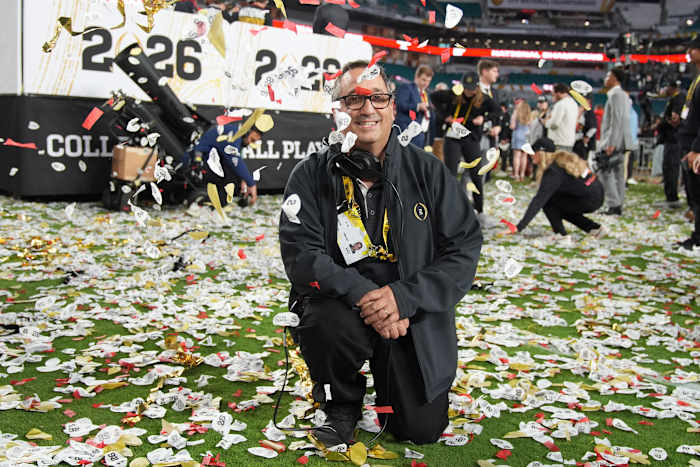
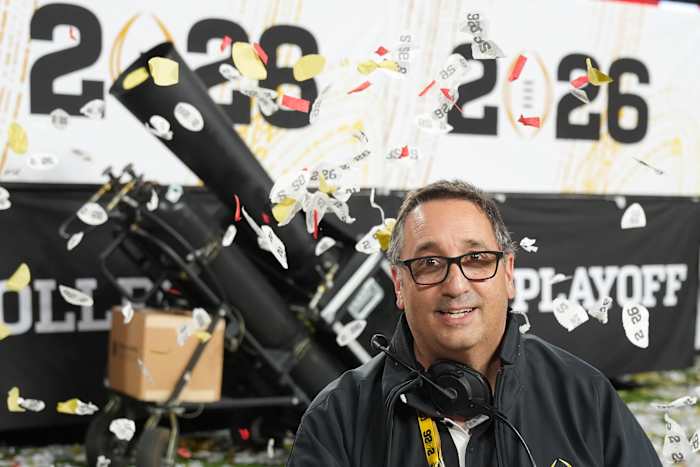
Noah Winter proudly claims he has attended more Super Bowls than the legendary Tom Brady. While Brady, a renowned NFL quarterback, has played in 10 Super Bowls—setting a record among players—Winter will be marking his 30th consecutive Super Bowl appearance this year. However, unlike Brady, Winter’s presence isn’t on the field but behind the scenes as he’s responsible for orchestrating the vibrant confetti celebration that occurs when the game concludes.
Winter operates Artistry in Motion, a company that specializes in producing confetti for a variety of high-profile events, including rock concerts, movies, political conventions, and even the Olympics. Nevertheless, his most recognizable contribution remains the dazzling cascade of colors that descends onto the field after each Super Bowl game.
It’s a moment that often becomes the topic of conversation at social gatherings. “It’s become an iconic moment,” Winter reflects from his office and confetti factory located in Northridge, California.
Jane Gershovich, a photographer who captured moments for the Seattle Seahawks during their Super Bowl victory in 2014, notes the infectious joy the confetti brings. She recalls how players and their families eagerly immerse themselves in the paper shower, often tossing it into the air or creating confetti angels in celebration.
“Watching the players and their children interact with the confetti in such a pure and joyful way truly enhances the celebration for everyone on the field,” Gershovich shares.
“Just seeing the players and their kids engage with it at such a wholesome level, it brings a lot of joy to everyone on the field,” she said.
So, what goes into planning and executing a giant confetti drop? Winter fields some questions:
What happens to the losing team’s confetti?
Artistry in Motion trucks 300 pounds (135 kilograms) of two-colored confetti for each of the teams to the Super Bowl. They bring confetti cannons onto the field with about 4 minutes remaining, and line them up around the stadium walls.
Even if the teams stream onto the field before the clock runs out, the confetti waits until the timer shows the game is officially over. And the winners’ colors get the go-ahead.
“It’s always better to be late then early,” Winter explained. “Sometimes players go out and shake hands. We don’t launch until triple zero on the clock. Over the 30 years, we never have launched the wrong color or launched too early.”
The color mix is not 50-50, because some colors dominate on video, so the company has to experiment to find the correct mix.
Massachusetts company Seaman Paper has for 25 years manufactured the tissue paper that Artistry in Motion turns into confetti, said Jamie Jones, one of Seaman’s owners. A lot of New England Patriots fans who work there are particularly excited about their part in this year’s Super Bowl.
The company makes about 150,000 pounds (68,000 kilograms) of tissue paper a day — mostly for gift wrapping and food service.
“It’s a very prestigious but not big order,” Jones said of the Super Bowl paper.
How do you get the best flutter?
Winter has found that a rectangular shape is best for confetti because it turns on its axis and hangs in the air.
But TV viewers might not realize that there are actually two confetti drops at the Super Bowl — one at game’s end, and the other when the Vince Lombardi Trophy is presented to the winning team. That second round of confetti is cut in the silhouette of the trophy.
Messages can be printed on the tiny rectangles too. For a handful of Super Bowls, Artistry in Motion printed social media messages on each tiny flag at the request of event sponsor Twitter.
Some people ask whether the confetti is cut by hand (it isn’t), and Winter jokes that his hands get tired.
Is the confetti biodegradable?
The tiny rectangular flags of tissue paper are made from U.S.-sourced, 98% postconsumer recycled material, Winter says. The paper is biodegradable.
The company makes confetti in the colors of the four final NFL playoff teams. All that isn’t used is recycled.
The confetti makes a beautiful mess in the stadium, but cleanup isn’t Winter’s job. Every stadium uses a different approach, depending in part on the field’s makeup. Some use rakes. Others employ leaf blowers, taking care not to degrade the artificial turf.
How do you get into the confetti business?
Winter studied lighting design in college and did pyrotechnic work at venues including the Hollywood Bowl before Disney asked his team to recreate leaves falling and twirling for a live “Pocahontas” show in the mid-1980s. Soon, he was creating confetti for Disney’s daily parade at Disneyland.
In 1986, Mick Jagger saw the confetti at Disney and asked Artistry in Motion to make some for a Rolling Stones’ concert at Dodgers Stadium. Then, he brought the fledgling confetti company on tour. Other artists, including Bono from U2, asked that confetti be made for their shows as well.
Stadium concerts led to sporting events. The company’s first Super Bowl was in 1997, when the Green Bay Packers defeated the Patriots (pre-Brady) at the Louisiana Superdome in New Orleans. The year before that, Winter had been a pyrotechnician at the Super Bowl, making this year’s game his 30th.
In 2025, an estimated 127.7 million people watched the game on TV or streaming.
Winter wouldn’t admit to having a favorite team, but he did say he has two brothers who are New York Jets fans, and he has promised to bring them to the Super Bowl to work a confetti cannon if their team ever returns. Quarterback Joe Namath led the Jets to their last Super Bowl, in 1969.
Copyright 2026 The Associated Press. All rights reserved. This material may not be published, broadcast, rewritten or redistributed without permission.