
Share this @internewscast.com

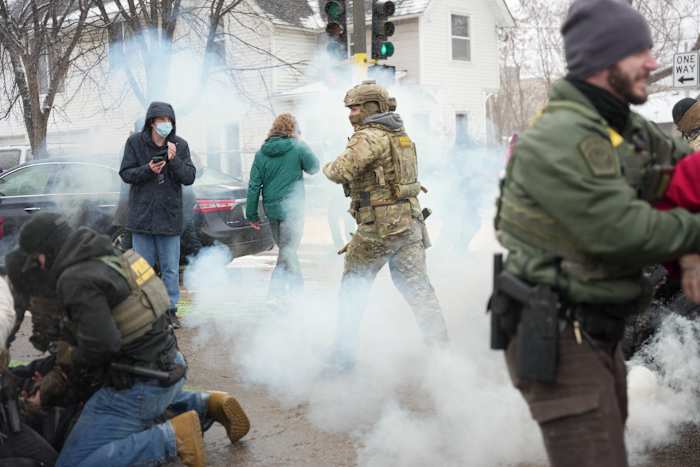
WASHINGTON – In response to ongoing protests tied to the Trump administration’s immigration policies, the U.S. Army has put several dozen additional soldiers on alert for potential deployment to Minneapolis, according to a defense official speaking on Wednesday.
The official, who requested anonymity due to the sensitive nature of the plans, indicated that soldiers from an Army military police brigade based at Fort Bragg, North Carolina, have received orders to prepare for possible deployment. This preparatory alert is a standard procedure and does not guarantee that troops will be sent.
Should deployment occur, the soldiers would assist civil authorities in Minneapolis. This move comes as part of regular standby orders, which are issued routinely and are not indicative of an immediate deployment, emphasized the official.
Additionally, around 1,500 soldiers from the Army’s 11th Airborne Division, stationed in Alaska, are under similar orders. President Donald Trump has floated the idea of invoking the Insurrection Act, an infrequently used law from the 1800s that permits the use of active-duty military as domestic law enforcement.
The President’s consideration of the Insurrection Act followed a fatal incident involving a federal immigration officer and Minneapolis resident Renee Good on January 7, which sparked local protests. However, Trump later suggested that invoking the act may not be necessary, stating to reporters, “there isn’t a reason to use it ‘right now.’”
Trump reiterated his willingness to utilize the act if required, calling it “very powerful” and asserting, “If I needed it, I’d use it.”
When asked about the latest orders, which were reported earlier by MS Now, the Pentagon said it didn’t have information to provide at this time.
Minnesota Gov. Tim Walz, a Democrat and frequent target of Trump, has urged the president to refrain from sending in more troops and, in a statement Tuesday, invited him to visit Minnesota and “help restore calm and order and reaffirm that true public safety comes from shared purpose, trust, and respect.”
In his second term, Trump has pushed traditional boundaries by using troops in American cities, often over the objections of local officials, amid federal operations targeting illegal immigration and crime.
Trump deployed federalized National Guard troops to Los Angeles last June after protesters took to the streets in response to a blitz of immigration arrests. Ultimately, he sent about 4,000 Guard members and 700 active-duty Marines to guard federal buildings and, later, to protect federal agents as they carried out immigration arrests.
He also mobilized Guard troops in places like Chicago and Portland, Oregon, but has faced a series of legal setbacks. Trump said in December that he was dropping that push for the time being.
Copyright 2026 The Associated Press. All rights reserved. This material may not be published, broadcast, rewritten or redistributed without permission.