
Share this @internewscast.com
Blue states are ramping up efforts to impose new taxes on their wealthiest residents, even as a significant exodus of income and taxpayers is being observed moving towards red states.
In states like California, New York, Washington, and Michigan, legislators are pushing forward with plans aimed at increasing taxes for high earners. Washington is considering a tax on incomes exceeding $1 million, while California is targeting the net worth of billionaires. Other states are contemplating measures such as taxing residents who relocate and broadening the scope of income taxation.
According to IRS migration data from 2022 to 2023, California saw a staggering loss of nearly $12 billion in taxable income in just one year, while New York experienced a $9.9 billion decrease. Conversely, states like Florida and Texas witnessed gains, with Florida seeing an influx of $20.5 billion and Texas $5.5 billion, as taxpayers relocated with their earnings in tow.
During this period, California also saw a reduction of approximately 230,000 residents, whereas states with lower taxes not only increased their populations but also their income levels.
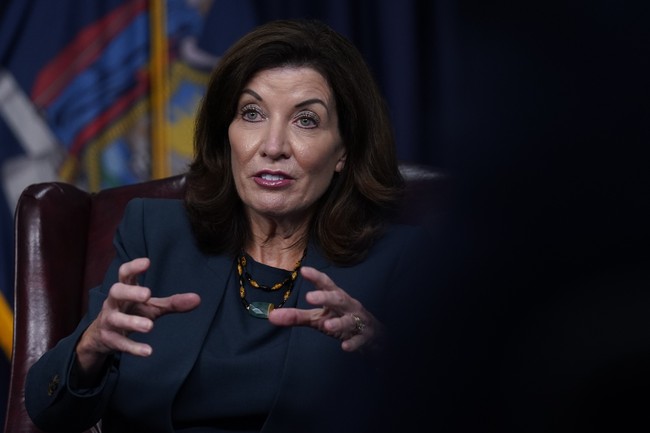
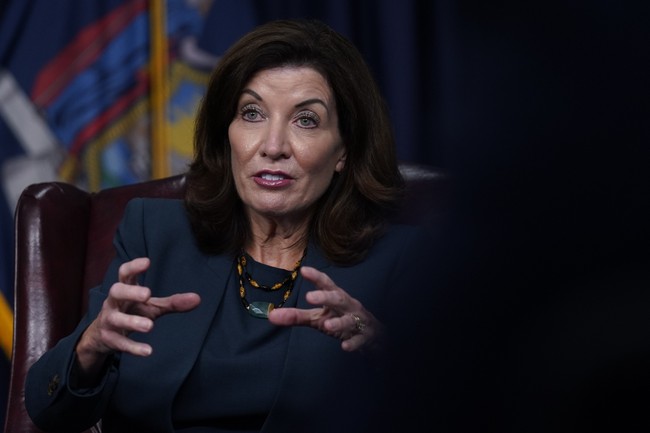
New York Governor Kathy Hochul has noted this trend, acknowledging the ongoing shift. Despite these moves, the assumption behind the new tax proposals is that high earners will remain and accept the higher rates. However, migration statistics suggest a different outcome is unfolding.
“Maybe the first step should be go down to Palm Beach and see who you can bring back home because our tax base has been eroded.”
These proposals assume high earners will stay and absorb higher rates. The migration data shows otherwise.
JPMorgan Chase CEO Jamie Dimon has warned about New York’s tax structure:
“New York City has much going for it… but it also has the highest city and state corporate taxes and the highest individual income taxes.”
Business leaders have been warning about this shift for years, pointing to rising costs, regulatory pressure, and tax burdens that make long-term investment harder to justify in high-tax states compared to lower-cost alternatives, especially as relocation becomes easier for both individuals and corporations.
The same pattern shows up in recent moves by the ultra-wealthy. Starbucks founder Howard Schultz is relocating to Florida after decades in Seattle, a move he described as personal that came as Washington pushed higher taxes on top earners. Amazon founder Jeff Bezos made a similar move to Florida during earlier tax fights in Washington. Companies are expanding in Texas and Tennessee while pulling back in higher-tax states.
High earners can move. Companies can move. Capital moves even faster. When tax burdens rise, those moves follow.
Battle in Seattle: Amazon vs. The Socialists
Blue states continue to pursue higher rates even as the taxpayers generating that revenue relocate. Florida and Texas do not impose income taxes, and their population and income gains reflect that. That contrast is visible in where people move, where companies expand, and where income lands.
Those taxpayers contribute more than income tax revenue. They invest, build companies, hire workers, and drive the economic activity that state budgets depend on. When they leave, the loss does not stay at the top. It spreads across the tax base.
That creates another problem. Budgets built around a shrinking group become harder to sustain, yet the response has often been to raise rates further or expand who gets taxed as the base narrows.
Higher rates aren’t capturing that revenue. They’re driving it out.
Editor’s Note: Do you enjoy RedState’s conservative reporting that takes on the radical left and woke media? Support our work so that we can continue to bring you the truth.