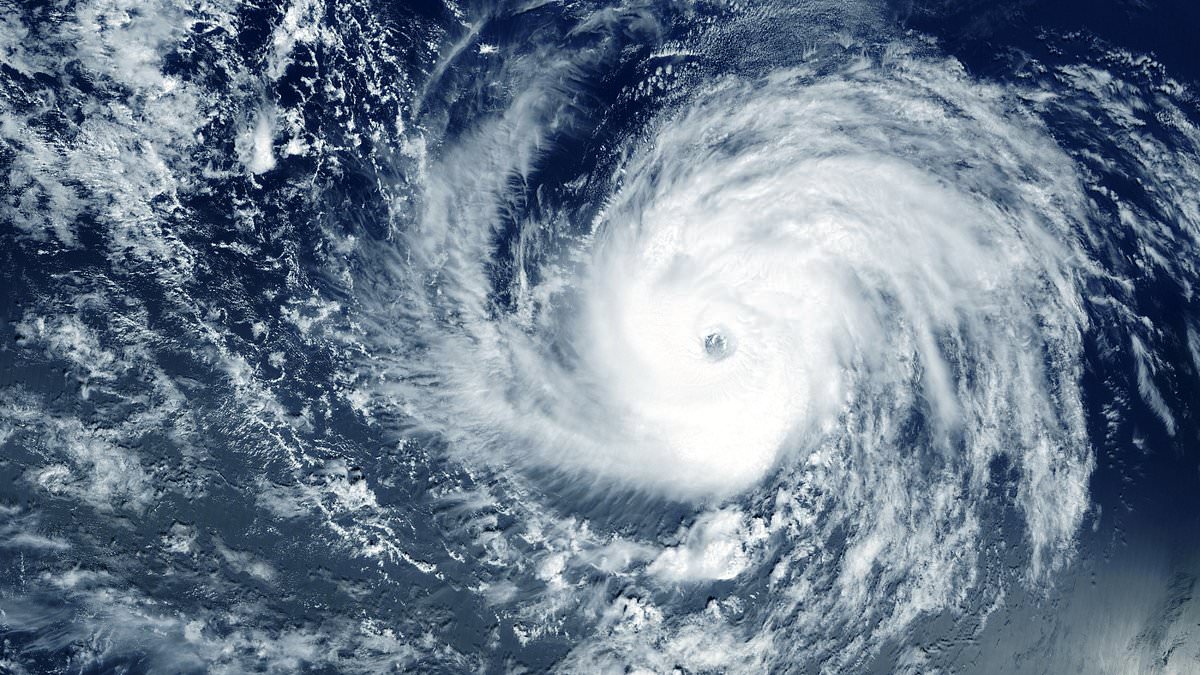
Millions of Americans are now at increased risk this hurricane season following the Pentagon’s sudden termination of a critical program that supplies essential storm data.
Starting June 30, the federal government will cease processing and disseminating data from three weather satellites that provide hurricane predictions 10 to 12 hours before they develop.
Experts worry that the absence of satellite data might affect every storm nearing the US East Coast and Gulf Coast regions, home to over 60 million people who depend on precise and prompt hurricane forecasts.
The loss could lead to delayed storm warnings, less accurate hurricane models, and reduced evacuation time for people.
James Franklin, retired National Hurricane Center branch chief, told NewsNation: ‘There are going to be cases this year when certain warnings are delayed because of this.
‘It might mean that evacuations get delayed because of this, and you could lose lives because of this.’
In May, officials released a forecast for 2025, predicting a 70 percent chance of an above-average hurricane season, with 13 to 19 named storms.
Of those, six to 10 could become hurricanes, including three to five major hurricanes of Category 3 or higher.
Last year, around 400 people died during the hurricane season, the deadliest since 2005, according to the National Hurricane Center.

NOAA announced that it would cease the ‘ingest, processing and distribution’ of data from these satellites, effective June 30.

The cutoff occurred on June 27, right in the middle of an ‘above normal’ Atlantic hurricane season.
Meteorologists at AccuWeather expect as many as six major storms could make direct landfall in the US this summer.
That would be the same number of storms that caused the damage of $500 million last year, when Hurricanes Helene and Milton were the most destructive.
The satellites provided microwave data that allowed scientists to see inside storms and monitor wind and rain patterns, even through clouds and darkness. Without it, forecasters could miss six to ten hours of early warning.
Experts say without the satellite data, forecasters may not detect signs that a storm is rapidly strengthening until it’s too late, a risk meteorologists call a ‘sunrise surprise.’
These storms appear mild at night but suddenly become stronger and more dangerous by morning.
‘This is a major setback,’ said Marc Alessi, a hurricane expert with the Union of Concerned Scientists.
‘We will no longer be able to say, OK, this storm is definitely undergoing rapid intensification, we need to update our forecasts to reflect that.’
The data stream was officially terminated on June 27, typically before the beginning of peak hurricane activity in July, according to the National Oceanic and Atmospheric Administration (NOAA).

With Defense Meteorological Satellite Program (DMSP) offline, experts say only about half as much microwave data is now available. The loss could mean weaker forecasts and less warning time for dangerous storms.
A NOAA spokesperson said the agency is using other satellites and tools to continue forecasting storms, calling it a ‘routine process of data rotation and replacement.’
But former officials say the move was unusually abrupt and poorly communicated.
‘I’ve never seen anything like this,’ said Rick Spinrad, a former NOAA administrator. ‘It’s shocking.’
The shutdown raises deeper concerns about the Pentagon’s commitment to weather forecasting and climate science.
The White House has proposed a nearly 40 percent cut to NOAA’s 2026 budget, cutting more than $2 million in funding.
The Trump administration’s second term has also moved to reduce staff and eliminate contracts related to disaster preparedness and climate research.
In 2024, NOAA produced some of its accurate forecasts ever for hurricanes Milton and Helene, predicting rapid intensification and landfall with almost perfect precision.
Scientists say the level of accuracy depended on having fully funded satellites and data systems that have now been dismantled.
‘This is alarmingly bad news,’ said University of Miami hurricane expert Brian McNoldy.
‘Data is already limited, so losing three functioning satellites overnight is insane.