
Share this @internewscast.com
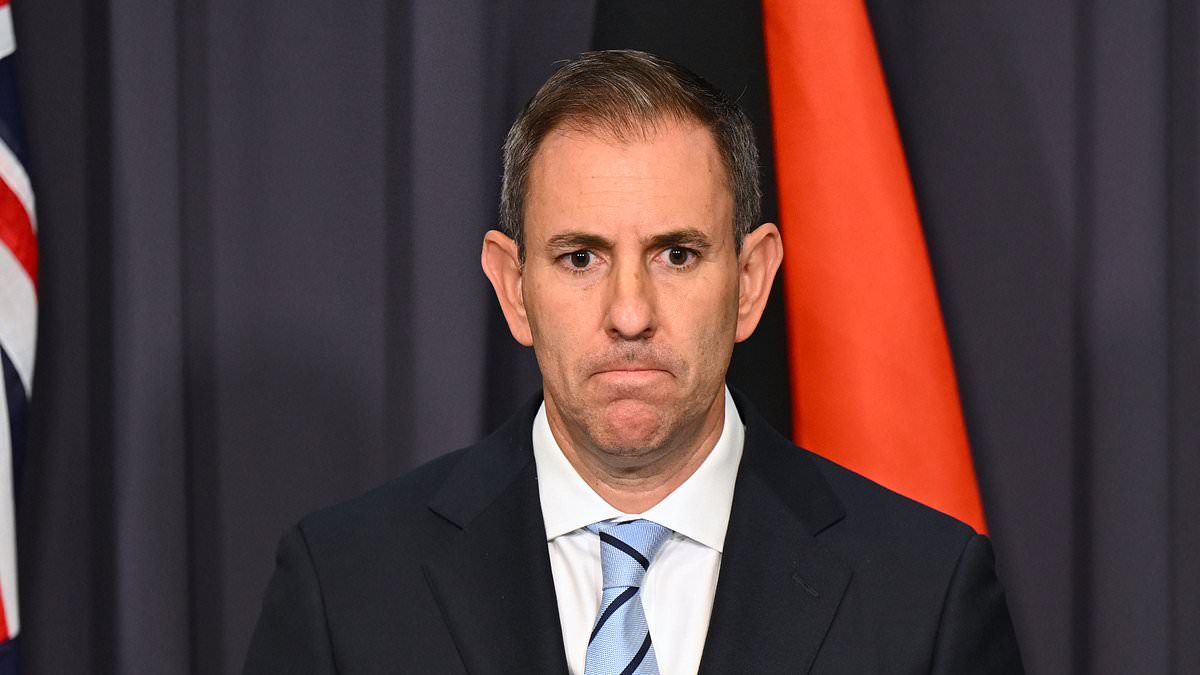
The Albanese government is under fire, facing accusations of acknowledging its own ‘reckless spending’ as a factor in the recent rise in inflation. This comes as Treasurer Jim Chalmers gears up to address the issue of significant savings in the forthcoming May Budget.
Chalmers is set to present a speech in Melbourne on Thursday to a gathering of business economists, where he will outline the aspirations embedded in his fifth budget, describing it as ‘full of ambition.’
In the backdrop of his announcement, it has emerged that the Treasury is considering modifications to several financial mechanisms. These include the capital gains tax discount, negative gearing, trusts, and tax exemptions for electric vehicles.
The Treasurer plans to emphasize how the turmoil in the Middle East has underscored the necessity for a contemporary tax system. He intends to argue that the current global instability only heightens the urgency for reform.
Chalmers will outline that any proposed reforms would adhere to certain fundamental principles. He will stress the importance of recognizing how an antiquated tax system hampers opportunities for younger Australians and future generations, underscoring the need for changes that emphasize intergenerational responsibility.
‘Firstly, we recognise an outdated tax system is weighing on the opportunities faced by younger Australians and future generations. So any changes would have a substantial focus on our intergenerational responsibilities.
‘Second, we are focused on better incentivising productive business investment, if we can afford to. And third, making the system simpler and more sustainable.’
Senior Liberal frontbencher James Paterson claimed the speech was a ‘huge concession’ by the Albanese government that its ‘reckless spending had contributed to higher inflation’.

The Albanese government has been accused of finally admitting that its ‘reckless spending’ has contributed to higher inflation as Treasurer Jim Chalmers prepares to deliver a speech about substantial savings in the upcoming May Budget
‘He and the government has spent all of this term saying that there’s nothing to see here, that government spending didn’t contribute in any way to the inflation that we’ve seen,’ he told Sky News.
‘And yet he’s also going to sign this speech today that we’ll be taking a major savings package to this budget.
‘Now, if government spending wasn’t due to inflation, then why would a savings package be necessary?
‘Let’s see what the deal is. But at the very least, it’s a huge concession from the treasurer.’
Chalmers has repeatedly denied that public spending was to blame for rising inflation, as fears grow that it could soar to five per cent.
The Reserve Bank of Australia lifted the cash rate by 25 basis points on Tuesday, bringing the figure to 4.10 per cent – a move that will push mortgage repayments higher as economists warn cost-of-living pressures are far from easing.
‘The RBA’s hand has been forced by Jim Chalmers’ weakness on spending. And Australians are paying the price now,’ Paterson said.
‘It’s going to get worse because of the war on Iran and higher oil prices.

The Reserve Bank of Australia lifted the cash rate by 25 basis points on Tuesday, bringing the figure to 4.10 per cent – a move that will push mortgage repayments higher as economists warn cost-of-living pressures are far from easing (stock image)
‘But that’s exactly why you need to get inflation under control, because you don’t control world events.’
A Greens‑led parliamentary inquiry into the capital gains tax discount found the measure disproportionately benefits wealthier Australians and tilts the housing market towards investors at the expense of owner‑occupiers.
Labor senators Ellie Whiteaker and Richard Dowling, who endorsed the report, said younger Australians increasingly face economic conditions that differ starkly from those experienced by previous generations.
Advocates for bold reform, including independent MP Allegra Spender and several economists, say the 2026 budget represents Labor’s best chance in decades to overhaul the tax system, given the government’s large parliamentary majority and the long runway before the next federal election.
Chalmers will also warn of ‘hard decisions’ ahead as he attempts to balance productivity, structural reform and the economic instability driven by global conflict.
‘The conflict in the Middle East is a stark reminder of how quickly the global economic outlook can change,’ he will say.
‘It is adding to inflation risks, weighing on growth, and increasing already elevated uncertainty.
‘But it is also a stark reminder of why addressing our three key economic challenges is so urgent.

Chalmers will argue the instability triggered by the Middle East conflict has only sharpened the need for a more modern tax system
‘All this economic uncertainty and volatility is a reason for more reform, not less.’
Chalmers has come under fire from the Opposition for claiming government spending has fallen since Labor took office.
‘[When] we came to office, spending as a share of the economy was up near a third of the economy. We got it down closer to a quarter,’ he will say.
Opposition figures dispute that, pointing to budget spending of 24.4 per cent in the 2022 financial year, the year Chalmers delivered his first budget.
Payments as a share of GDP were 31.4 per cent at the time due to pandemic‑related spending.
Critics have also accused Chalmers of using the Middle East conflict as a distraction from historically high spending levels.
Chalmers has repeatedly insisted government spending is not fuelling inflation.
As recently as January, following a higher‑than‑expected inflation print of 3.8 per cent, he argued that price pressures were being driven by a ‘resurgence in the private sector’.
‘What’s very clear from this data is that it reflects a resurgence in the private sector and not an increase in public sector spending,’ he said.
‘If our budget was the problem, if public spending was the problem, then we wouldn’t have seen three interest rate cuts last year.’
The Opposition has highlighted remarks from Reserve Bank Governor Michelle Bullock, who on Tuesday stressed that inflation had been running high well before the Middle East conflict began.
‘Higher petrol prices will add to inflation, but they’re not the reason for today’s decision… Inflation was already too high,’ she said after the RBA lifted rates by 25 basis points.