
On being named Shadow Chancellor a week ago today, I was told — rather alarmingly — that my years in business may exceed the combined commercial experience of Andy Burnham’s entire Cabinet.
My working life has taken me from pumping jam into doughnuts in a Tesco bakery to serving as a board director at Sky. Along the way, it taught me a simple truth that Labour governments repeatedly fail to grasp: growth is not manufactured by Whitehall. It is built by businesses.
That conviction is what drew me out of the corporate world and into politics. For too long, ministers have behaved as though their role is to interfere, direct and micro-manage, when what enterprise often needs most is the freedom to get on with the job.
As Shadow Chancellor, my focus will be relentless: clearing obstacles for companies and for individuals alike. That means a tax system that is lower and easier to navigate, energy bills that are more affordable, regulation that is lighter, and a government that backs entrepreneurs prepared to take risks. At present, too many of those wealth creators are being punished when they should be encouraged to expand.
Labour insists that economic growth is its overriding mission, with Burnham promising “growth in every postcode”. Yet in practice, the party has directed a disproportionate share of its tax increases at the very businesses expected to deliver that prosperity.
From higher employers’ National Insurance to stealthier increases in business rates and energy costs left to spiral, Labour’s agenda bears down on the people who create jobs, raise wages and keep money flowing through local communities.

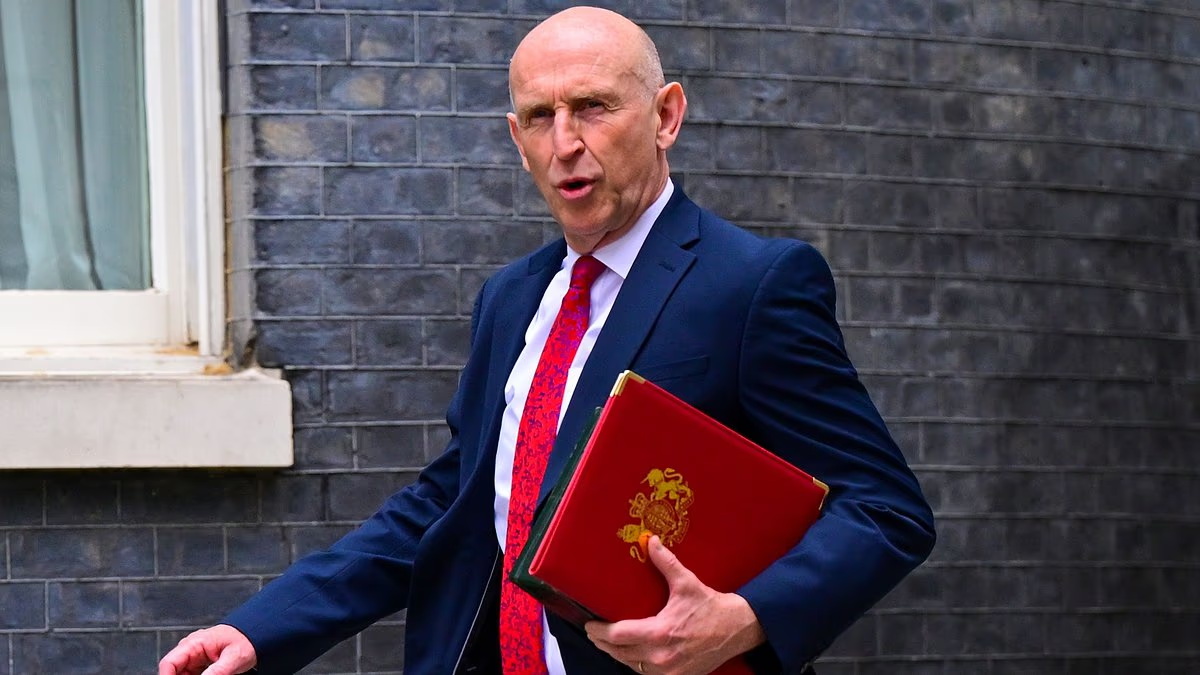
Anyone expecting a change of direction under a new Chancellor should think again. John Healey has described himself as a “continuity” Chancellor, writes Andrew Griffith
And for those hoping that a new Chancellor might signal a fresh approach, the answer is already clear. John Healey has said himself that he intends to be a “continuity” Chancellor.
Since he was in the Cabinet that took collective responsibility for every one of his predecessor Rachel Reeves’s disastrous decisions, businesses and families will already be fearing yet more tax hikes. Add in the enormous black hole of spending promises Burnham has made, plus the rising cost of borrowing, and the story begins to sound all too familiar.
Like his 1970s namesake Denis Healey, the new man at No11 is coming back for more tax, and it will be hard-working families and businesses who pay the price.
It is increasingly clear these tax rises will not be used to support our cash-starved Armed Forces.
Despite resigning over Starmer and Reeves’s failure to properly fund defence, the Chancellor now seems to be raising the white flag.
Once again it will be Benefits Street taking precedence over Horse Guards Parade, despite the scandal that disability claims are rising faster in the UK than war-torn Ukraine. At a time when Argentina is making bogus claims over British sovereign territory in the Falklands, how can the Chancellor choose benefits for anxiety and other low-level mental health conditions over funding our Army, Air Force and Navy?
Conservatives understand the trade-off and are not afraid to say that welfare should be a safety net not a lifestyle choice.
That is why, on my third day in the job, I sat alongside James Cartlidge, the shadow defence secretary, and Helen Whately, the shadow secretary for work and pensions, as our leader Kemi Badenoch unveiled the work we had done to find the money we need to fund defence to the tune of 3 per cent of GDP.
To Labour, these choices may be controversial. But, when you know whose side you are on, they are not. The Conservatives are unashamedly on the side of those who work hard, run a business, aspire to own their own home and put down roots in a community. We are equally unashamedly on the side of our Armed Forces.
If we can reform welfare and rewire the state, we will be able to cut bad taxes – such as Stamp Duty – scrap business rates for thousands of firms such as pubs, and fully fund our Armed Forces.
Healey faces tough choices as he prepares his first Budget. He should commit to no more tax rises. But I fear that, as Labour Chancellors always do, he will take the easy way out. And if he does, he risks becoming the second Chancellor called Healey to bankrupt Britain.


