
Share this @internewscast.com
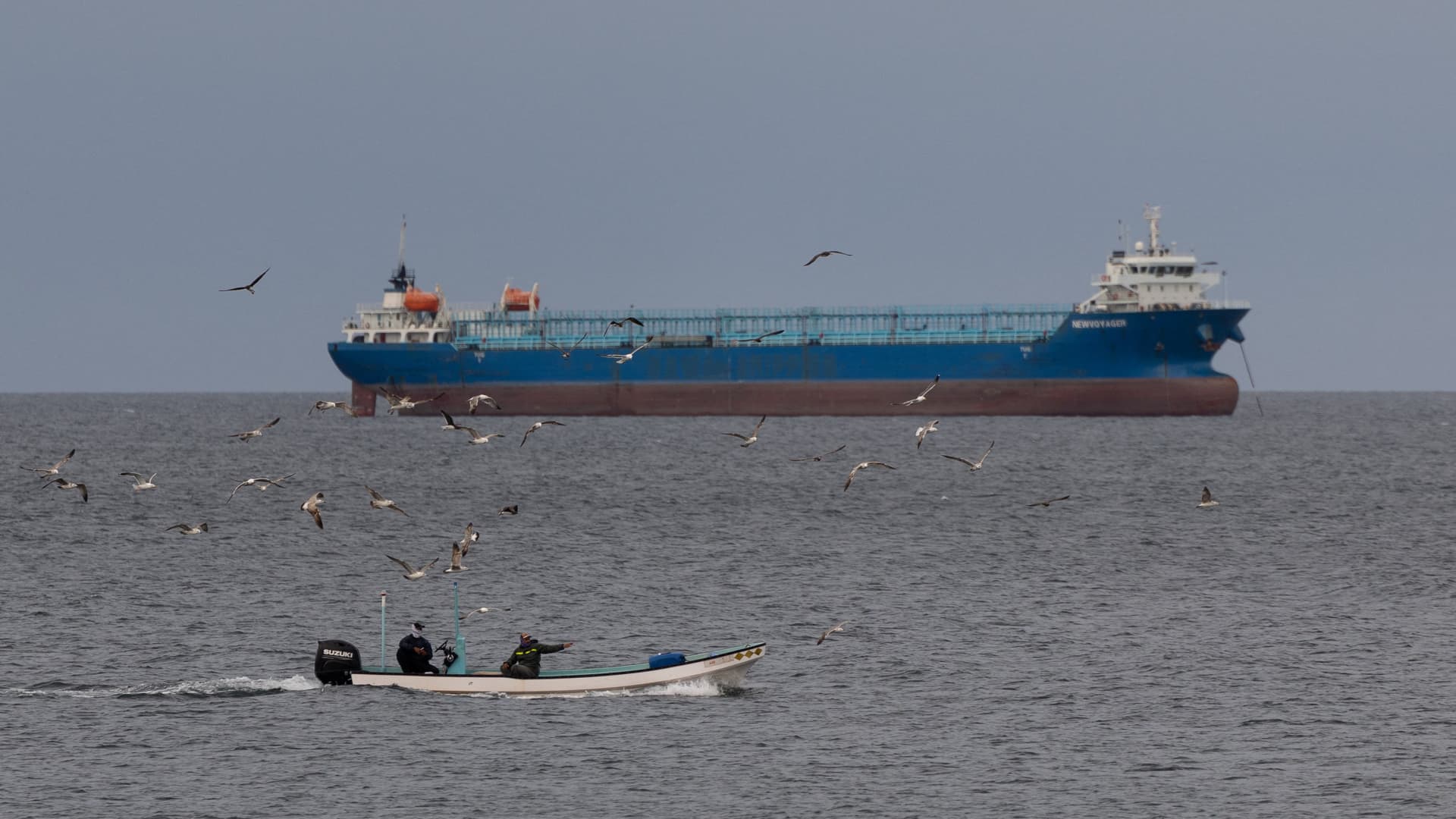
Off the coast of Muscat, Oman, a small fishing boat glides by as a larger vessel sits anchored, a silent witness to the ongoing U.S.-Israeli tensions with Iran. This scene, captured on March 25, 2026, encapsulates the backdrop of a region steeped in conflict, where geopolitical stakes ripple across global markets.
Stringer | Reuters
As the new week commenced, Asian stock markets displayed a mixed performance. With several major exchanges closed due to holidays, investors kept a watchful eye on the unfolding crisis in the Middle East. The financial world is particularly focused on the implications of escalating tensions for global oil supplies.
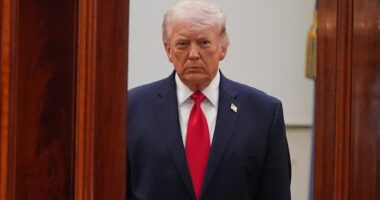
On Sunday, President Donald Trump issued a series of stern warnings, threatening to target Iran’s power infrastructure if the Strait of Hormuz, a critical passageway for nearly 20% of the world’s oil, wasn’t fully reopened. This ultimatum comes in the wake of regional hostilities that have been simmering since February 28.
In a social media tirade laden with expletives, Trump pledged to unleash severe consequences on Iran, following the recent rescue of an American airman on Iranian soil. He cryptically referred to a “Tuesday 8 P.M. Eastern Time” deadline, a point of concern that has yet to be clarified. According to statements from the White House to MS NOW, this deadline represents the latest pressure point for Iran to negotiate a resolution with the U.S.
Adding to the anticipation, Trump announced plans for a press conference alongside military leaders, set for 1 p.m. on Monday at the Oval Office. This announcement has heightened expectations and uncertainties surrounding the administration’s next moves in this high-stakes geopolitical chess game.
Iran has, however, rejected Trump’s ultimatum to reopen the Strait of Hormuz, saying that the critical waterway would only reopen fully after damage from the war is compensated. Tehran has continued strikes on economic and infrastructure targets in the neighboring Gulf region, including Kuwait’s oil headquarters.
Signaling progress in the peace talks, Axios reported that Washington and Tehran were engaged in discussions mediated by some Gulf states for a potential 45-day ceasefire that could end the conflict, although the odds for reaching a partial deal before the Tuesday deadline were slim.
“The question is whether or not a more favourable outcome can be reached without another round of exchanges that can potentially narrow the path to lower intensity conflict in the medium term,” said Homin Lin, senior macro strategist at Lombard Odier, adding that investors will be careful with trading from headline to headline.
If Trump follows through on targeting Iran’s power grid and civilian infrastructure, risk assets may face another leg lower, Lin added. “As long as the anxious wait for Iran end-game clarity continues, markets will likely remain volatile.”
Japan’s Nikkei 225 climbed 0.55% higher to end the session at 53,413.68, and the broad-based Topix ended flat at 3,644.8. South Korea’s blue-chip Kospi rose 1.36% to 5,450.33 while the small-cap Kosdaq dropped 1.5% to 1,047.37.
India’s benchmark Nifty 50 was 0.62% higher, reversing course from losses earlier in the session, while the BSE Sensex was up 0.68% as of 1.45 p.m. local time [4:15 a.m. ET]
Many markets in Asia are closed on Monday for holidays, as Australia, New Zealand, and Hong Kong celebrate Easter, while mainland China and Taiwan celebrate Qingming Festival, the tomb-sweeping holiday.
Eight members of the Organization of the Petroleum Exporting Countries and allies raised their production quotas on Sunday by 206,000 barrels per day for May, though the move appeared largely symbolic as the war has constrained shipments from several members.
The U.S. West Texas Intermediate for May dropped around 2% to $109.3 per barrel. International benchmark Brent crude prices declined over 1% to $107.8 per barrel as of 4:15 a.m. ET.