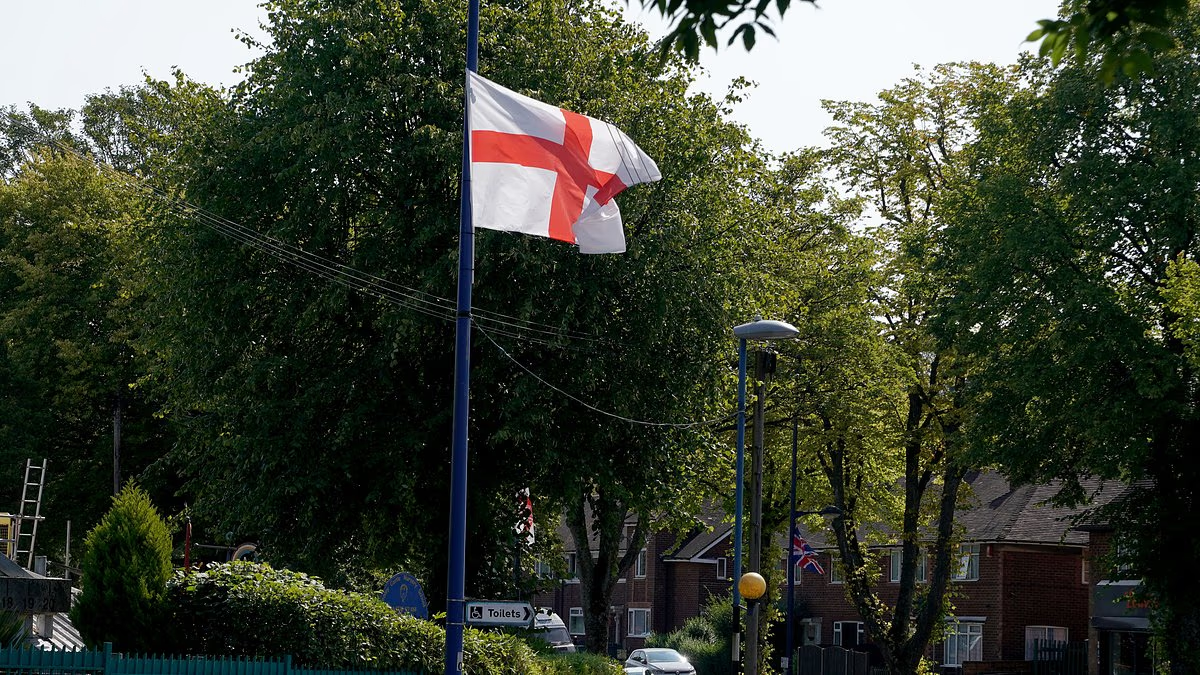

Birmingham City Council is preparing for a potential £2.6million operation to take down Union Jacks and St George’s flags from streets across the city.
The authority, currently led by a coalition of Liberal Democrats, Greens and Independents, began legal proceedings last month aimed at stopping flags from being placed on lampposts.
Should the council secure an injunction, anyone putting up flags near roads without formal approval could risk an unlimited fine or a prison sentence of up to two years.
Around 20,000 flags have been attached to lampposts in Birmingham under Operation Raise the Colours, a campaign presented by supporters as an effort to encourage national pride.
Court papers filed by the council state that removing the flags would cost taxpayers about £132 per flag, bringing the total estimated bill to £2.64million.
The council effectively declared itself bankrupt in September 2023, although it said in February this year that it had moved out of its financial crisis.
Officials also argue that a citywide removal operation would require police assistance and would have to take place “during hours of darkness” because of “safety concerns”.
Birmingham City Council remains the country’s most indebted local authority, with debts of more than £3.5billion.
In September 2023, it issued a section 114 notice, equivalent to declaring itself bankrupt. This followed more than a decade of control by a Labour majority.

Multiple St George’s and Union Jack flags are tied to lampposts around Weoley Castle in Birmingham

Birmingham city council first sparked outrage in August last year by ordering the removal of British flags from lampposts
This resulted in council tax jumping by 4.99 per cent for next year, which is the maximum threshold possible without holding a referendum.
The authority said in August it was pursuing legal action to stop people raising the flags, after staff tasked with removing them faced harassment and intimidation.
Jane Baston, a Green councillor and Birmingham’s cabinet member for equalities, communities and social justice, said: ‘The council is taking a lawful, proportionate and evidence-led approach to unauthorised attachments on the highway.
‘This includes pursuing injunctive action based on the evidence gathered to date. Our priority is to protect public safety, staff and contractor welfare, community cohesion and the responsible use of public funds.
‘We ask residents and community groups to support this approach and to ensure any displays are placed only where permission exists.’
If the council is granted an injunction, anyone who erects flags such as the Union Jack near roads without the bankrupt Birmingham council’s permission could face an unlimited fine or up to two years in prison.
The authority defended the decision, claiming the flags posed a ‘risk to safety’ and could trigger ‘conflict and disorder’ amid a ‘combination of large-scale unlawful activity and public tension’.
It added: ‘Given the scale of the issue, the risks to public safety, and the inability to safely and effectively enforce compliance through existing means, the council considers that injunctive relief is necessary.’

Birmingham city council said it was pursuing legal action to stop people raising the flags, after staff tasked with removing them faced harassment and intimidation
The injunction was described as being ‘proportionate’ to ‘a widespread and persistent problem that presents a clear risk of harm’.
The council’s application named Ryan Bridge, co-founder of Operation Raise the Colours, as well as seven others and ‘persons unknown’.
Birmingham city council first sparked outrage in August last year in ordering the removal of British flags from lampposts – while being ‘too scared’ to take down Palestine flags without police protection.
At the time, they claimed the flags put the lives of pedestrians and motorists ‘at risk’ despite being as much as 25ft off the ground.
The flags had been strung up by a small, organised group of residents to ‘show Birmingham and the rest of the country how proud we are of our history, freedoms and achievements’.
In a statement published in August, Raise The Colours said: ‘We have become aware of a Birmingham city council post referring to a High Court injunction application concerning unauthorised highway attachments, including flags, banners and signage.
‘We were not in dialogue with Birmingham city council prior to this. We only became aware after members of the public alerted us to the Council’s Facebook post and after the matter was mentioned on TalkTV.
‘We believe public funds would be better spent on core services such as refuse collections, safer streets and supporting local communities.
‘We are seeking clarity and will respond through a proper legal process if required.
‘We ask everyone not to speculate and to allow the facts to be established through proper channels. We will update people when we are able to do so.’
It follows a heated nationwide debate over the display of British and St George’s flags, hailed by some as symbols of national pride but condemned by others as nationalist emblems used to intimidate ethnic minorities.
Elsewhere, in July, Oxfordshire council became the first local authority to gain legal authority to end flag flying from public infrastructure.
Maintenance staff at Oxfordshire County Council were told to wear face coverings and check their vehicles for trackers when removing the flags after a colleague’s home address was published by campaigners.
The local authority, which was previously run by the Liberal Democrats but now has no overall control, had brought legal action to stop people raising flags near highways, which it said involved safety risks concerning trespassing and obstruction.
While some politicians decried the removals, others claimed the increased number being flown was a result of xenophobia or racism.
Oxfordshire County Council said flags had been placed on or near public roads without permission for months, despite a formal legal notice in March and pre-action legal letters sent to individuals in May.
READ MORE: Liberal Democrat council starts legal battle in bid to ban flags from public roads amid claims they ‘intimidate residents’