
A fire burns at an oil refinery in Omsk, Russia, on July 6, 2026, after the regional governor said the province had been targeted by Ukrainian drones, in an image taken from a social media video.
Reuters
Ukraine’s expanding drone campaign has become one of the defining features of its war with Russia, drawing global attention and challenging long-held assumptions about NATO defense investment priorities.
After four years of war, Kyiv has significantly increased both the production and sophistication of its drones. That buildup has enabled Ukraine to intensify strikes on Russian energy infrastructure and military targets, including prominent oil refineries in major cities, as part of a broader effort to squeeze Moscow’s energy revenues.
Military analysts and defense strategists say the drone offensive has played an important role in slowing Russia’s battlefield momentum. At the same time, they caution that Ukraine’s ability to strike deep inside Russian territory has sharply increased the danger of escalation.
This week, Ukraine appeared to carry out one of its deepest strikes inside Russia since the start of the war.
On Tuesday, thick black smoke was seen rising from a major oil refinery in the Siberian city of Omsk. Ukrainian President Volodymyr Zelenskyy later said the country’s improved drone capabilities had brought Siberia “within reach.” The refinery sits nearly 2,500 kilometers, or 1,553 miles, from Ukrainian territory and lies close to Russia’s border with Kazakhstan.

Ukraine’s battlefield gains underscore how quickly drones are transforming modern warfare, pushing combat toward a more autonomous, networked and data-driven future.
How drones are changing the Russia-Ukraine war
Two things have changed to allow Ukraine to accelerate its long-range drone strikes deep within Russian territory, according to Bob Tollast, a research fellow in land warfare at the Royal United Services Institute, a London-based defense and security think tank.
A concerted effort from Ukrainian forces to boost production and improve inertial navigation, software and machine vision had all helped to improve resilience when satellite navigation is jammed, Tollast said.
Foreign support for Ukraine had also likely played a role, he added, noting that oil refineries and terminals were vast targets.
In this pool photograph distributed by Russian state agency Sputnik, Russia’s Vladimir Putin addresses the audience at the 23rd Congress of the United Russia party in Moscow on June 28, 2026.
Yekaterina Shtukina | Afp | Getty Images
“We’ll see how Russia responds, they have had limited success with nets and drone interceptors of the kind Ukraine uses, and for some time have placed air defence systems on towers and recently even tall buildings,” Tollast told CNBC by email.
“But with Ukraine’s domestically made cruise missiles like Flamingo on the scene hitting industrial sites (including air defence production) the picture is pretty ugly for Moscow,” he continued.
“Ukraine’s counter refinery campaign is now a rain of blows, but it might be too early to say if Russia will suffer lasting damage because the sector has long had spare capacity,” Tollast said.
Russia has responded by also scaling its own drone production and integrating them more into its overall military.
NATO building a ‘drone-ready alliance’
Beyond the frontline, Ukraine’s drone campaign also appears to have influenced NATO’s defense spending plans.
NATO Secretary General Mark Rutte said Tuesday that drones have “fundamentally altered” the character of modern warfare and have become a “decisive factor” on the battlefield, citing the Russia-Ukraine war as one example.
Rutte’s comments came as he announced the launch of the alliance’s so-called NATO Drone Edge initiative, a plan in which allies are slated to invest more than $40 billion in counter-drone capabilities over the next five years.
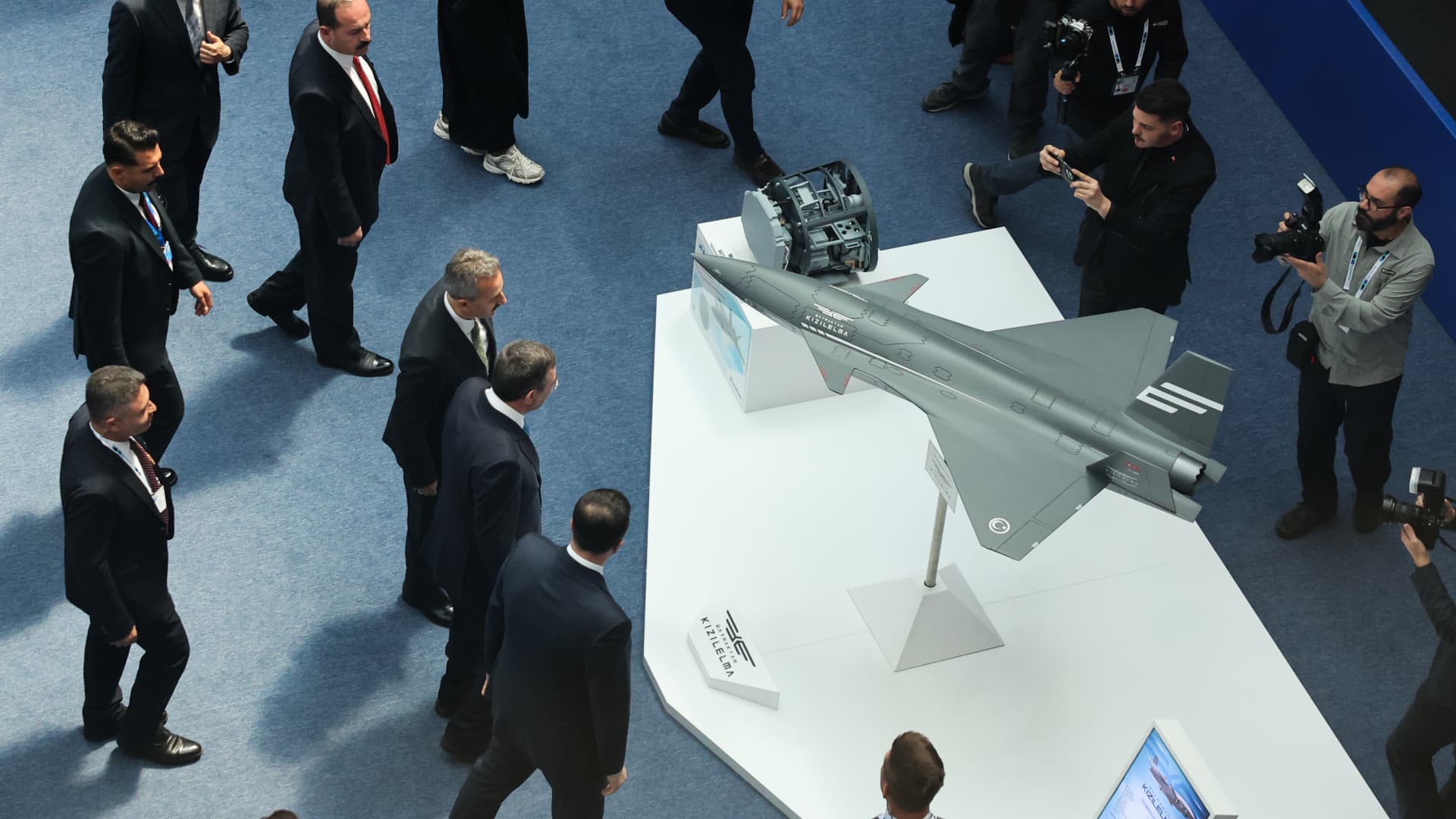
Turkish Vice President Cevdet Yilmaz looks on a model of Bayraktar drone during the Defence Industry Forum at the NATO Summit in Ankara, Turkiye on July 7, 2026.
Nurphoto | Nurphoto | Getty Images
“Together, we are building a drone-ready Alliance. We are leveraging the latest innovative technologies, investing in our transatlantic defence industries, and learning real-world lessons from the battlefield in Ukraine,” Rutte said.
Alongside cutting off Russian energy revenues, Ukraine’s drone attacks are designed to try to force Russian President Vladimir Putin to bring an end to the war.
Ukraine’s success on the battlefield has prompted a shift in how the country is viewed and its relationship to NATO and the EU. Security analysts and world leaders alike have highlighted that Ukraine increasingly has something to offer allies and shouldn’t be seen as a mere beneficiary of military support and donations.
Ukraine is winning because they have become good at drones and counter-drone systems — technologies that other NATO allies aren’t very good at, Ulrike Franke, senior policy fellow at the European Council on Foreign Relations, told CNBC.
Ukraine is holding all the cards, she said, adding that they have “drones and counter-drone systems, and indeed data on how to fight the Russians.”

It comes as warfare is undergoing a major shift where expensive, more traditional tech is being challenged by a more agile, decentralized model, often spearheaded by startups and informed by what happened in Ukraine.
Ukraine became the global leader in drone warfare out of necessity, Morningstar analyst Loredana Muharremi said. “Facing a larger and better-equipped military, it could not compete symmetrically, forcing it to innovate rapidly with low-cost, commercially available drones adapted for military use.”
“Real innovation wasn’t the technology itself, but the procurement model,” she added in emailed comments to CNBC.
Throughout the four-and-a-half-year war, Ukraine has built a much faster innovation cycle than that of legacy defense companies, which often span years.
People refuel their cars at a petrol station in Moscow on June 24, 2026.
Alexander Nemenov | Afp | Getty Images
Cooperation between the military, domestic startups, and private industry has allowed new technologies to be deployed in just weeks and drones to evolve continuously based on battlefield feedback, Muharremi said.
“The largest [financial] impact is expected to come through higher order intake and backlog over the next two to three years, with the more meaningful contribution to revenue and earnings from 2028 onward,” Muharremi said.
Finland’s Stubb: Ukraine has new leverage
Finnish President Alexander Stubb said Ukraine’s Zelenskyy now “has the cards” to carry out long-range drone strikes, something the Trump administration said it did not approve of in October last year.
“There are two separate issues here. He has the cards for the long-range attacks, so the drones and the missiles that are hitting, say Russian oil refineries, and reducing their capacity to produce and export by 40%,” Stubb told CNBC on Tuesday.
“And he is actually turning the tide with the Russian population, which is now for the first time being against the war. So, this has to have an effect on Russia’s strategic thinking.”

Finland’s president warned, however, that “we shouldn’t be all smiles about it,” saying Ukraine needs air defense to bolster its war effort.
U.S. President Donald Trump held separate calls with Russia’s Putin and Ukraine’s Zelenskyy over the weekend and said Monday that a resolution to the conflict is “getting closer than people realize.”


