Share this @internewscast.com
Three weeks into the escalating conflict involving the United States, Israel, and Iran, the war has increasingly drawn in much of the Middle East. There appears to be little indication of a ceasefire or de-escalation in the near future.
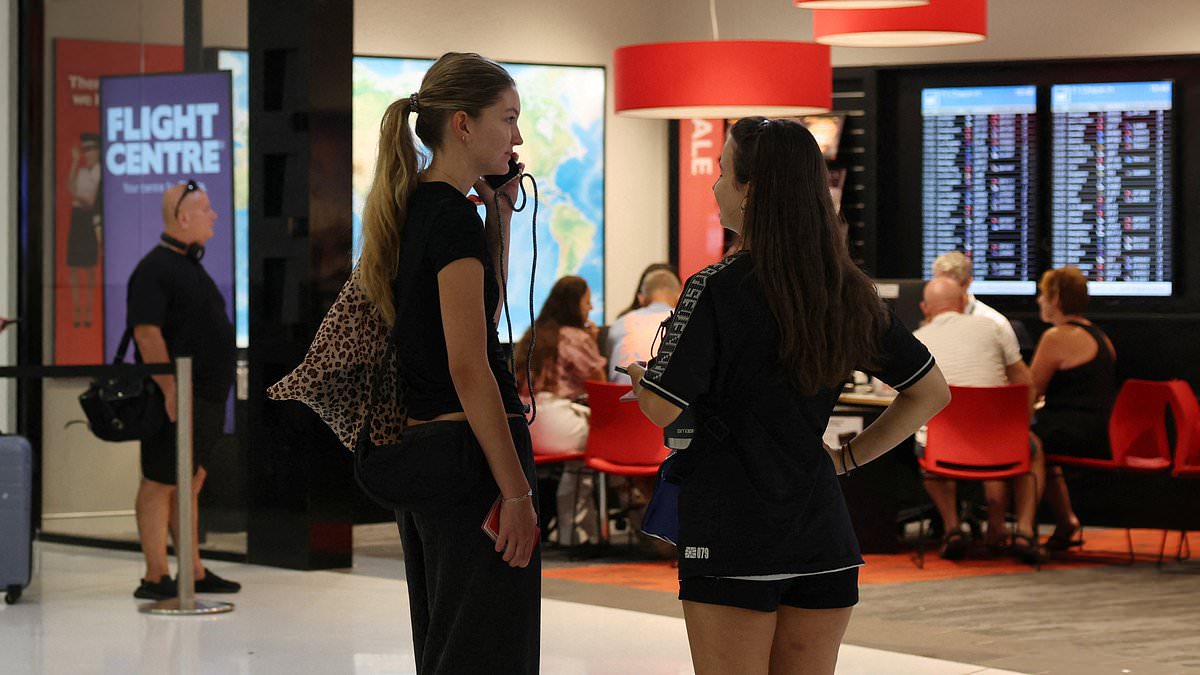
This ongoing conflict has significantly disrupted air travel across the region.
Missile and drone attacks have targeted major airports, crucial air routes through the Middle East have been closed, and the price of jet fuel has surged dramatically.
These developments translate to higher operational costs and decreased capacity for airlines. For travelers, this means fewer flight options and elevated ticket prices.
While some passengers may choose to alter, postpone, or cancel their travel plans, others who must travel for business or personal reasons are facing steep prices and may need to consider complex, alternative routes.
The current situation highlights significant implications for the future of global air travel. However, there are also practical strategies available for travelers to manage the uncertainties they face.
For virtually every airline in the world, fuel and labour represent the two highest costs. Since the beginning of the conflict, severe energy market disruption means the average jet fuel price has nearly doubled, with little indication relief is on the way.
And it’s possible the global energy market crisis could escalate further, as gas plants and gas fields in Qatar and Iran come under attack.

Most carriers based in the Middle East are selling tickets with a reduced flight schedule

Many major airlines have hiked their international fares significantly as the war continues
Right now, because of the increase in fuel prices for many airlines, jet fuel has likely surged to become the number-one cost (if it wasn’t already).
Fuel costs aren’t the only factor.
For Australians looking to travel to or through the Middle East, the removal of millions of airline seats from flight schedules has pushed serious demand onto other routes.
Unsurprisingly, many major airlines have hiked their international fares significantly. And they may go up further still. Qantas, for instance, this week said it would review its international airfares every two weeks.
Some tickets have appeared at an extraordinarily high price. Cathay Pacific attracted attention for advertising business class tickets from Sydney to London (via Hong Kong) for close to A$40,000 return.
This is obviously very expensive. However, it is a natural result of the way most airlines use ‘dynamic pricing’. In essence, airlines are trying to identify (typically by analysing your flight searches) the highest price you’re willing to pay, so they can sell you a ticket at that price.
In a crisis, some might see this as taking advantage of vulnerable passengers. But airlines could argue the system ensures there is a seat there for someone who desperately needs it.
Unfortunately, they rely on the price consumers are willing to pay to demonstrate that level of ‘need’.

The Middle East is home to some of the world’s biggest travel hubs, such as Dubai Airport
More broadly, the conflict has dramatically altered airlines’ ability to predict their costs. That’s a problem, because seats are usually for sale up to nearly a year in advance.
Will we see a shift in popular flight routes around the world if this conflict drags on? It’s hard to say.
The Middle East is geographically well-positioned to access nearly the entire world with a non-stop flight. It sits at the intersection of several popular international travel corridors, and its airline ownership models typically include government backing (which can help carriers stay operationally and financially stable).
However, if this conflict threatens those advantages in the long term, other airlines may step in, perhaps able to lower their fares over time by boosting their capacity.
Airlines based in Asia are particularly well placed to serve Australians travelling to Europe, though high demand for these routes has driven up airfares.
Another option is to sequence together multiple tickets on different carriers. This can lower costs and may add an element of ‘adventure’.
However, there are some significant risks that could undo any cost savings.
For one, the ‘extras’ can really add up. A sequence of self-organised tickets often means additional expenses for overnight transits, multiple baggage fees, and more meals on the road.

Severe energy market disruption means the average jet fuel price has nearly doubled
Travellers should also be mindful of visa requirements in transit countries, and any visa fees that apply.
Crucially, the ‘do-it-yourself’ approach often means you are not protected from the impacts of delays or cancellations across multiple tickets on different airlines.
For those who are planning travel in the next couple of months, most carriers based in the Middle East are selling tickets with a reduced flight schedule to accommodate operational restrictions.
But given ongoing uncertainty, these schedules may not be as reliable as passengers would typically expect.
Buying flexible fares and travel insurance can help alleviate the effects of travel disruptions. But they introduce added costs.
What about those already booked, but anxious about whether they’ll be able to fly? Some airlines have cancellation or rebooking policies for passengers affected by the conflict for travel within a specified window of time.
Airlines may offer fee waivers, free rebooking or penalty-free cancellations.
But those whose dates aren’t eligible shouldn’t proactively cancel their flights themselves. Waiting for the airline to formally say, ‘we can’t take you there’ gives you the best chance of ensuring it remains responsible for rebooking, a refund and other accommodations.
This article was originally published on The Conversation