
Share this @internewscast.com
Republican Representative Randy Fine from Florida has introduced a bill titled the “Protecting Puppies from Sharia Act.” This legislation aims to cut off federal funding to any state or local government that imposes a ban on keeping dogs as pets.
Fine’s initiative comes on the heels of his widely circulated statement asserting that Americans would prioritize dogs over what he termed “radical Islam.”
“I am proud to introduce the Protecting Puppies from Sharia Act,” Fine proclaimed on the social media platform X. “Democrats are up in arms because I made a straightforward declaration—when faced with the decision between our beloved dogs and those who would prohibit them, the choice is clear. They can take a hike.”
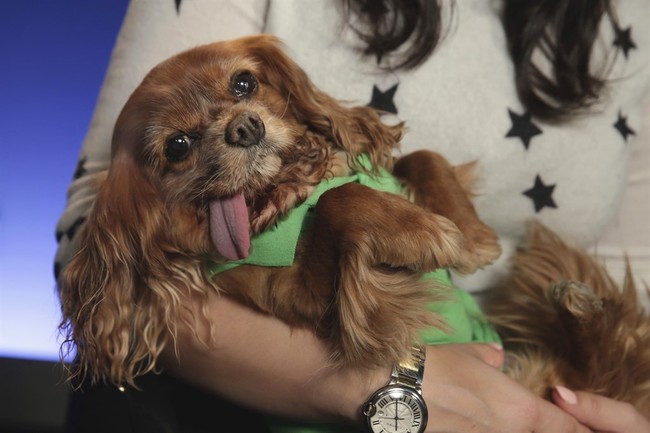
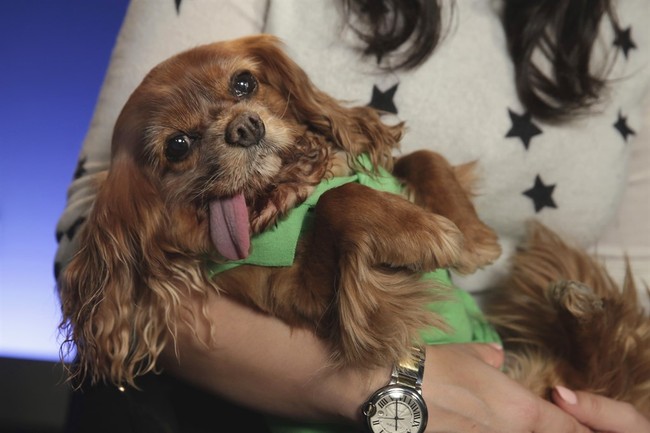
Accompanying his message was an image of an adorable puppy paired with the iconic Gadsden flag slogan, “Don’t tread on me.”
“In America, we will not tolerate anyone dictating that we cannot own dogs,” Fine stated assertively. “My bill safeguards Americans’ right to have a dog and ensures that no federal funds are allocated to any state or local government that deems them Haram.”
The term “Haram” is an Arabic word that translates to “forbidden” or “prohibited” under Islamic law.
“There are 57 countries that are Sharia compliant; the United States will not be the 58th,” Fine concluded.
I am proud to introduce the Protecting Puppies from Sharia Act.
Democrats are losing their minds because I made a simple statement—given a choice between our dogs and those who would ban them, the choice is easy.
They can pound sand.
This bill will ban federal funds to any… pic.twitter.com/KjertyzUJc
— Congressman Randy Fine (@RepFine) February 19, 2026
READ MORE: Dogs Continue to Win the PR Battle Against Islam by Just Being Dogs
Hot Takes: It’s No Contest, Between a Pro-Palestine Activist and Americans’ Love for Their Dogs
You have to hand it to Fine. This guy has some balls (for fetch, of course), considering Democrats have spent the last few days trying to neuter him over comments he made on social media, saying Muslims would be banned well before dogs.
“If they force us to choose, the choice between dogs and Muslims is not a difficult one,” Fine wrote on X over the weekend.
The comments had Democrats barking about expulsion and calling his comments “genocidal.” And their rage may have had some legitimacy if Fine had made the comments in a vacuum. But he didn’t, making the left’s faux outrage a joke.
The congressman was responding to Nerdeen Kiswani, a pro-Palestinian activist and loyal lapdog to Democratic Socialist New York City Mayor Zohran Mamdani, who posted that the city that never sleeps was “coming to Islam” when it comes to “unclean” dogs.
“Finally, NYC is coming to Islam. Dogs definitely have a place in society, just not as indoor pets,” she said. “Like we’ve said all along, they are unclean.”
Kiswani later claimed her comments were a joke. Fine, though, wasn’t buying it.
“There’s no reading of it that sounds satirical,” he said. “In Islam, they don’t like dogs … So when a major Muslim leader says we’ve got to get rid of them, you should take them seriously.”
If they force us to choose, the choice between dogs and Muslims is not a difficult one.
— Congressman Randy Fine (@RepFine) February 15, 2026
House Minority Leader Hakeem Jeffries (NY-8) naturally leapt at the opportunity to dishonestly frame Fine’s comments as Islamophobic and demanded GOP members “hold him accountable.”
“Randy Fine is a disgrace to the United States Congress. He is an Islamophobic, disgusting, and unrepentant bigot,” bargain basement Obama responded. “Republican leaders must hold this so-called Member of Congress accountable.”
“Political violence, xenophobia, and hate crimes against the Muslim community are on the rise,” he said without evidence. “House Democrats will not let the racist and bigoted behavior of Randy Fine go unchecked.”
Jeffries asserted that a censure, removal from House committees, or perhaps even expulsion could be on the table for Fine if Democrats win big in the midterms.
Jeffries: Randy Fine is a disgrace to the United States Congress. He is an Islamophobic, disgusting and unrepentant bigot.
It is unacceptable that Mike Johnson and House Republicans continue to remain silent. Their casual acceptance of hateful and divisive language enables this…
— Chad Pergram (@ChadPergram) February 18, 2026
I didn’t have ‘Democrats want to ban dogs to appease radical Islam’ on my Bingo card, but here we are. No, wait. I actually did have that on my Bingo card. It totally tracks.
Fine, in a discussion with The Hill, said he is clearly differentiating between “mainstream Islam” and “radical Islam.” He also teased the possibility of having a furry friend as his guest to the State of the Union.
Woof.
“If a group of people says, ‘Hey, we’ve just shown up in your country, and dogs violate our religion, so you have to stop having them.’ My answer to them is, ‘No, these are our pets. You can go home,” he said.
The congressman will formally introduce the “Protecting Puppies from Sharia Act” on Friday. He reportedly has four co-sponsors joining him in the effort.
Editor’s Note: Do you enjoy RedState’s conservative reporting that takes on the radical left and woke media? Support our work so that we can continue to bring you the truth.