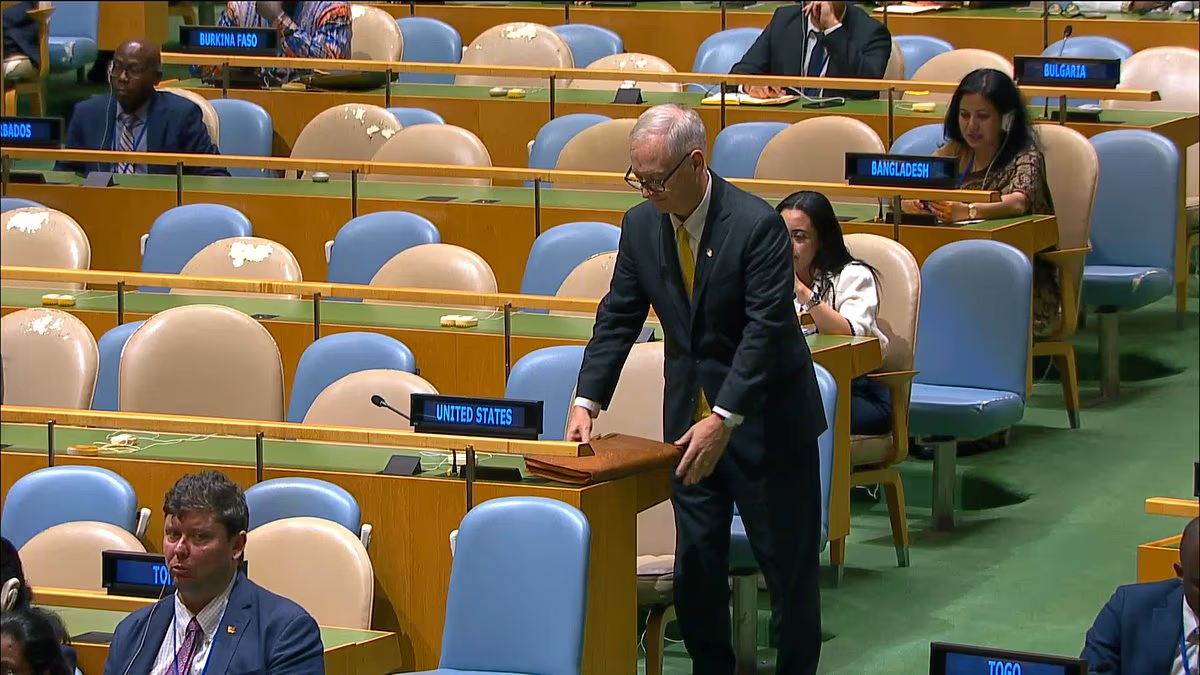

The US delegation to the UN General Assembly walked out after Iranian President Masoud Pezeshkian told world leaders that Iran had become a “victim of terrorism”.
Pezeshkian delivered his address on Wednesday afternoon during the gathering of world leaders in New York.
Within minutes of taking the podium, he accused the United States and Israel of killing civilians and said Iran had “been the victims of terrorism”.
He continued: “I come from an Iran in which our esteemed supreme leader was assassinated without any legal framework or reason.”
Referring to the US attack on Iran’s Minab primary school on the first day of the war, Pezeshkian held up photographs of the incident and said: “I come from an Iran where, in truth, they bombed a school.”
As the Iranian president made the remarks, the sole US delegate in the General Assembly Hall rose from his seat, collected his briefcase and left the chamber while taking off his glasses.
“We have only defended ourselves. We are not terrorists,” Pezeshkian told the General Assembly. “Our innocent people have been the targets of cowardly attacks and aggressions imposed upon our country. And we defended ourselves with utmost strength. America and Israel attacked us.”
Pezeshkian added: “They have tested the strength and the steadfastness of Iran, and they have learned that Iran cannot be made to surrender.”

The US delegate appeared angry at the Iranian president’s remarks

The sole US delegate in the General Assembly Hall stood up, picked up his briefcase and walked out while removing his glasses

Iranian President Masoud Pezeshkian displayed photographs of children killed in a US attack on Iran

Pezeshkian also displayed a photograph of the late Iranian Supreme Leader Ayatollah Ali Khamenei during the 81st session of the United Nations General Assembly
Addressing US President Donald Trump at the close of his speech, Pezeshkian said: “[Trump] must know that the resistance of the Iranian people will only increase in the face of sanctions, increased pressure, increased bullying. We will never bow our head or bend at the knee.”
Pezeshkian arrived in New York under heavy security and intense scrutiny. Considered a moderate within Iran’s political system, he addressed world leaders a day after Trump used the same platform to suggest he could “annihilate” the Islamic Republic if a deal was not reached soon to end the nearly seven-month war.
Hours later, Trump told reporters that his chief envoys, Steve Witkoff and Jared Kushner, had held talks lasting about three hours with Iranian officials on the sidelines of the annual UN gathering. He provided few details about the discussions or what had been covered.
“It was a very good meeting,” Trump said. He later described the Iranian officials involved as “not the highest level, but it’s something”. On Tuesday, Secretary of State Marco Rubio also said Trump was open to meeting Pezeshkian during the Iranian president’s visit to New York.
Tehran, however, played down the unscheduled exchange, which marked the first indirect contact between US and Iranian officials since a June ceasefire collapsed. Esmail Baghaei, a spokesperson for Iran’s Foreign Ministry, reiterated Tehran’s negotiating demands, including that Washington lift its blockade of Iranian ports and release frozen Iranian assets.
Baghaei said the discussions, held indirectly through Qatari mediators, were “not anything new”.
Pezeshkian is expected to further set out Tehran’s position as more than a year of on-and-off negotiations between the two longtime adversaries has failed to deliver a lasting agreement. His speech came as intermittent attacks continued in the Strait of Hormuz off Iran’s coast, with commercial shipping still below prewar levels.
His address last year followed the 12-day Israel-Iran war, which resulted in the assassinations of many of the Islamic Republic’s senior military and political leaders and once again derailed weeks of negotiations between Iran and the United States.
‘Ladies and gentlemen, you all bore witness that this past June, my country was subjected to a savage aggression and flagrant contravention of the most elementary principles of international law,’ Mr Pezeshkian said at the time.


