
Share this @internewscast.com
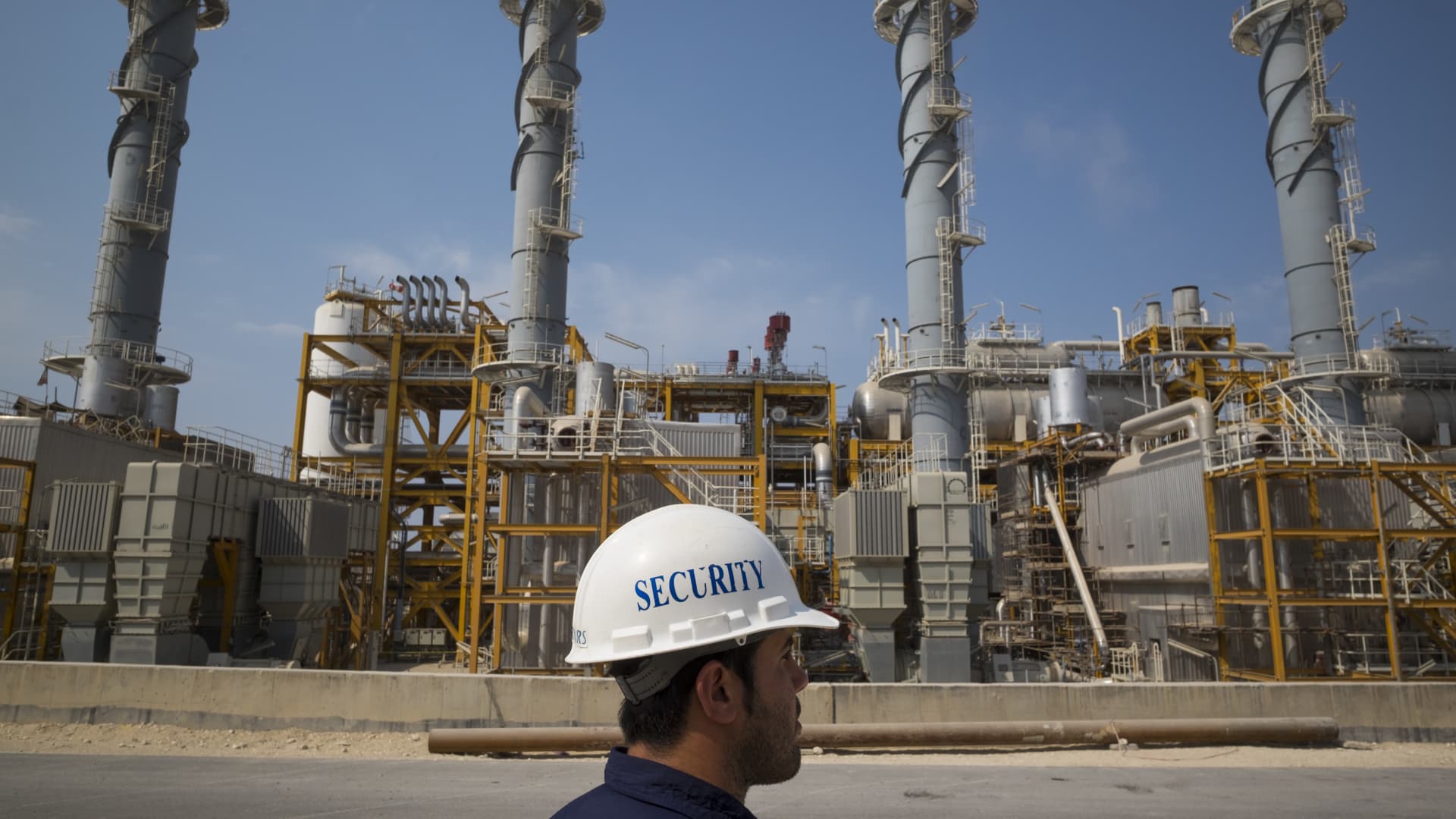
On August 23, 2016, an Iranian security official oversaw operations in phase 19 of the South Pars gas field, located along Iran’s Persian Gulf coastline in Assaluyeh.
Photo by Morteza Nikoubazl, Nurphoto via Getty Images
Oil prices experienced a sharp decline of over 5% on Wednesday following a statement from U.S. President Donald Trump, who revealed that the U.S. and Iran are currently “in negotiations.” While Trump suggested that Iran is interested in forging a peace deal, Iranian officials have denied engaging in direct talks with the U.S.
The price of Brent crude, the international oil benchmark, plummeted nearly 6% to $98.31 per barrel. Meanwhile, U.S. West Texas Intermediate crude futures saw a 5% drop, settling at $87.65 per barrel.
During remarks in the Oval Office, President Trump explained his decision to retract a previous threat of military action against Iran’s energy sector, attributing the change to ongoing negotiations. “They’re engaging in dialogue with us, and it’s a reasonable conversation,” Trump noted when pressed for details regarding the change in approach.
“They’re talking to us, and they’re talking sense,” Trump said when asked to elaborate on the shift.
Later Tuesday, The New York Times reported, citing two unnamed officials, that the U.S. had sent Iran a 15-point proposal aimed at ending the war.
According to the report, it remains unclear how widely the proposal, delivered through Pakistan, has been circulated among Iranian officials. It is also uncertain whether Israel, which is carrying out attacks on Iran alongside the U.S., would back the plan.

The current disruption to oil supplies marks the largest shock in decades when measured as a share of global supply, Goldman Sachs co-head of global commodities research Daan Struyven said in a call with the media, underscoring the unusually high uncertainty facing markets.
The bank noted that near-term price movements are being driven less by changes in the base case outlook and more by shifts in the perceived probability of worst-case scenarios. Crude is effectively trading on a geopolitical risk premium as investors hedge against prolonged disruptions and critically low inventories, Goldman said.
The bank’s base case assumes flows through the Strait of Hormuz to normalize in April over a four-week period.