
Share this @internewscast.com
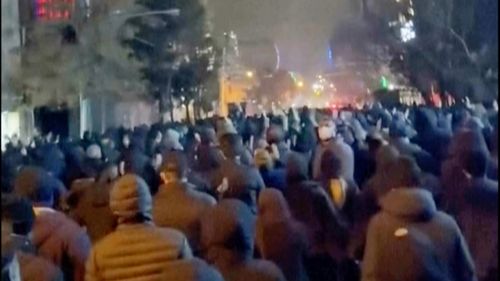
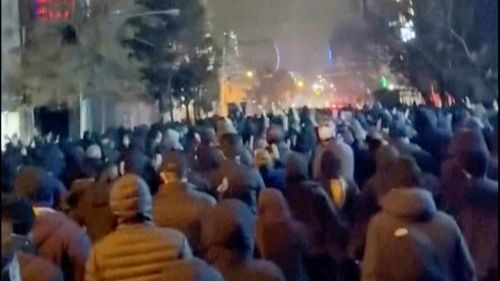
In the wake of ongoing protests across Iran, the US-based Human Rights Activists News Agency has reported that over 10,600 individuals have been detained. Known for its reliable updates during previous periods of unrest in the country, the agency relies on corroboration from supporters within Iran to validate information. According to their data, the protests have resulted in the deaths of 490 demonstrators and 48 security personnel.
Events in Mashhad, Iran’s second-largest city located approximately 725 kilometers northeast of Tehran, have been particularly tense, with video footage allegedly capturing confrontations between protesters and security forces. Similar unrest appears to have emerged in Kerman, which lies about 800 kilometers southeast of the capital.
In an attempt to portray a sense of normalcy, Iranian state television on Sunday broadcasted live reports from various city streets, displaying date stamps on-screen to assure viewers of the footage’s recency. Notably, Tehran and Mashhad were absent from these reports.
The Iranian government has intensified its rhetoric. Ali Larijani, a prominent security official, accused some protestors of acts akin to those perpetrated by ISIS, such as “killing people or burning some people,” drawing a controversial parallel to the Islamic State’s violent tactics.
State media have also focused on the impact of the unrest on security forces, airing the funerals of fallen officers and reporting the deaths of six more in Kermanshah. In Fars province, 13 individuals lost their lives due to the violence, and seven security personnel were killed in North Khorasan province. The broadcasts included images of a pickup truck laden with body bags and scenes from a morgue, underscoring the severity of the situation.
State TV aired funerals of slain security force members while reporting another six had been killed in Kermanshah. In Fars province, violence killed 13 people, and seven security forces were killed in North Khorasan province, it added. It showed a pickup truck full of bodies in body bags and later a morgue.
Even Iran’s reformist President Masoud Pezeshkian, who had been trying to ease anger before the demonstrations exploded in recent days, offered a hardening tone in an interview aired on Sunday.
“People have concerns, we should sit with them and if it is our duty, we should resolve their concerns,” Pezeshkian said.
“But the higher duty is not to allow a group of rioters to come and destroy the entire society.”
The demonstrations began on December 28 over the collapse of the Iranian rial currency, which trades at over 1.4 million to $US1, as the country’s economy is squeezed by international sanctions in part levied over its nuclear program. The protests intensified and grew into calls directly challenging Iran’s theocracy.