Share this @internewscast.com
The Australian Federal Police (AFP) have emphasized the significance of seemingly ordinary photographs in their efforts to combat child exploitation. “To the untrained eye, these images may appear as simple snapshots of daily life,” stated the AFP. “However, for the Australian Centre to Counter Child Exploitation (ACCCE) led by the AFP, they serve as crucial clues that could lead to identifying, rescuing, and supporting victims of online child sexual exploitation (OCSE).”

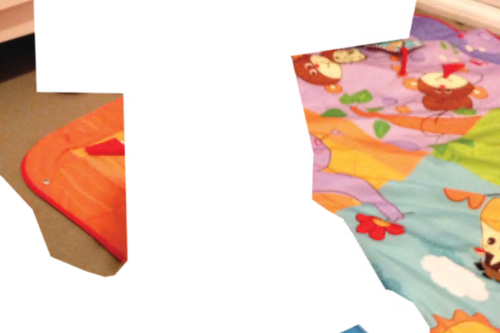
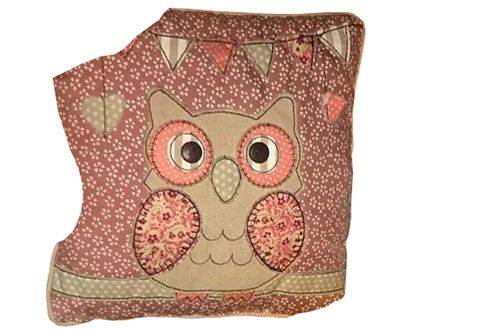
The nine photographs in question are believed to have Australian links, whether through victims, locations, or offenders. Although the images have been edited to remove any explicit content, the AFP hopes that by making them public, they might receive valuable tips or insights that could aid their investigations.
“One of the images released in this latest Stop Child Abuse – Trace an Object campaign features two framed football jerseys,” explained Detective Sergeant Lana Carey, leader of the Victim Identification team. “By sharing this image, we aim to jog the memory of anyone who might recognize them.”

Detective Sergeant Carey elaborated on the potential leads that could result from this initiative. “This could include a player or club member who recognizes the jersey colors or design, a framer who recalls working on them, or a fan familiar with the significance of the number 8 and 11 jerseys being grouped together.”
”One of the photos from this latest Stop Child Abuse â Trace an Object release shows two framed football jerseys, so, in putting it out into public, we’re looking to spark the memory of anyone who might have come across them,” Victim Identification team leader Detective Sergeant Lana Carey said.
“Possibilities here could include a player or club member who might recognise the jersey colours or design, a framer who might remember doing the job, or a fan who might know the significance of the number 8 and 11 jerseys being grouped together.
“It’s about tapping into the wisdom of everyday Australians. And we know they’re eager to play a role, given the previous three image releases have generated 1372 reports and counting.”


Carey noted that while every photo represented cases where all lines of inquiry had been exhausted, they were not seen as dead ends.
”Our identification specialists never give up on a victim,” she said.
“We follow every lead and avenue we have when files first come into the ACCCE, and if we don’t succeed.”
We will continue to visit them periodically, year after year after year after year, to see if new intelligence or technology might open up fresh lines of inquiry.
“It’s about the never-ending hunt for closure, the commitment to saving and supporting victims and survivors and, hopefully, that bittersweet moment when you realise you’ve solved it.”


“Our victim identification team members receive fresh images of online child sexual exploitation every single day,” Commander Schneider said.
“And every new file carries just as much horror and trauma for the victim as the one before it.
“Every one of them represents a life upended, so when team members take on a case, they never give up; it’s our version of looking for a needle in a haystack.
“We know community leads can make or break an investigation, so we encourage people to remember that any tip they give us â no matter how small could change the life of a victim.”