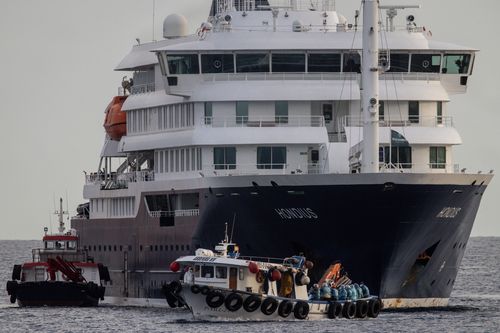

Instead of heading straight to Perth, four Australian citizens, a permanent resident, and a New Zealand national departing from Tenerife will now have to make a stopover in the Netherlands.
Departing at approximately 6:20 PM on Monday (or 3:20 AM Tuesday AEST), this group is set to spend up to 48 hours in the European country under stringent regulations before continuing their journey.
Their arrival at RAAF Base Pearce, located near Perth, marks the beginning of the next phase. Upon landing, they will be swiftly transferred to the Bullsbrook Centre for National Resilience close by.
In preparation for their arrival, hantavirus will be classified under the Biosecurity Act, and a mandate will require them to undergo a three-week quarantine period.
Health Minister Mark Butler emphasized the necessity of a “precautionary approach” despite the virus being “extremely rare” with even scarcer instances of human-to-human transmission.
Butler noted, “As we proceed through the three-week span, we will be seeking additional guidance,” and highlighted that the virus’s incubation period could extend up to 42 days.
“I do make no apology for the fact this is one of the stronger approaches you’d see around the world.”
The WHO recommends a 42-day quarantine period. UK passengers will be asked to isolate for up to 45 days but public health specialists will assess whether they can do that at home or somewhere else.
The US has only said that the uninfected passengers will be taken to the National Quarantine Unit for assessment and monitoring.
Personnel in full-body protective gear and breathing masks escorted the travellers from ship to shore in Tenerife as planes arrived to fly out passengers from more than 20 countries in an evacuation effort continuing on Monday.
Three people have died since the outbreak began, and five people who left the ship earlier were infected.
One of 17 American passengers evacuated from the ship and flown to Nebraska also tested positive for the hantavirus but was not showing any symptoms, and another had mild symptoms, US health officials said late on Sunday (Monday AEST).
It was the first-ever case of a hantavirus outbreak on a cruise ship, according to Maria Van Kerkhove, WHO’s director of epidemic and pandemic preparedness.Â
Health officials say risk to public is low
Hantavirus usually spreads from rodent droppings and is not easily transmitted between people. But the Andes virus detected in the cruise ship outbreak may be able to spread between people in rare cases.Â
Symptoms â which can include fever, chills and muscle aches â usually show between one and eight weeks after exposure.
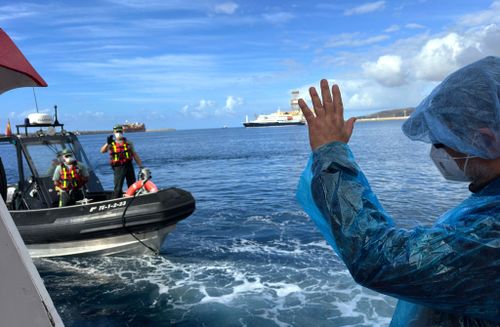
WHO Director-General Tedros Adhanom Ghebreyesus said on Sunday that the general public should not be worried about the outbreak.Â
“This is not another COVID. And the risk to the public is low. So they shouldn’t be scared, and they shouldn’t panic,” he said.
Kerkhove said WHO was recommending passengers’ home countries “have active monitoring and follow-up, which means daily health checks, either at home or in a specialised facility”.
– Reported with Associated Press
NEVER MISS A STORY: Get your breaking news and exclusive stories first by following us across all platforms.


