Share this @internewscast.com
Australian Treasurer Jim Chalmers has expressed confidence that the nation’s economy will not slip into a recession due to the ongoing conflict in the Middle East. According to federal projections, however, inflation could surge to the upper 4% range.
Chalmers stated that the Treasury has evaluated various scenarios concerning the war’s economic repercussions. While they predict an impact on economic growth, he assured that it won’t lead to the severe downturn typical of an economic crash.
In a Sky News interview, when asked if a recession was a looming possibility for Australia, Chalmers responded, “That’s not something that we’re anticipating or expecting.”
Chances of a rate hike have increased
Just a week ago, the Reserve Bank of Australia was anticipated to maintain the current interest rates during its March board meeting on Tuesday.
The situation shifted with the escalation of conflict in the Middle East. This development has resulted in the blockage of oil transport through the Strait of Hormuz, with reports of tankers ablaze in the Persian Gulf.
Experts are cautioning that benchmark oil prices might soon surpass US$150 per barrel. Such a spike could drive inflation—which currently stands at 3.8%—even further from the Reserve Bank’s target range of 2% to 3%.
Chalmers said scenarios were being modelled where inflation peaks at mid to high fours, due to the US and Israel’s war on Iran, which has spiralled into a regional conflict.
“The source of the most extraordinary volatility in our forecast and in the economy … is really how long this (war in the Middle East) drags out for.
“We know already that it’s a very substantial shock.”
The situation could change entirely between the Reserve Bank board entering its lock-up on Monday morning and its cash rate announcement at 2.30pm on Tuesday.
It’s unclear what the effects the February hike has had on Australian consumers and how long the Strait of Hormuz will remain closed.
The Reserve Bank deputy governor Andrew Hauser revealed in a recent podcast interview, it is more worried about high inflation than growth, HSBC chief economist Paul Bloxham said.
“The market has taken this interview as guidance that a hike is more likely in March than not,” Bloxham said.
US President Donald Trump’s unpredictability means forecasting is a mug’s game.
Chalmers conceded that market expectations have moved towards predicting a rate hike.
“Two weeks ago the market was expecting about a one in 10 chance of an interest rate increase on Tuesday. That was before the escalation of the conflict in the Middle East. Now there’s about a two‑thirds expectation,” he said.
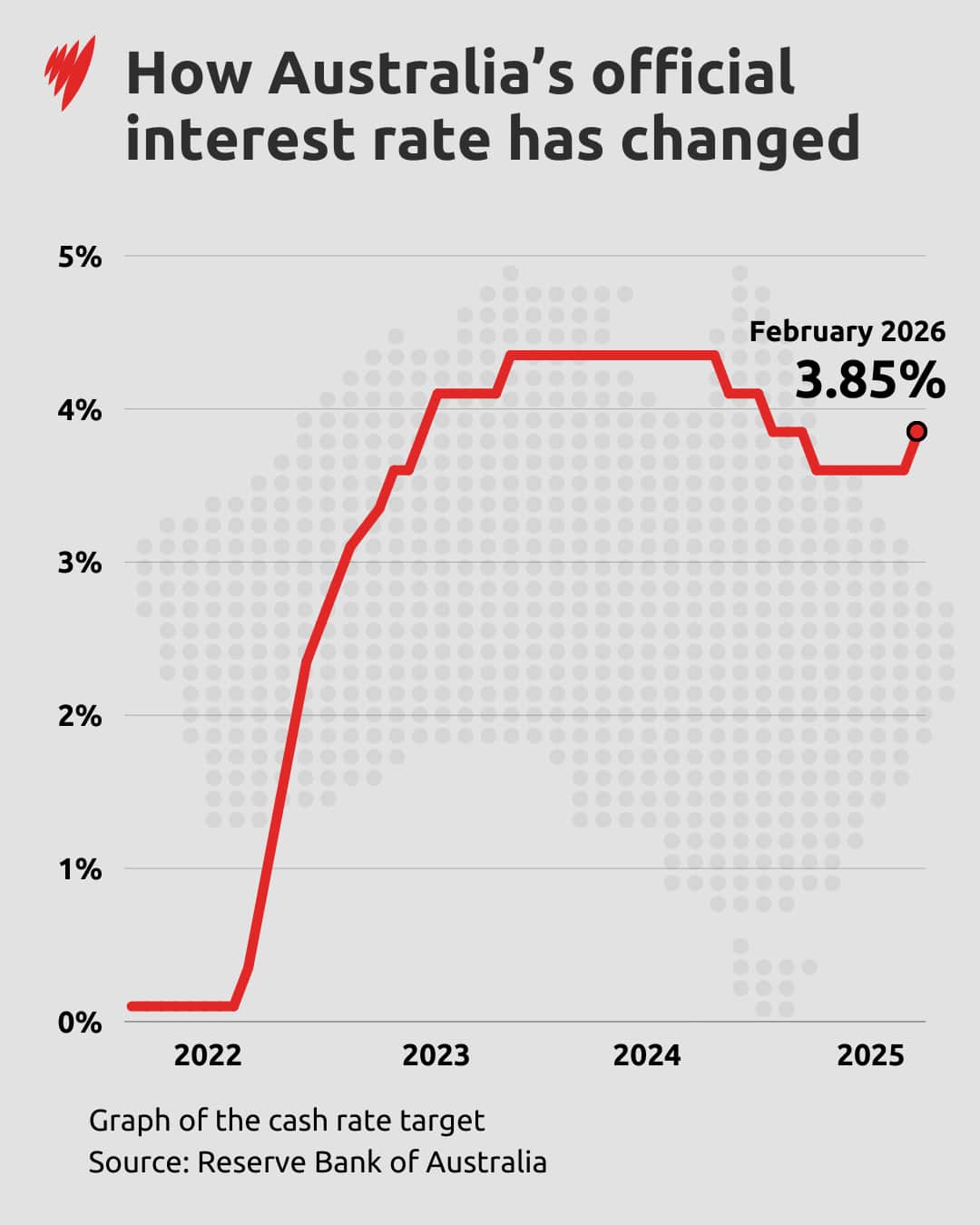
AMP chief economist Shane Oliver said the Reserve Bank should leave the cash rate on hold at 3.85 per cent given the uncertainty.
“However, we now think the RBA will hike on Tuesday,” Oliver said.
The bank appeared concerned the war’s impact on oil prices would add to inflation expectations, making it even harder to bring price growth back down, he said.
The big four banks predict a rate rise and another in May, which would bring the cash rate back to 4.35 per cent — where it was before the Reserve Bank’s first rate cut in February 2025Reserve Bank’s first rate cut in February 2025.
The central bank will release its biannual Financial Stability Review on Thursday while the Australian Bureau of Statistics will release jobs data.
Oliver expects the labour force survey to show a 25,000 rise in employment but a slight rise in unemployment to 4.2 per cent.
Like everyone else, Wall Street investors are mulling the impact of war in Iran on global oil supplies as erratic prices whipsaw equities.
All three major US stock indexes logged declines on Friday and for the week.
The Dow Jones fell 119.38 points, or 0.26 per cent, to 46,558.47, the S&P 500 lost 40.43 points, or 0.61 per cent, to 6,632.19 and the Nasdaq lost 206.62 points, or 0.93 per cent, to 22,105.36.
Australian share futures plunged 61 points, or 0.70 per cent, to 16,387.
The S&P/ASX200 fell 11.9 points on Friday, down 0.14 per cent to 8,617.1, as the broader All Ordinaries lost 12.3 points, or 0.14 per cent, to 8,839.1.
This concluded the local market’s second straight week of losses and its worst fortnight since mid-2022.
— With additional reporting from the Australian Associated Press.
For the latest from SBS News, download our app and subscribe to our newsletter.