Share this @internewscast.com
In Brief
- Balendra Shah trained as a civil engineer but first gained national attention through Nepal’s underground hip-hop scene.
- In a political shock in 2022, he became the first independent candidate elected mayor of Kathmandu.
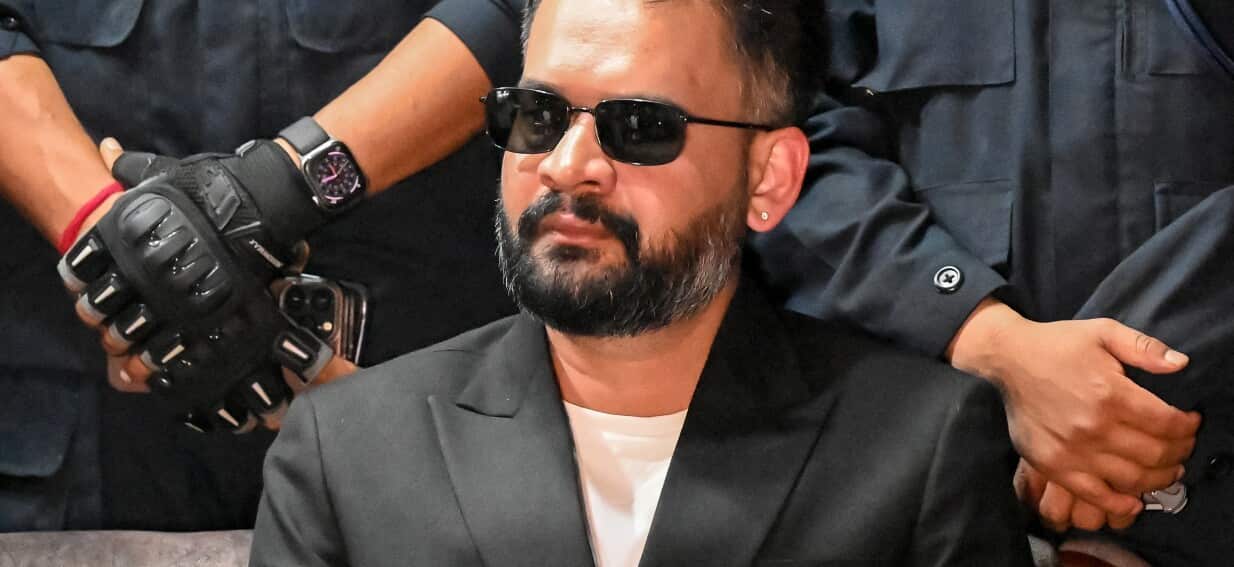
In a surprising turn of events, Balendra Shah, a former rapper who transitioned into politics, has claimed a significant victory in Nepal’s parliamentary elections. Shah defeated the seasoned politician and ex-Prime Minister KP Sharma Oli in Oli’s own constituency, marking a pivotal moment in the country’s political landscape.
This win is particularly symbolic, coming just six months after a wave of anti-corruption protests led to the ousting of Nepal’s previous government. Shah’s triumph over the veteran Marxist leader underscores a shift in the nation’s political dynamics, driven by public demand for reform and transparency.
At 35, Shah took a bold step by resigning from his position as the mayor of Kathmandu to directly challenge the 74-year-old Oli, who has served as prime minister four times. This daring move has now paid off, as Shah has captured a decisive lead, according to the Election Commission.
With these election results, Shah’s Rastriya Swatantra Party (RSP) is on track to secure a majority in parliament, positioning him as a potential candidate for the prime minister’s office.
Known popularly as Balen, Shah has become a prominent figure representing the wave of youth-driven political change in Nepal. His rise to power signals a new era, reflecting the growing influence of younger generations in shaping the country’s future.
Better known as Balen, the sharply dressed 35-year-old has emerged as a symbol of youth-driven political change.
Born in Kathmandu in 1990, he was a schoolboy during Nepal’s 1996-2006 Maoist civil war, which killed thousands and eventually ended the monarchy.
Shah trained as a civil engineer but first gained national attention through Nepal’s underground hip-hop scene, releasing songs that railed against corruption and inequality.
Those themes, he says, still guide his politics.
“If a person involved in politics also engages in literature or music, it becomes emotionally driven,” Shah told Agence France-Presse during his campaign for Thursday’s elections in the Himalayan nation of 30 million people.
“We also need to nurture the emotional aspect of our lives, and a politician should possess that sensitivity.”
His music, which has drawn millions of views online, helped him cultivate a devoted following on social media — a platform he continues to favour over traditional outlets for communicating with supporters.
That popularity translated into a political shock in 2022, when Shah became the first independent candidate elected mayor of Kathmandu, stunning Nepal’s entrenched political establishment.
He built a reputation as a blunt, often confrontational reformer as mayor, launching campaigns against tax evasion, traffic congestion and mismanagement.
However, his tenure also attracted criticism for heavy-handed enforcement and for bypassing journalists in favour of broadcasting directly to millions of followers online.
‘Social justice’
Shah resigned as mayor in January to run in the general elections, the first since mass protests in September overthrew Oli.
Rather than running from his Kathmandu base, Shah chose to challenge Oli directly in Jhapa-5, a largely rural constituency around 300 kilometres southeast of the capital.
He said that “contesting against a major figure” signalled that he was “not taking the easy way out” to win a seat.
“It demonstrates that, despite the problems or betrayals that have affected the country, we are moving towards addressing them,” he said.
Shah joined the centrist RSP, led by television host Rabi Lamichhane, which became parliament’s fourth-largest force in the last elections in 2022 after challenging parties that had dominated Nepal since the end of the civil war.
“We share the same ideology,” Shah said, describing a vision of “a liberal economic system with social justice”, including free education and healthcare for the poor.
Shah emerged as a central figure during the September protests, which were initially sparked by anger over a brief ban on social media platforms under a loose “Gen Z” banner.
They quickly grew into a broader movement against corruption and economic stagnation. At least 77 people were killed during the unrest.
“Gen Z’s number one demand is good governance, because there is a high level of corruption in the country,” Shah said.
He insists music will remain part of his identity, despite his political ambitions.
“Music is a medium to express oneself,” he said. “I will continue it, even if I am elected as prime minister.”
For the latest from SBS News, download our app and subscribe to our newsletter.