

The government is attempting to ease the financial burden of parenthood by offering childcare subsidies and enhanced paid parental leave.
However, for Australians like 24-year-old Alkira Barber, these measures fall short of making a significant impact.

While abortion is legal throughout Australia, obtaining accurate data on abortion rates is challenging, as most states do not consistently report figures, and national statistics are infrequently released.
Even more elusive is the data regarding the motivations behind Australians choosing to have abortions.
Stories akin to Barber’s might be more widespread than we currently understand.
Take, for example, Beatrice* and her partner, who desired a child but recently faced the difficult decision to terminate a pregnancy due to financial constraints.
“Even though we are relatively comfortable with our incomes, we realised that having a baby and subsequently raising a child would have forced us back into poverty on an extreme scale,” Beatrice told nine.com.au.
They had to pay $650 to terminate the pregnancy, but some women can’t even afford that.
Beatrice and her partner still want to be parents, but won’t be able to afford a child unless they both get substantial pay rises.
Even then, there’s no guarantee their wages will keep up with inflation.
Christine*, 32, and her partner say they seem to fall backwards financially every year despite his high income.
They had their first child in 2020 and want a second but already struggle to cover the rent on a three bedroom unit in Sydney.
Buying a home is out of the question with the national median house now sitting at $1.28 million, especially while Christine is at home with their youngest.
And when she returns to work, day care costs will eat up any extra earnings that could have gone towards a house deposit.
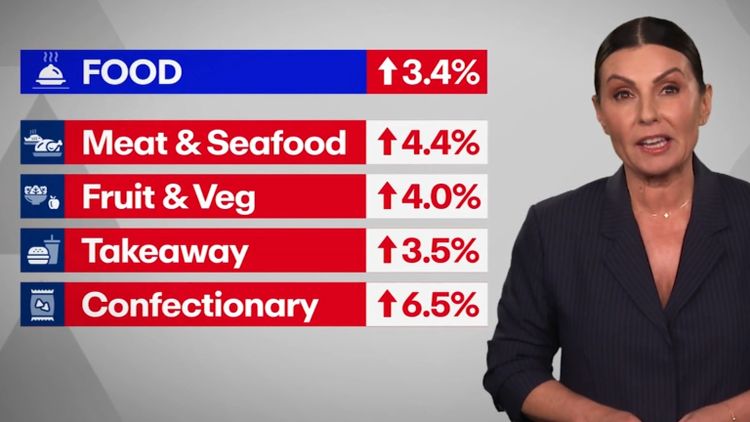
On top of it all, groceries that used to cost the family $250 a week now set them back $600 per week.
“No matter how much we do, how much we sacrifice, the groceries keep getting more expensive,” Christine told nine.com.au.
So when she fell pregnant unexpectedly two years ago, they had to terminate.
Christine was devastated.
She lost 15kg and was bedridden for months but could not afford extra appointments with her regular therapist, who charges $500 a visit.
A mental health plan gave her access to subsidised support but waitlists were up to six months long.
And even now, Christine and her partner are no closer to being able to afford the second child they desperately want.
“We work adults to the bone, tax them at the highest rates, make them pay the most for food, education and electricity, take away their ability to own a home and invest in their own futures, and then wonder why they can’t or won’t have children.”
Australia’s birth rate is plummeting and is unlikely to recover while the cost of living is holding Aussies back from having kids.
Australia’s birth rate has also been below the replacement level (the rate needed to keep the population size stable) of 2.1 children per adult woman for almost 50 years now.
NEVER MISS A STORY: Get your breaking news and exclusive stories first by following us across all platforms.