Share this @internewscast.com
The latest survey from The Australian Institute of Marine Science (AIMS) shows coral cover on parts of the Great Barrier Reef has reduced by as much as a third from record high levels following a global mass bleaching event.
The heat-vulnerable tropical ecosystem off the coast of Queensland has experienced its sharpest decline in hard coral prevalence in four decades, with a 2024 spike in ocean temperatures largely to blame.

The survey does not include the latest bleaching event from early 2025, which impacted the Great Barrier Reef and ecosystems along the Western Australian coast.

The growing prevalence of bleaching events

Report co-author Daniela Ceccarelli was concerned about the growing prevalence of bleaching events.

“These back-to-back events were previously completely unheard of,” Ceccarelli said.
Heat stress events in quick succession were worrying, given the emerging dominance of “fast to grow and first to go” Acropora coral species.
Capable of bouncing back quickly after a destructive event when given more space to expand, the fast-growing varieties were largely responsible for the previous survey’s record-high coral coverage rates.

Ceccarelli likened the fast-growing corals to grasses and bushes that shoot up first after a bushfire.

“And if you were to fly over, you’d go ‘it’s nice and green, it’s great’,” Ceccarelli said.

“But the trees are not there yet.”

Heat stress threatening coral recovery

With heat stress events coming too often for hardier, slow-growing corals to get a foothold, Ceccarelli warned such cycles of crash and rapid recovery were becoming more common.
“The question is, how long can this go on before we reach a low from which recovery is not possible?” she said.

“We don’t know that, but it’s worrying we aren’t getting a lot of time between heatwaves anymore.”
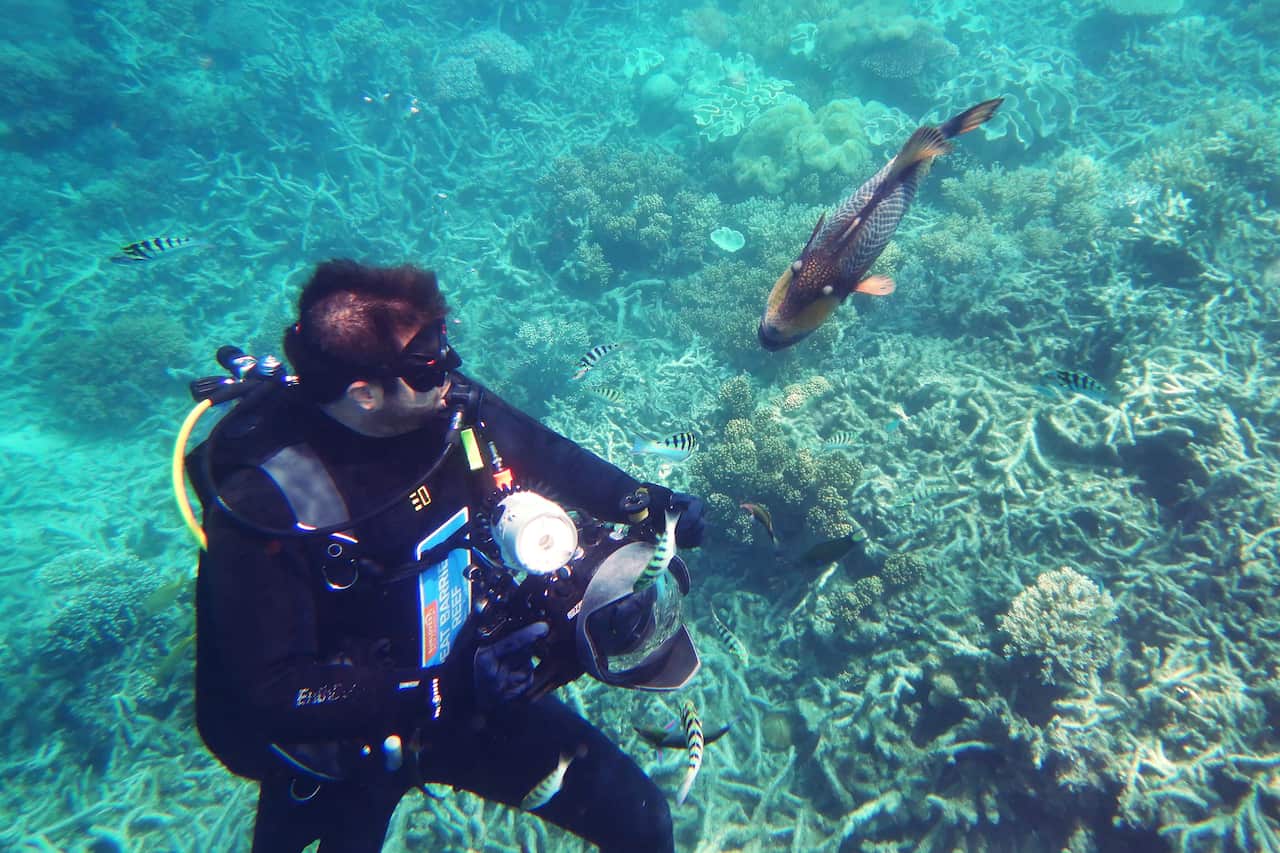
A marine researcher wearing a wetsuit is looking at a fish underwater.

Marine experts fear corals may not adapt to and recover from the impacts of climate change. Credit: AAP

Particularly sensitive to heat stress, corals expel the algae living in their tissues when water is too warm, causing the coral to turn completely white.

Coral can recover from bleaching, but it is a sign of stress and can kill the organisms if severe enough.

While cyclones and outbreaks of crown-of-thorns starfish also harm reefs, AIMS indicated that the primary factor driving the 2024 decline in coral coverage was ocean warming due to climate change.
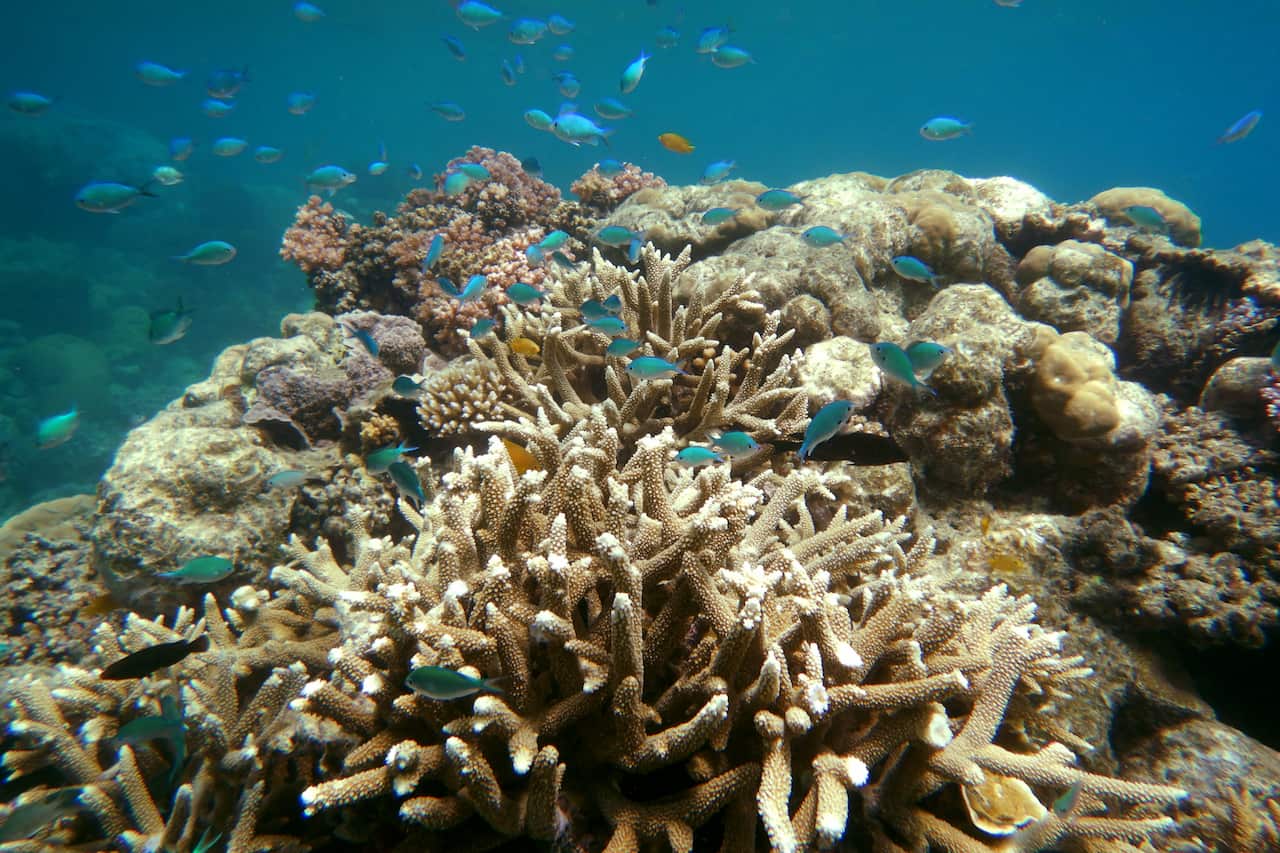
Coral underwater.

Marine experts say coral can recover from bleaching but it can be fatal if severe enough Credit: AAP

Fears over further decline in reef health

The entire tropical ecosystem recorded falls in coral coverage — an internationally recognised indicator of reef health — but declines were sharpest in the south.
Coverage fell by nearly a third in the southern region, from 38.9 per cent to 26.9 per cent.
North of Cooktown, coverage fell by roughly a quarter.

In the central region, hard corals shrunk nearly 14 per cent.

Even with those sharp declines, when coming from such a high base, overall coverage is now hovering around long-run averages.
AIMS chief executive officer Selina Stead said ocean warming caused by climate change was clearly impacting coral reefs.
“The future of the world’s coral reefs relies on strong greenhouse gas emissions reduction, management of local and regional pressures, and development of approaches to help reefs adapt to and recover from the impacts of climate.”

Share this @internewscast.com
You May Also Like
Festival visitors enter one of the main entrances during day one of the Byron Bay Bluesfest on April 14, 2022 in Byron Bay, Australia. The music festival returns after a two-year break due to the coronavirus pandemic.

Cancellation of Recent Music Festival Reflects Emerging Trend in Australia

Just a week shy of its scheduled dates, the Rolling Loud music…
Warnings as heavy rain heads for South Australia

Prepare for Downpour: Heavy Rain Expected to Hit South Australia

Significant rainfall is anticipated for regions of South Australia, including Adelaide, as…
A cargo plane carrying money crashed near Bolivia's capital leaving at least 15 people dead.

Tragic Bolivian Cargo Plane Crash Claims 15 Lives, Devastating Loss of Money on Board

A cargo plane carrying money crashed near Bolivia’s capital killing at least…
Will Jacks starred with both bat and ball as England beat New Zealand at the T20 World Cup

England’s T20 World Cup Triumph: Navigating Imperfections and Testing Fate with New Zealand Victory

Throughout the Twenty20 World Cup, England has persistently pursued the elusive “perfect…

Australia’s Financial Crisis: Breaking Records and Impacting Lives in 2023

Key Points Investment firm collapses, superannuation issues and misleading advice were major…
Smoke rises on the skyline after an explosion in Tehran, Iran, Saturday, Feb. 28, 2026.(AP Photo)

Israel Conducts Strikes on Iran’s Capital with U.S. Support

Israel launched a daylight attack Saturday on Iran‘s capital, with a cloud…

Sussan Ley Announces Departure from Parliament, Celebrates Leadership Achievements

After representing her New South Wales electorate for a quarter of a…
Bill Clinton

Bill Clinton Denies Wrongdoing in Intense Epstein Questioning

Former US President Bill Clinton told members of Congress on Friday that…
International Atomic Energy Agency flag

UN Nuclear Agency Faces Challenges in Confirming Iran’s Uranium Enrichment Status

Iran has not allowed the United Nations nuclear agency access to its…
Jacqueline Schmidt Aravena, pictured with her sister at their Melbourne home.

Melbourne Woman Fights to Stop Disabled Sister’s Imminent Deportation

The sister of a woman with cerebral palsy, who is on the…

Hillary Clinton Denies Any Memory of Meeting Jeffrey Epstein

In Brief Former US secretary of state Hillary Clinton has spoken at…

Veteran Navy Officer Mona Shindy Dismissed from Multicultural Board Following Israel-Related Social Media Posts

Former Australian Navy officer Mona Shindy is contemplating legal action against Multicultural…