
Share this @internewscast.com
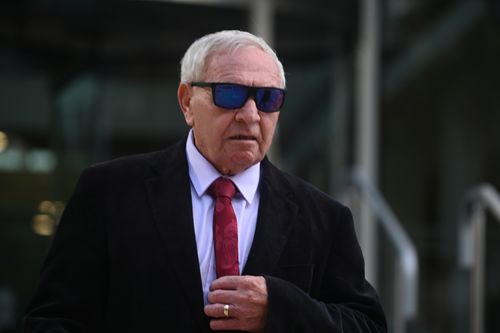
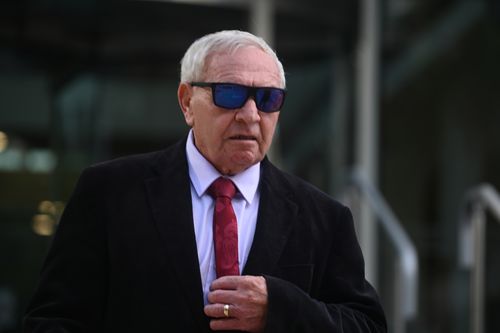
Barry Cable, the once-revered football icon now facing serious allegations, could be spared incarceration thanks to testimony from his wife, according to his defense attorney.
During Cable’s trial concerning charges of child sexual abuse, his wife’s testimony was portrayed as significantly undermining the prosecution’s argument.
The 82-year-old former Australian rules football star is contending with multiple historical allegations of child sexual abuse involving a girl who was around eight or nine years old at the time. The trial is currently being held in Perth.
The accusations claim that Cable abused the child in the late 1960s at his family residence while she stayed with Cable and his wife, Helen, for approximately a month.
Cable’s attorney, Tom Percy, argued that the prosecution’s case is fundamentally flawed due to a lack of witnesses and forensic evidence to support the allegations made by the complainant.
During his closing arguments on Friday in the WA District Court, Percy pointed out inconsistencies in the woman’s account of where the alleged abuse took place, suggesting that these discrepancies cast significant doubt on the occurrence of the events in question.
“Our case is the allegations are simply false.”
Percy said a series of official documents from the early 1970s the prosecution said showed the girl stayed with the Cables were misinterpreted and show the former North Melbourne player had no opportunity to abuse her because the dates didn’t line up.
“The only reasonable inference is she never went (to the Cables),” Percy said.
Prosecution evidence from three other women who claim Cable sexually abused them was of limited value and couldn’t salvage the case against his client because the alleged offending was different and the child victims were older, he told the court.
“You can’t fill the unfillable void of the prosecution’s case,” Percy said.
“The height of it is, he may have had an interest in little girls.”
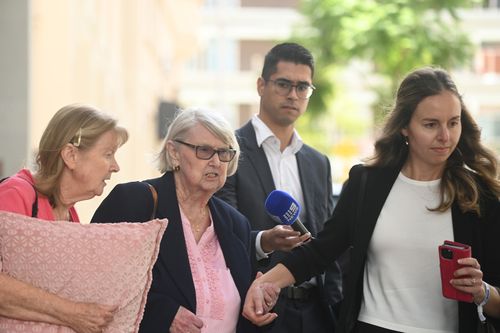
Mrs Cable was a credible, reliable and remarkable witness, who had provided clarity about the events of the past, he said.
“The telling blow in this case was Helen Cable’s evidence,” Percy said.
“The prosecution case simply can’t survive.”
Prosecutor Kim Jennings said Cable’s alleged offending was brazen.
She asked Judge Michael Bowden for latitude over the woman’s inability to accurately identify the location where Cable allegedly abused her.
“She’s remembering back 60 years and remembering as a small child,” she said.
“This is a child who had a pretty traumatic start to life.
“What stands out is the sexual abuse, not the details of where it happened.”
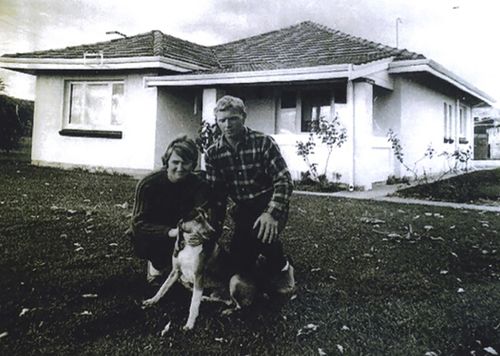
Mrs Cable had not been truthful while giving evidence and had tried to minimise Cable and her family’s links to the child in a bid to protect her husband, Jennings said.
The complainant had recalled intimate details about the abuse she had endured and should be believed, she said.
She didn’t complain at the time because Cable told her she wouldn’t be believed because he was Barry Cable, Jennings said.
“Barry Cable thought he was invincible,” she said.
“He had a very successful football career, and he was quite famous in the community.”
Cable has denied five counts of indecent dealing with a girl aged under 13 and two counts of unlawful carnal knowledge of a girl under 13 between December 31, 1966 and December 31, 1969.
A civil trial previously found Cable abused a different girl over five years from 1968 when she was aged 12.
The civil trial judge said there was compelling evidence the former footballer had violated other children.
He was later stripped of his Australian Football Hall of Fame honours following an illustrious playing career in the 1960s and ’70s for Perth and East Perth in the WAFL and North Melbourne in the VFL, going on to coach in both leagues.
Judge Bowden reserved his verdict until a date no later than April 17.