Share this @internewscast.com


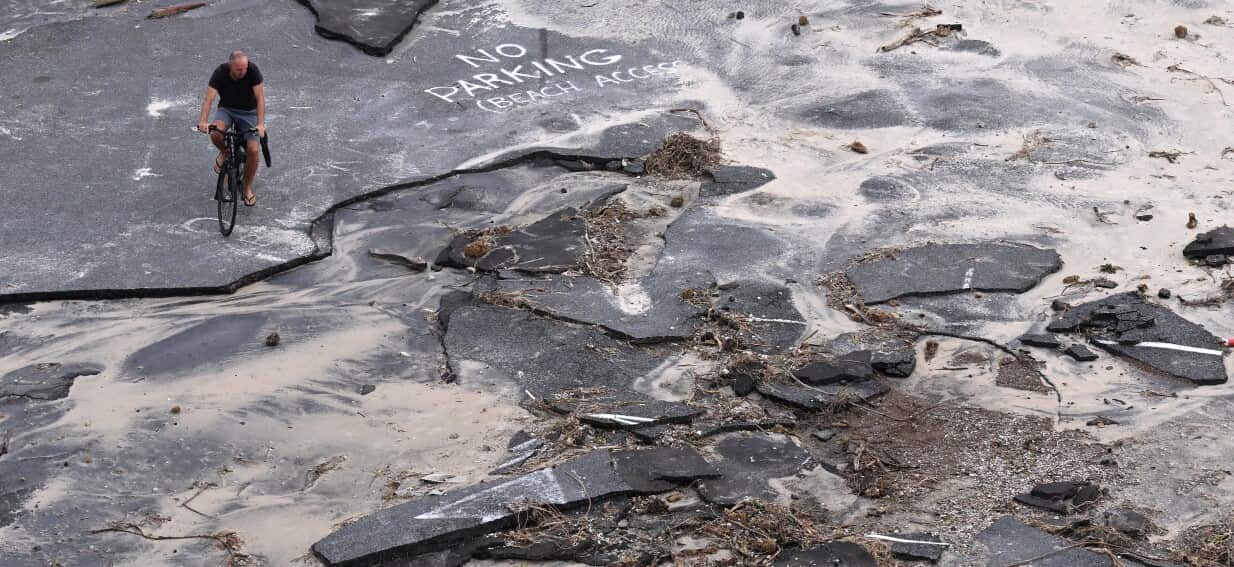
Australia’s destructive ex-tropical cyclone Alfred has been ranked among the world’s most costly disasters fuelled by climate change in 2025.
Economic losses caused by the fierce storm that ravaged southeast Queensland and northern NSW clocked in at roughly $1.8 billion.
The 10 most economically catastrophic events listed by UK-based humanitarian relief charity Christian Aid totalled more than $180 billion in losses, with each costing more than $1.5 billion.

The devastating inferno resulted in economic losses exceeding a staggering $89 billion, a testament to the immense destruction of properties and other damages. This figure highlights the financial toll such disasters can impose, particularly in wealthier regions where property values are typically higher and insurance coverage is more prevalent.

The tropical storms and extreme monsoon system was thought to cost around $37.2 billion, making it the second most expensive event of 2025.
The flooding disaster also claimed more than 1,750 lives, making it among the year’s deadliest climate events.
Extreme rainfall and flooding in China in June and August was the third most costly event.
Cataloguing extreme weather events is an annual undertaking for the charity seeking to underline the economic and human toll of a changing climate.
It draws on economic loss calculations made by insurance giant Aon, with most estimates based on insured losses and missing the full costs of lost income, environmental degradation and human displacement.

Adding to the growing concern, recent research has increasingly linked the rise in greenhouse gas emissions to specific extreme weather events. This connection underscores the need for urgent action in addressing climate change to mitigate such catastrophic occurrences.

Following ex-tropical cyclone Alfred, which was the eighth most costly disaster listed, ClimaMeter’s Rapid Attribution Study found the storm dumped more rain than it would have without human-driven climate change.
The storm, which threatened to barrel through densely-populated urban centres as a category four tropical cyclone before it was downgraded ahead of landfall, owed much of its intensity and rainfall extremes to above-average ocean temperatures.

In an unsettling development, researchers observed that the storm, named Alfred, took an unusual path further south than typically expected. This deviation has raised alarms about the potential for warmer ocean temperatures to allow windstorms to navigate into areas historically unprepared for such phenomena, posing new challenges for those communities.

Scientists broadly expect fewer cyclones under a warming climate but the ones that do form are more likely to be more intense.
Davide Faranda, research director at the Laboratoire de Science du Climat et de l’Environnement, said the documented events were not isolated disasters or natural.
“They are the predictable outcome of a warmer atmosphere and hotter oceans, driven by decades of fossil fuel emissions,” he said.

The economic impact of these disasters tends to be more pronounced in affluent countries. This is largely because these nations often have higher property values and residents with greater access to insurance, thus amplifying the financial repercussions when disaster strikes.

Yet the economies of poorer nations are usually hit harder by climate change extremes as these countries have fewer resources to respond.
Christian Aid chief executive officer Patrick Watt said the findings underlined the urgent need for adaptation, particularly in the Global South where resources are stretched.
“The poorest communities are first and worst affected,” he said.

Share this @internewscast.com
You May Also Like

Prime Minister Announces Fuel Excise Cuts in New National Energy Strategy

In Brief The fuel excise will be halved for three months. The…

Unveiling Iran’s Power Shift: Meet the New Leaders Steering the Nation

The recent US-Israeli strikes have significantly impacted Iran, claiming the lives of…

Nationwide ‘No Kings’ Rallies: Thousands Unite Against Trump in Powerful Protest Movement

In Brief The protesters called for action against the bombardment of Iran…

Tragic Porepunkah Shooting: Unraveling the Events Leading to Cop-Killer’s Demise

The elusive manhunt for a fugitive, believed to be Freeman, has concluded…

Netanyahu Directs Israeli Forces to Intensify Operations in Southern Lebanon

IN BRIEF Last week, Israel said it would seize southern Lebanon as…
Millions of Aussies to suffer further after major bank's fresh rates warning

Major Bank’s New Rate Warning Signals Potential Challenges for Millions of Australians

Interest rates could peak at an 18-year high in a matter of…
The government's plan to underwrite fuel costs is aimed to shore up supply and bring down costs.

Government Allocates Taxpayer Money to Offset Rising Petrol Prices

The Albanese government will use public funds to bring down the cost…

Albanese Unveils Strategic Fuel Powers: Key Changes and Their Impact on Australia’s Energy Future

IN BRIEF The Australian government will underwrite private fuel cargo purchases. This…
Apple almost went broke – now it's celebrating 50 years

Apple Overcomes Financial Struggles to Celebrate 50 Years of Innovation

Apple’s journey from the brink of collapse to becoming one of the…

Victoria and Tasmania Launch Free Public Transport Initiatives, While Other States Lag Behind

In Brief Victoria’s public transport users will get free travel for a…
Finder has revealed 12 per cent of Australians felt the regret when faced with a minor health matter such as a dental visit.

One-in-Five Australians Regret This Common Financial Blunder: Survey Insights

One-in-five Australians regret not taking out private health insurance after being stung…
FILE - A KitKat chocolate bar in Rugby, England, on July 25, 2018. (AP Photo/Martin Cleaver, File)

Twelve Tonnes of KitKat Bars Stolen in Major Chocolate Heist

Swiss food giant Nestlé says about 12 tonnes, or 413,793 candy bars,…