

The prospect of ignoring the older demographic is a risk that even the boldest government might shy away from.
So, what exactly does this year’s budget have in store for the various age groups?
If you’re a typical working family residing in the suburbs, juggling a mortgage and raising school-aged children, there are some reasons to be optimistic.
Families with existing mortgages won’t be impacted by the modifications to negative gearing.
Australian workers are set to benefit from several tax cuts, including a newly announced $250 instant offset available at tax time next year, along with a $1,000 immediate deduction.
For small business operators, the broadening of the $20,000 asset write-off is promising, and the permanent reinstatement of loss carryback could offer some welcome tax relief.
Small business owners have seen the expansion of the $20,000 asset write-off, while the permanent return of loss carry back could bring some tax relief.
The government’s efforts to improve fuel security and resilience aren’t likely to have an immediate effect on prices at the bowser, so taking the kids to school could continue to strain family budgets.
What’s in it for their kids?
As for schools, the government did not make education a central feature of its budget, but $26.1 million has been allocated over four years to improve classroom outcomes.
The government also confirmed it was working with states and territories to deliver a $4 billion Thriving Kids program, which will provide parents with advice and support around child development, including for kids with autism.
Families will also be able to access a Medicare-subsidised GP check-up for children aged three, to assess their health and development.
This comes as the government works to prune the NDIS, potentially leaving many families, particularly those seeking support for a child with autism, looking for alternative support.
The government also pledged $1.8 billion over the next four years for Medicare Urgent Care clinics, offering expanded bulk-billing services.
Chalmers said that by July, four in five Australians would live within a 20 minute drive of one of these clinics.
For younger adults than our working family, the changes to negative gearing could leave them feeling a little miffed that those who benefited from Australia’s investor-friendly housing market will continue to do so.
However, young innovators looking to launch their own start-up or take advantage of the AI boom will find support.
Start-ups will be offered loss refundability from 2028-29.
And the government has declared it’s investing heavily in AI, including data centres, and using the tech to streamline its own processes.
And while this generation is likely to continue to struggle under a housing crisis, the government has announced major initiatives to streamline and speed up housing approvals, hopefully building more of a buyer’s market for when the kids of today are looking to buy a home.
What’s in it for their parents?
Older Australians, meanwhile, have been offered a $3.7 billion expansion of aged care services.
The government has committed to an extra 5000 aged care beds each year, to help support elderly people with constrained finances.
It’s also pledged to deliver faster access to Support at Home places, bringing down waiting times. And personal care services, such as showering, dressing, and continence support, will be free alongside clinical care.
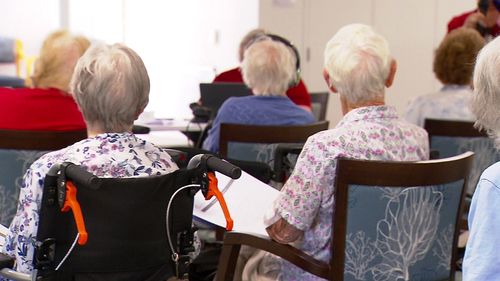
More care for palliative patients and dementia sufferers will also be extended.
And while the benefits of the PBS aren’t limited to the elderly, they are more likely to develop serious illness.
The government has also pledged $5.9 billion to list more medications on the support scheme.
NEVER MISS A STORY: Get your breaking news and exclusive stories first by following us across all platforms.