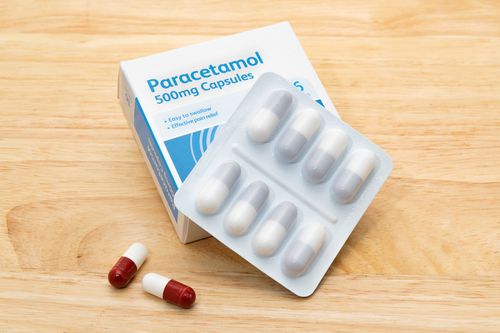

In a recent development, researchers have refuted US President Donald Trump’s assertion that a widely used painkiller is linked to autism. The medication in question, acetaminophen, is known as Tylenol in the United States and paracetamol in Australia.
President Trump had advised against the use of acetaminophen throughout pregnancy, claiming it could lead to neurodevelopmental disorders such as autism. However, a team of scientists from Monash University in Australia has found no concrete evidence to support this claim. Their review, published in the BMJ, indicates that there is no clear association between the use of paracetamol during pregnancy and the occurrence of autism or ADHD in children.
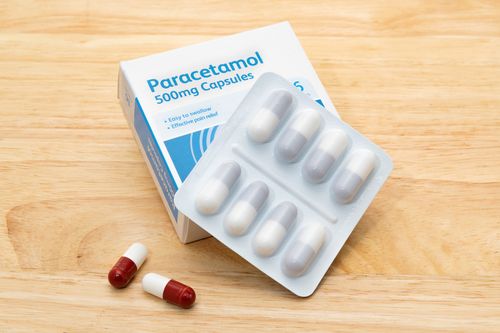
The researchers strongly advise that women should continue to use the medication if necessary, emphasizing that the current body of evidence does not substantiate the alleged risks. They also highlight that confidence in the findings from existing studies and reviews on this subject is rated as “low to critically low.”
Furthermore, the study authors suggest that any perceived effects observed in earlier research might be influenced by shared genetic and environmental factors within families, rather than the use of acetaminophen itself.
The researchers say confidence in the findings of existing evidence reviews and studies on the topic is “low to critically low”.
They suggest any apparent effect seen in previous studies “may be driven by shared genetic and environmental factors within families”.
It calls other reviews on the topic “poor quality”.
“Science and vaccines have transformed public health and human survival, and whilst they have limited recognised side effects, collectively the benefits clearly outweigh the risks of the diseases they prevent,” study co-author and Monash University Professor Helena Teede said.
“It is important to rely on the best collective evidence to understand the benefits and risks of vaccines.”
Only one review included two studies that appropriately adjusted for possible effects of genetic and environmental factors shared by siblings, and accounted for other important factors such as parents’ mental health, background and lifestyle, the university said.
In both these studies, the observed association between exposure to paracetamol and risk of autism and ADHD in childhood disappeared or reduced after adjustment, suggesting that these factors explain much of the observed risk, say the researchers.
“The current evidence base is insufficient to definitively link in utero exposure to paracetamol with autism and ADHD in childhood,” they concluded.