Share this @internewscast.com
Australia’s climate is changing rapidly due to rising global greenhouse gas emissions.
These can overwhelm emergency and medical services, damage infrastructure, and lead to deaths and morbidities.

While only certain extreme weather events are assigned names, many others go without this distinction.

Would there be advantages to naming every significant weather occurrence?

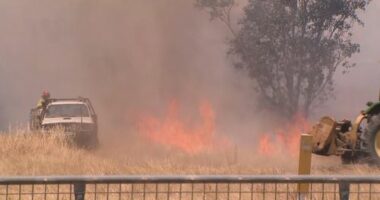
For example, bushfires are often named informally, drawing from dates or locations like Black Saturday or the Black Summer fires. In contrast, smaller bushfires tend to remain nameless.

In Australia, the only severe weather events that receive formal names are tropical cyclones.
Tropical cyclones are named alphabetically, with names occasionally skipped under specific protocols (such as for high-profile political figures). In March 2025, for example, ‘Anthony’ was replaced with Cyclone Alfred.

Other severe weather phenomena, such as east coast lows, significant floods, and heatwaves, typically go unnamed, even though they can inflict similar levels of damage.

Internationally, formal naming of tropical weather systems expanded after 1950. In 1979, the World Meteorological Organization (WMO) assumed responsibility for coordinating tropical cyclone names globally.
Australia follows this framework. The Bureau of Meteorology names cyclones in Australian waters using regional lists coordinated through the WMO, retiring names linked to particularly destructive events such as Cyclone Tracy, Yasi and Debbie.

The rationale for naming cyclones is straightforward: using short and unique names minimizes confusion when multiple storms happen simultaneously, facilitating clearer communication among agencies, the media, and the public.

Research has demonstrated, though only about a third of participants remembered the name, that naming heatwaves could enhance public awareness and encourage protective actions.

Names can make hazards more memorable. Research shows naming weather events helps people recall warnings, share information and prepare more effectively.
The United Kingdom’s Met Office found named storms generated higher media engagement and public awareness. People were quicker to secure property, cancel travel and heed official advice.
In contrast, events described only by technical labels, such as an ‘intense low-pressure system’ or a ‘prolonged heat event’, may not capture public attention as well.

The same logic underpins naming cyclones: short, distinctive names reduce confusion when multiple storms occur at once and improve communication across agencies, media and the public.

Yet despite their impact, many of Australia’s deadliest weather events — especially heatwaves — still arrive nameless. East coast lows too, although potentially highly destructive, aren’t named.
A 2024 study evaluated Seville’s first named heatwave, Zoe, and found people who remembered its name were more likely to take safety precautions — such as staying indoors or checking on others — and expressed greater trust in their local government’s response.

Although only about a third of participants recalled the name, the research provided the first real-world evidence that naming heatwaves can improve public awareness and protective behaviour.

Not all research supports naming heatwaves. A 2025 study by UK researchers found no clear evidence naming heatwaves increased public concern or protective behaviour.
In controlled experiments with participants in England and Italy, naming a heatwave — even with emotive labels like Lucifer — had little impact on how people perceived risk or planned to respond.
The WMO has also expressed caution about naming heatwaves, arguing that it may misdirect attention.

While acknowledging heat poses a major and growing public health threat, the organisation concluded naming individual heatwaves could shift focus away from critical messaging — namely, who is at risk and what actions to take.

Should Australia follow?

Australia faces a unique communication challenge due to the wide range of weather events we experience. Some extreme weather events — such as east coast lows and major flood systems — are discrete, trackable phenomena more comparable to tropical cyclones than to diffuse hazards like heatwaves.
Past east coast lows have caused major disruption and loss of life, including the 1974 storm that drove the MV Sygna ashore near Newcastle and the storm that ran the Pasha Bulker aground in 2007.

For these, naming could meaningfully improve communication, recognition, and preparedness without the same drawbacks the WMO highlights for heatwaves.

That does not mean naming should be adopted indiscriminately. Names carry social and cultural meaning, and poorly designed systems risk confusion or unintended stigma.
Any expansion of naming practices would need to be carefully designed, evidence-based and clearly linked to public safety outcomes.
Rather than adopting naming wholesale, Australia could benefit from a multidisciplinary review led by the Bureau of Meteorology, involving emergency services, public-health experts, social scientists and communications specialists.
Such a review could assess whether naming additional extreme weather events would improve warning effectiveness as climate change continues to increase the frequency and intensity of dangerous weather.
Samuel Cornell is a PhD candidate in public health and community medicine at the School of Population Health, UNSW Sydney

Steve Turton is an adjunct professor of environmental geography at CQUniversity Australia

The Conversation


Share this @internewscast.com
You May Also Like
A family is grateful to be alive after they were forced to huddle together inside a shipping container as flames tore through their home.Isabel Bafunno, 81, said they tried to put out the fire when it reached their remote Caveat property in Victoria, but "it was hopeless".

From Devastation to Innovation: Family Transforms Shipping Container into New Home After Fire

A family narrowly escaped disaster as they huddled inside a shipping container…

Iranian Authorities Attribute Unrest to ‘Terrorists,’ Indicate Escalated Response to Protests

Iranian authorities have indicated they could intensify their crackdown on the biggest…

Unprecedented Wildlife Takeover: Australian Marsupial Thrives on Remote British Island

Simon Archer says the Isle of Man is steeped in stories. The…
An out-of-control blaze in Longwood has burnt through more than 48,000 hectares.

Tragic Discovery: Body Uncovered in Fire-Ravaged Region of Victoria

In a tragic development amidst the relentless Longwood bushfire, authorities have discovered…
Sendle shuts down

Parcel Delivery Company Sendle Abruptly Ceases Operations

Australian parcel and courier service Sendle has suddenly ceased operations, leaving small…

Shocking Road Rage Incident: Prominent Muslim Leader and Wife Victims of Alleged Assault in Melbourne

In a disturbing incident near Melbourne, an imam and his wife were…

The Rising Popularity of This Hobby Among Young Australians

Meeting a three-time premiership-winning rugby league player to look at birds on…
With Cuban ally Maduro ousted, Trump warns Havana to make a 'deal' before it's too late

Trump Urges Cuba to Negotiate Following Maduro’s Ouster: A Geopolitical Shift in Latin America

President Donald Trump fired off another warning to the government of Cuba…
Childcare centre shut down in Sydney for failing to meet standards

Sydney Childcare Centre Closed Due to Non-Compliance with Standards

A Sydney childcare centre is the first to be shut down amid…
Stefan Di Benedetto started an alcohol start-up and hasn't looked back

Entrepreneur Overcomes Financial Challenges and Setbacks in Launching Start-up in Competitive Market, Maintains Optimism

When Stefan Di Benedetto decided to take a bold leap into entrepreneurship,…
Bondi hero Ahmed al-Ahmed has met with former Prime Minister and current Australian ambassador Kevin Rudd in the latest engagement on his trip to the US.

Bondi Hero Ahmed al-Ahmed Connects with Former Prime Minister Kevin Rudd During U.S. Visit

Bondi hero Ahmed al-Ahmed has met with former Prime Minister and current…
Hundreds dead in mass Iran protests, activists say

Activists Report Hundreds Killed Amid Ongoing Protests in Iran

A crackdown on nationwide protests in Iran has killed at least 538…