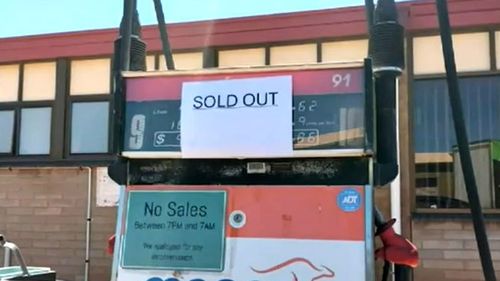

The latest dire prediction, primarily fueled by a sudden jolt in diesel supply and prices impacting food trucks, hinges on the duration of the ongoing conflict.
As the blockade of the Strait of Hormuz escalates, scholars warn that the ripple effect of climbing diesel prices is evolving from a mere inconvenience at the fuel stations to a genuine threat to national food security.

Experts like Fahimnia are urging the public to refrain from “panic buying,” as such actions could exacerbate the crisis.
Dr. Scott French, an economist at UNSW, labeled panic buying as a “self-fulfilling prophecy.”
Though it might appear wise for individuals to stock up on fuel now, this collective behavior “overwhelms the system and manifests the very shortage they fear.”
Australia’s fuel stability is under scrutiny, with current reserves lasting only 29 to 36 days, significantly short of the International Energy Agency’s 90-day requirement.
Professor Kannan noted that if the Hormuz blockade exceeds 30 days, the Liquid Fuel Emergency Act 1984 could be triggered, ushering in formal transaction limits and fuel rationing. Already, nearly 20 percent of reserves have been released to support independent retailers in regional areas.
However, Dr Lurion De Mello of Macquarie Business School says the immediate focus should be on diesel, rather than petrol.
“Our diesel supply depends heavily on refineries in South Korea, Japan, and Singapore,” De Mello said. “In the short term, limiting the filling of jerry cans at petrol stations could help stabilise demand.”
If there is a silver lining, experts suggest this crisis may be the final push Australia needs to break its oil dependence.
“Every major geopolitical shock in an oil-producing region quickly becomes an energy and transport crisis,” Professor Hussein Dia of Swinburne University said.
“Moving away from oil is as much about stability and security as it is about climate action.”
NEVER MISS A STORY: Get your breaking news and exclusive stories first by following us across all platforms.