
Share this @internewscast.com
Recent findings indicate that Australia could face a severe economic downturn if tensions in Iran lead to an extended conflict.
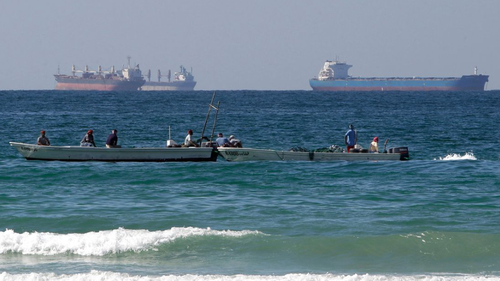
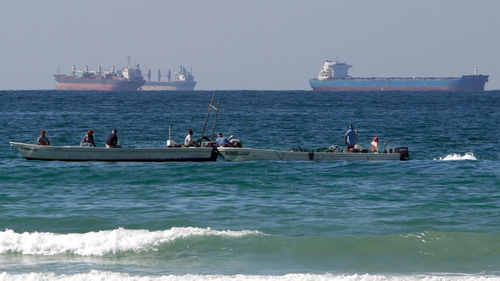
According to projections by Oxford Economics Australia, the hostilities may persist for approximately two months, resulting in the closure of the Strait of Hormuz until late April, based on their present evaluations.
The advisory group foresees that maritime traffic through this critical passage will recover to about half its usual volume by May and June, with a full restoration anticipated over the following half-year.
Nonetheless, economist Harry McAuley cautions that the window for diplomatic resolution is shrinking, heightening the possibility of a prolonged confrontation.
“In our scenario of an extended conflict, global GDP growth could decline to 1.4 percent by 2026, which is 1.2 percentage points below our current forecast, before rising to just 2.1 percent in 2027,” he explained.
“Oil prices are expected to remain above $150 per barrel for four months, coupled with a scarcity of refined energy products. This situation could drive global inflation to 7.7 percent, nearing the peak observed in 2022,” McAuley added.
“In this scenario, the Australian economy would suffer a sharp recession.
“Using our global economic model, which now includes Australian states and territories, we estimate GDP would contract 0.3 per cent q/q in Q2 as inflation soars and fall a further 0.8 per cent q/q in Q3 as fuel rationing begins.
“Excluding the pandemic, this would be the sharpest quarterly fall since the early 1990s.”