
Share this @internewscast.com
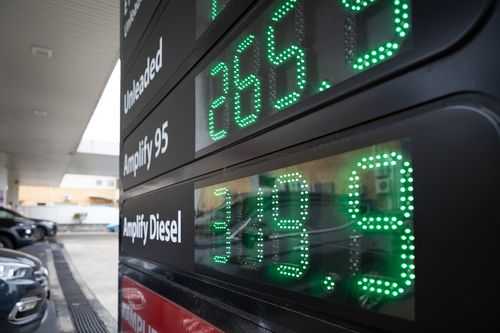
The looming “diesel squeeze” is poised to disrupt essential services that have long been considered reliable.
Here are five significant ways this crisis could soon impact our daily lives.
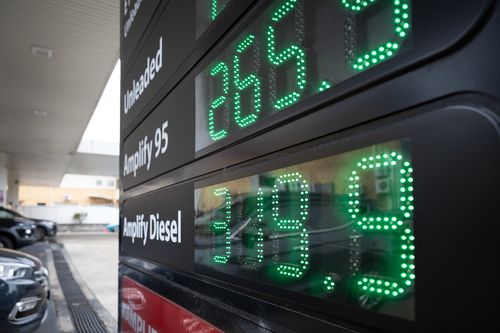
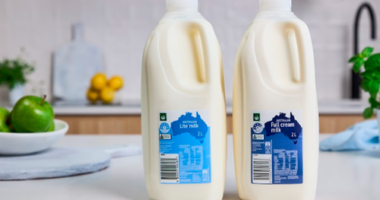
With diesel surcharges soaring to 10 percent, the simple act of purchasing a head of lettuce or a carton of milk now reflects the burden of the escalating fuel crisis.
Farmers are feeling the pinch too; without sufficient diesel to power their harvesters, crops risk being left to spoil in the fields, potentially leading to shortages and further price hikes.
“Elevated fuel costs could jeopardize both food security and the robustness of our local logistics systems,” she remarked.
This perspective is shared by Associate Professor David Ubilava from the University of Sydney, who pointed out that energy expenses are intricately linked to every phase of the food supply chain.
In a bid to blunt the impact on families, Prime Minister Anthony Albanese announced a “triple-intervention” strategy on Monday, and reiterated the measures taken in a rare national address on Wednesday evening.
The emergency package includes halving the fuel excise for the next three months and axing the heavy vehicle road user charge for the same period.
The government has also temporarily lowered diesel standards to allow more fuel to flow into the market.
While these measures provide a temporary “circuit breaker” for transport companies, the volatility of the global oil market means it remains uncertain whether these savings will be enough to subdue price rises at the checkout.
Will my mortgage rates go up again?
The “diesel squeeze” is a primary driver of cost-push inflation. As transport and production costs rise, the Consumer Price Index (CPI) follows.
This puts the Reserve Bank of Australia in a corner; to prevent inflation from spiraling out of control, the RBA may be forced to raise interest rates again, meaning the fuel crisis at the pump could directly lead to higher monthly mortgage repayments.
“This shift reflects the longer disruption to and slower recovery in fuel supply assumed… with the Strait of Hormuz essentially closed for eight weeks and traffic recovering only slowly after that,” she said.
Is my renovation or new build about to stall?
The construction industry is one of the largest consumers of diesel in the country. From the excavators digging foundations to the semi-trailers delivering timber and steel, the entire sector is fueled by the very resource that is now in short supply.
Builders say rising diesel prices are blowing out almost all of their costs.
“We are seeing price increases across multiple materials and suppliers, PVC pipe around 50 percent, plant hire 15 percent, civil earth works about 25 percent, asphalt 15 percent and concreting around eight to 12 percent,” Matt Moran, CEO of the Master Builders Association of WA told ABC radio.
“We’re getting messages and comments from our members daily,” he said.
While fixed price contracts often meant these increases could not be passed on to customers, it increased the risk of builders going insolvent, he said.
Is this the end of the great Aussie road trip?
Beyond essential services, the crisis is hitting our way of life. High fuel costs and limited supply are already forcing schools to cancel excursions and families to scrap Easter holiday plans.
Westpac data revealed on Thursday that just over half, 52 percent, of Australians are cancelling or changing their Easter long weekend plans due to cost and fuel shortage concerns.
For many regional communities that rely on “drive-in” tourism, the absence of families taking road trips these holidays could prove to be an economic disaster, effectively cutting off these towns from their primary source of income.
Operators at the Ocean View Holiday Park’s told nine.com.au bookings are now quieter than usual.
“Yeah, light on, not got a few bookings but nowhere near like what we usually have,” Jenny Smart said.
NEVER MISS A STORY: Get your breaking news and exclusive stories first by following us across all platforms.