Share this @internewscast.com
Health Minister Mark Butler has stated that the federal government will endeavor to support companies impacted by an “unfair, unjustified” increase in pharmaceutical tariffs introduced by United States President Donald Trump.
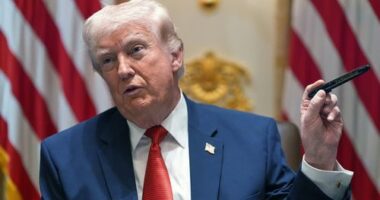
In a social media update, Trump announced that a 100 percent tariff would be applied to “any branded or patented Pharmaceutical Product, unless a Company IS BUILDING their Pharmaceutical Manufacturing Plant in America”.
He specified that these tariffs would take effect on 1 October, with “‘is building’ defined as ‘breaking ground’ and/or ‘under construction'”.
“Therefore, no tariff will be imposed on these pharmaceutical products if construction has commenced,” he stated.
During a press conference, Butler mentioned that the Australian government is “still working to comprehend the implications of this announcement, which is merely a few hours old”.
“We have been making the case since it first became clear that the US was going to take some action in this area about the benefits of continued free trade in pharmaceuticals between our countries,” Butler said.
The government would “do what we can to support Australian companies who might be hit by what we regard as unfair, unjustified tariffs after 20 years of free trade,” he said.
The Coalition has also said it “strongly opposes” Trump’s new tariff rate and is “ready to help the government in any way to help protect Australia’s pharmaceutical sector and the jobs of Australians”.
Opposition leader Sussan Ley and several other Coalition figures said in a statement: “This is a shocking but unsurprising development, and it is moments like this when a strong direct relationship with the president of the United States is critical to help save Aussie jobs.”
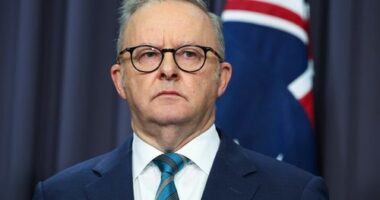
“While other leaders are able to pick up the phone to the [US] president, [Prime Minister] Anthony Albanese has not established such a relationship,” they said.
Trump’s July tariff ultimatum
Pharmaceutical imports to the US were initially hit with a 25 per cent tariff in May, and Trump proposed further hikes in July, saying they could go as high as 250 per cent.
Medicines and pharmaceuticals are among Australia’s top exports to the US, with around $2.1 billion in shipments last year, according to the Australian Bureau of Statistics.
Butler said in July that Trump’s tariff plan would be a blow to producers such as CSL, Australia’s largest pharmaceutical company.
However, CSL said in a statement on Friday it didn’t expect “any material impact from these tariffs”.
“In addition to CSL’s Australian facilities, we have a very significant United States manufacturing footprint,” a CSL spokesperson said in a statement.
“We are already expanding our US capabilities to meet the growing demand for our therapies and we have announced further expansion of significant, new capital investments during the next five years.”
CSL’s stock prices dropped by 3.6 percent shortly after the market opened on Friday, then recovered somewhat to be 1.7 percent down by late morning.
US pharma industry’s push against PBS
Australian drug pricing has become a source of tension with the Trump administration, with the US pharmaceutical industry pressuring Trump to impose tariffs on Australian and other manufacturers of pharmaceuticals covered by Australia’s Pharmaceutical Benefits Scheme (PBS).
In a January submission to the US government, the Pharmaceutical Research and Manufacturers of America trade group said the PBS was “egregious and discriminatory” and “undervalued American innovation”, putting jobs and exports at risk.
“If this move is driven by big pharma companies trying to persuade the US administration to diminish the protections of our PBS, it simply won’t be on the table for discussion with our government,” he asserted.
But Butler said on Friday he didn’t think the most recent tariff hike was primarily motivated by US opposition to the PBS.
“I think it’s pretty clear that the core objective of the US administration is to lower drug prices in their own country, and they’re using tariffs as a tool to try to achieve that objective,” he said.
However, he said tariffs weren’t the right policy to achieve that objective, highlighting that Australia buys “more pharmaceutical products from the US, by quite a distance, than they buy from us”.
“It is not in the American consumers’ interest to impose a higher price on the exports from Australia to America.”
— With additional reporting by Reuters and AAP.