
Share this @internewscast.com
A recent study reveals that Gen Z is distancing itself from alcohol much more than older generations, a shift that could lead to significant public health benefits and potentially transform the nation’s ingrained drinking culture.
Researchers at Flinders University studied 23 years’ worth of data to understand and model drinking behaviors among five generational cohorts: the silent generation, baby boomers, Gen X, millennials, and Gen Z.
The study showed that Gen Z individuals are 18 times more likely to refrain from alcohol throughout their lives compared to baby boomers.

In addition, Gen Z Australians are consuming far less alcohol weekly than their older counterparts.
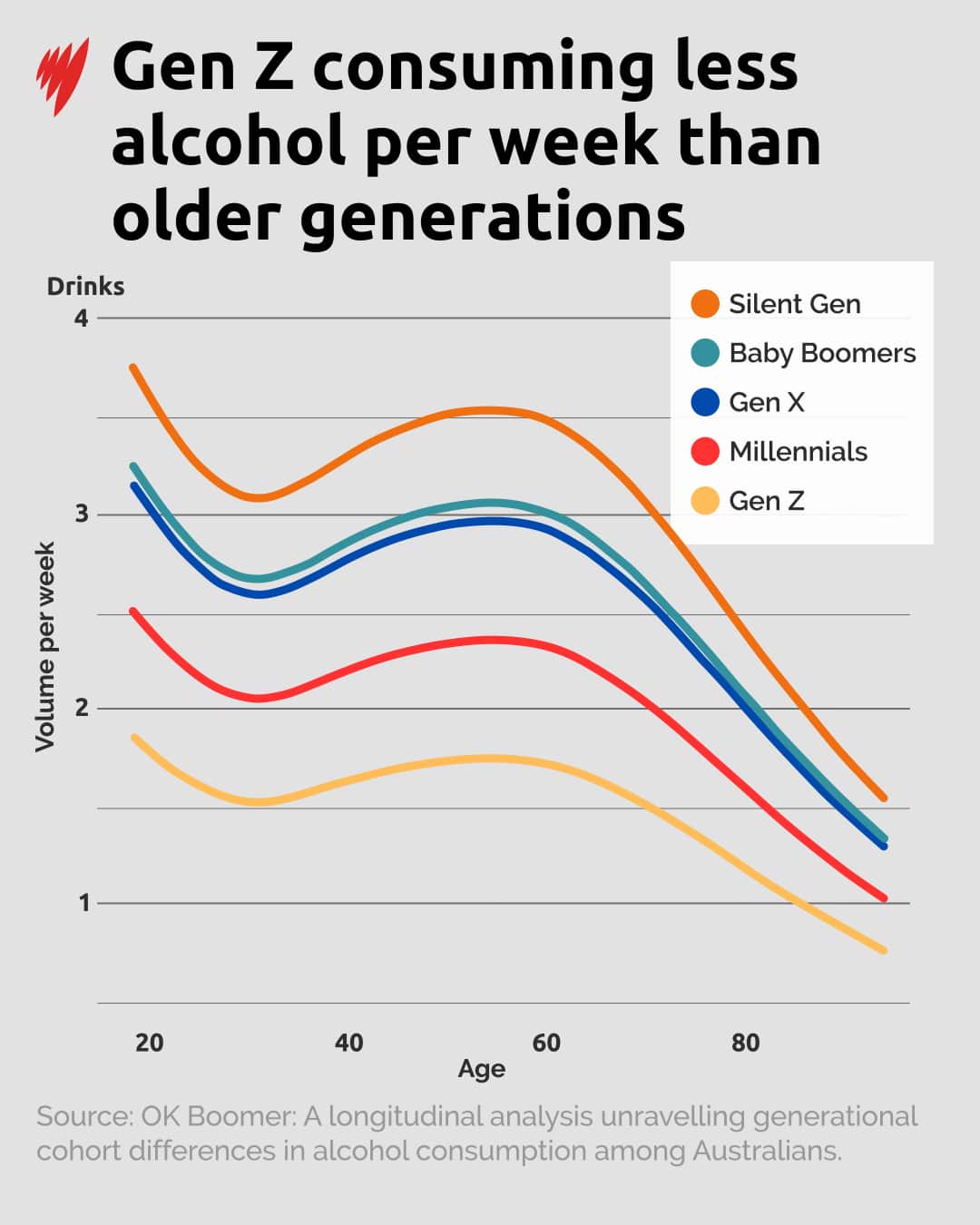
Gen Z consuming less alcohol

Source: SBS News

Lead author Gianluca Di Censo, a research fellow at the National Centre for Education and Training on Addiction (NCETA), told SBS News the first-of-its-kind study in Australia also assessed whether the trend would have a lasting impact.

“This is a promising trend as it indicates that reduced alcohol consumption isn’t just temporary; it is likely to continue throughout Gen Z’s lifetime,” a researcher noted.

Millennials are also drinking less than the generations before them, and along with gen Z, are projected to abstain from drinking at much higher rates throughout their lives than the two oldest generations.

However, Di Censo cautioned that unexpected societal or economic changes could alter this trajectory, but currently, “this appears to be a lasting change.”

What’s driving young people away from drinking?

While the study doesn’t determine that, researchers suspect a number of factors are shaping this pattern.
These factors include the high cost of living, increased use of digital devices, rising consumption of health-related media, and a “cultural shift towards denormalising alcohol consumption”.

“Gen Z feels they can socialize without drinking or being marginalized, and there’s a growing acceptance of sobriety alongside an emphasis on health and well-being,” Di Censo added.
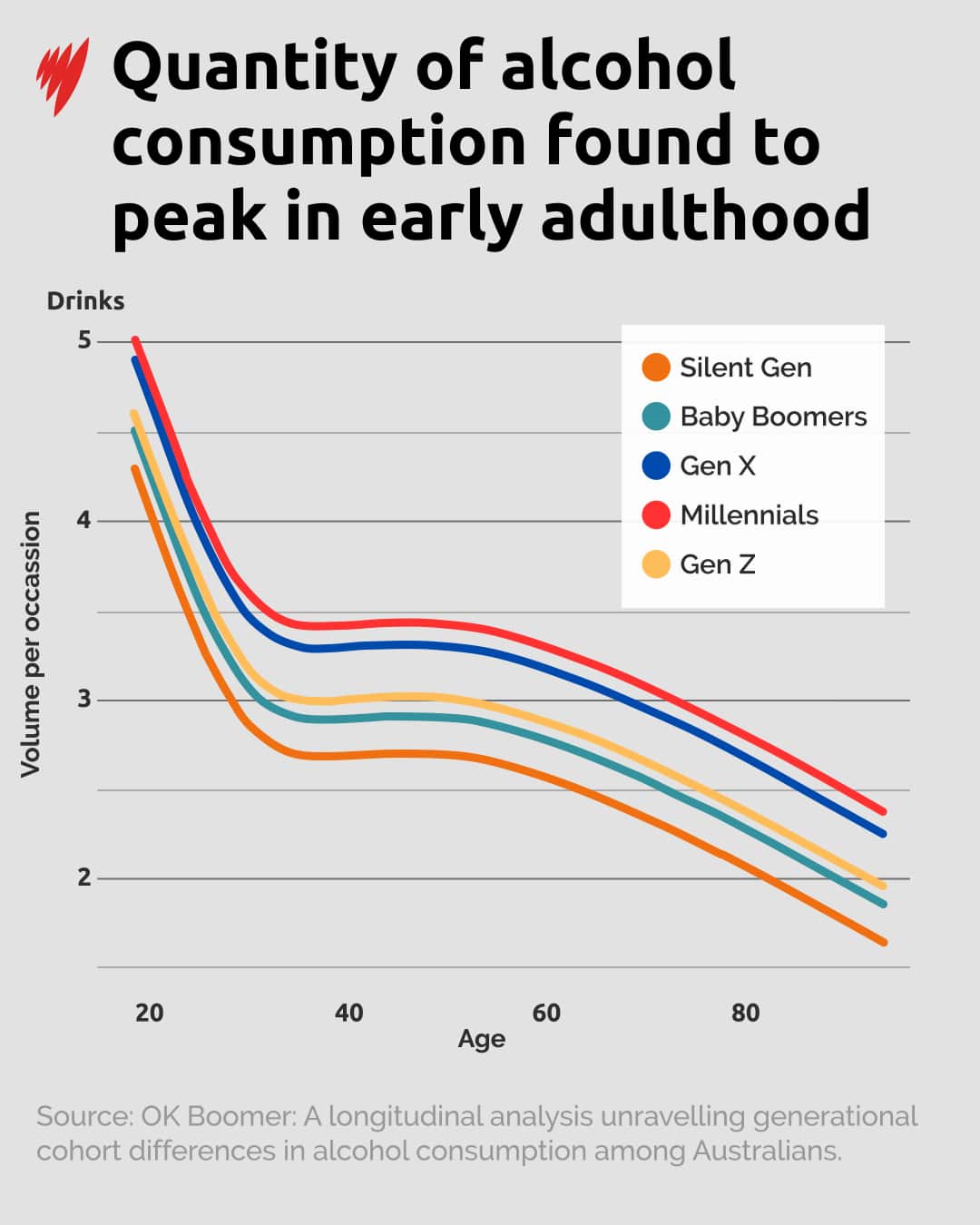
Alcohol consumption

Source: SBS News

Michael Livingston is an associate professor of alcohol research at Curtin University’s National Drug Research Institute.

He told SBS News there’s a “complex social pattern” at play, including a “fundamental shift” in how young people interact, given how they spend so much time online, changes in parenting and more awareness of the health risks around alcohol.
“Young people are much more risk-averse now than they were 20 years ago,” he said, pointing to research in other fields that shows declines in other risk-seeking acts among teens, such as those linked to road accidents, sexual behaviour and crime.

“Those risk-taking behaviours that used to be kind of a fundamental part of that transition into adulthood, they’re not as prominent as they were.”

Other studies have found young people are more likely to have existential worries about the future, including climate anxiety and financial concerns.
While a reduction in drinking is a public health win, Livingston said there are concerns that mental ill-health and anxiety are also on the rise in younger groups.

“One of the reasons people are drinking less is because they’re worrying more, and that’s obviously not a good outcome,” he said.

The implications of a cultural shift

The study’s co-author, Kirrily Thompson from NCETA, said: “For decades, alcohol has been deeply embedded in social life, but that’s changing.”
“Younger Australians are redefining what it means to socialise and celebrate, and they’re doing it with less alcohol,” she said. “That’s something we should be paying attention to, not just as researchers, but as a society.”

Alcohol use is associated with various health problems, including several cancers, liver, and heart diseases. The World Health Organization estimated that alcohol use led to approximately 2.6 million deaths worldwide in 2019.

The study’s authors believe understanding the drivers of generational trends could help inform public health strategies.

They propose that strategies such as minimum alcohol pricing, stricter advertising regulations, and focused health initiatives could reinforce this declining trend.

Is this happening anywhere else?

Changing habits around drinking among Australians have been well documented.

Back in 2001, 70 per cent of young people in Australia, aged between 14 and 17, said they had consumed alcohol in the past 12 months, according to the National Drug Strategy Household Survey. But that figure has dropped to about 30 per cent in recent years.
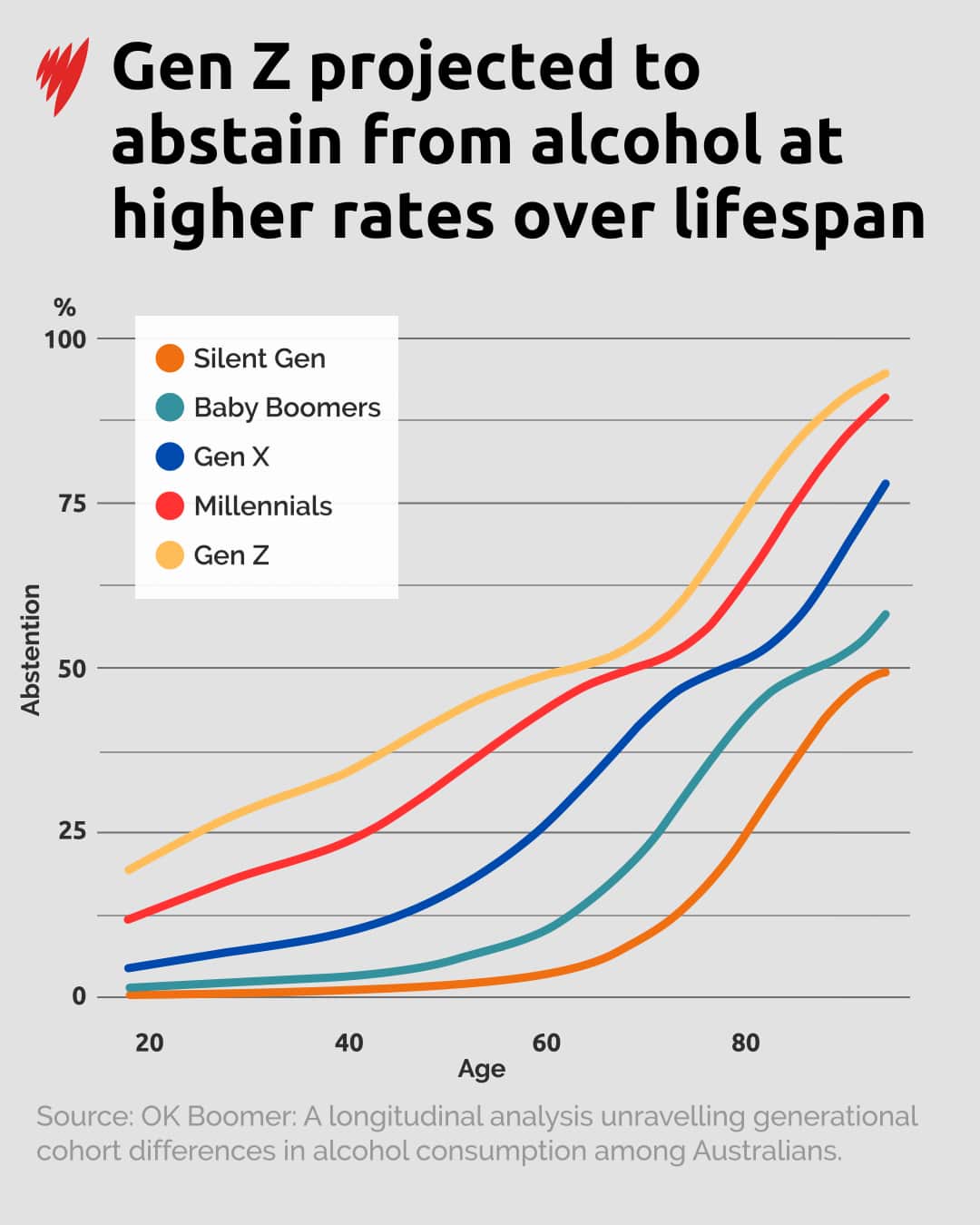
Alcohol abstention

Source: SBS News

A similar trend exists across a number of high-income countries, including New Zealand, Canada, the United Kingdom and European countries like Sweden.

Livingston said it’s a common pattern across many countries, “with similar historic drinking cultures” to Australia.

Will the trend last?

It’s not clear whether the trend is here to stay, but researchers said they’re optimistic.
“We’re not very good at knowing what’s going to happen in these big social changes in the future,” Livingston said.
“I think certainly for this generation, the people in their 20s now, that cohort, will drink less through their life course than previous cohorts.
“But whether we continue to drive down teen drinking in the future is a mystery that we’ll have to keep tracking.”

Share this @internewscast.com
You May Also Like

Surge in Rodent Population Poses New Challenges for Australian Farmers

in brief Mouse numbers are thought to have hit plague proportions in…

Renters Reach Breaking Point Amid Significant Market Shift

Brief Renters have hit an affordability ceiling, signalling a market shift, according…

Protesters Launch Legal Battle Against Controversial Anti-Hate Speech Laws

in brief Pro-Palestinian protesters are challenging Queensland’s hate speech laws after arrests…

Iran Holds Off on US Peace Talks: Uncertainty Looms Over Potential Dialogue

in brief Iran has lifted and then reimposed its own blockade of…
Strait of Hormuz

Iran Escalates Tensions with Strategic Strait of Hormuz Assault: What This Means for Global Diplomacy

Iran fired on three ships in the Strait of Hormuz on Wednesday,…

Unveiling Australia’s Rarest Parenting Experience: A Behind-the-Scenes Look at the ‘Military Operation’ Approach

Raising triplets is no small feat, and parents facing this unique challenge…
Police injured in night of chaos in Sydney's south-west

Chaos Erupts in Sydney’s South-West: Police Injured Amid Night of Unrest

A tumultuous night unfolded across Sydney’s suburbs, leaving two police officers injured…
Monster illicit tobacco haul uncovered in suitcase

Massive Illicit Tobacco Bust: Suitcase Yields Shocking Discovery

A record number of illegal vapes and tobacco products have been intercepted…
Minister for Health and Ageing and Minister for Disability and the NDIS Mark Butler ahead of an address to the National Press Club of Australia in Canberra on Wednesday 22 April 2026. fedpol Photo: Alex Ellinghausen

NDIS Implements Major Crackdown to Combat Fraud and Misuse

Health Minister Mark Butler delivered the sweeping changes in a National Press…
Paolo Zampolli is a long-time friend of Donald Trump.

Trump Envoy Proposes Bold World Cup Swap: Italy to Replace Iran in Global Tournament

Paolo Zampolli, acting as a special envoy for global partnerships, recently shared…
The rugby community in Waikato, New Zealand has been thrown into mourning by the sudden death of sportswoman Courtney Johansen (pictured)

Football Community Honors Cherished 29-Year-Old Coach Following Tragic Loss of Her and Unborn Child Due to Undiagnosed Health Issue

Heartfelt tributes have emerged for a New Zealand athlete who tragically passed…
Mr Mohamed was in Hawaii  for the Festival of Pacific A

Anthony Albanese’s Early Confidence in the Voice: Creating an Ambassadorial Role for Global Advocacy Before Australia’s Rejection

Anthony Albanese was so sure of the Indigenous Voice to Parliament’s success…