Share this @internewscast.com
In brief
- Iran’s foreign minister has argued that the United States is “inviting rather than deterring trouble” in the region.
- Japan says the threshold for sending ships to the Strait of Hormuz, as Donald Trump has requested, is “extremely high”.
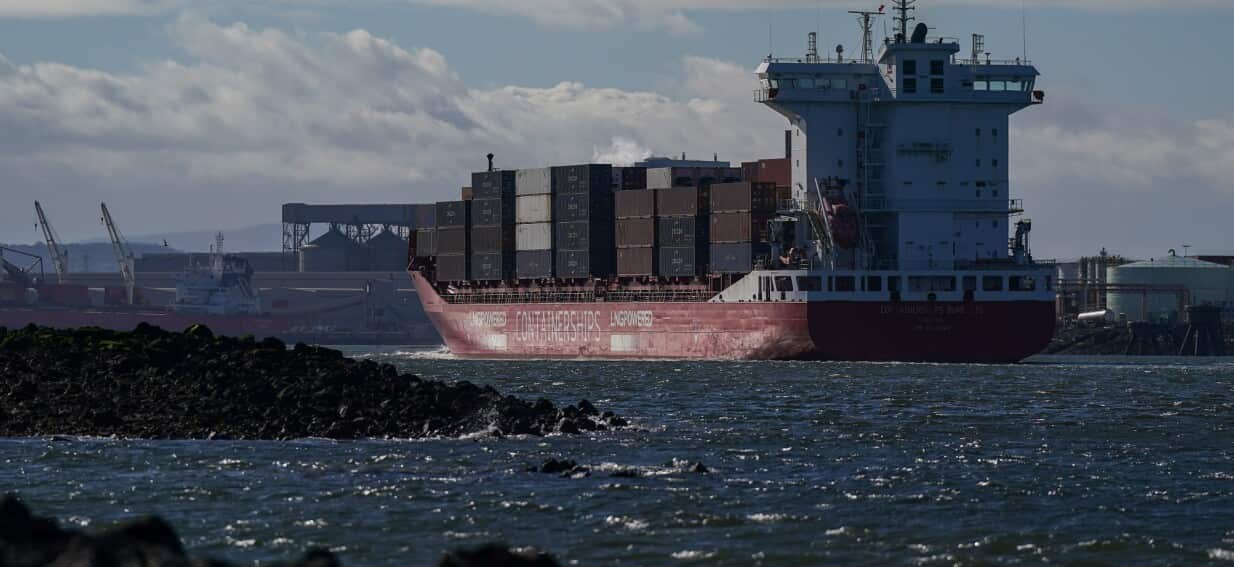
Iran has issued a strong warning to countries considering involvement in its ongoing conflict with the United States and Israel. This comes after U.S. President Donald Trump called on global powers to safeguard oil tankers navigating the Strait of Hormuz, a critical passage in the Gulf.
The Iranian government also delivered a pointed caution to its Arab neighbors. According to Iran’s foreign minister, the Islamic Republic possesses “ample evidence” that U.S. military bases in these countries have been utilized to launch attacks against Iran.
Iranian Foreign Minister Abbas Araghchi, in an interview with the Arabic-language news outlet Al-Araby Al-Jadeed, stated, “This war will conclude when we are assured it won’t reoccur and reparations are settled.”
Criticizing the U.S. military presence in the region, Araghchi suggested this presence is more of a catalyst for conflict than a deterrent. He urged neighboring nations to “expel foreign aggressors,” sharing his thoughts on social media platform X.
Reflecting on past events, Araghchi said, “We witnessed this last year: first Israel attacked, followed by the United States,” referencing Israel’s brief 12-day airstrike campaign in June, which also saw temporary U.S. involvement targeting Iranian nuclear facilities.
Global energy prices have surged since Iran responded to the recent U.S.-Israeli offensive by threatening the security of shipments through the Strait of Hormuz. This strategic waterway is vital, as it facilitates around 20 percent of the world’s oil and gas exports.
Trump responded by urging “China, France, Japan, South Korea, the UK and others” to send ships to escort tankers, while the US military continues to pound drone, boat and missile launch sites in Iran on the north shore.
But the countries he listed have given only guarded responses, and Araghchi, in a call with French counterpart Jean-Noel Barrot, warned them to “refrain from any action that could lead to escalation and expansion of the conflict”.
The UK defence ministry was non-committal, saying “we are currently discussing with our allies and partners a range of options to ensure the security of shipping in the region”.
Britain’s minister for energy security, Ed Miliband, told the BBC the “plan now has to be to de-escalate the conflict … We are talking to our allies. There are different ways in which we can make maritime shipping possible”.
South Korea said it was monitoring Trump’s remarks on social media, while the policy chief of Japan’s ruling party, Takayuki Kobayashi, said the bar for sending Japanese navy ships to the region under existing laws was “extremely high”.
Trump also said on Monday that the North Atlantic Treaty Organization (NATO) faces a “very bad” future if US allies fail to help open the Strait of Hormuz.
In a brief interview with the Financial Times, Trump said that as the US has aided Ukraine in the war with Russia, he expects Europe to help on the Strait of Hormuz.
“If there’s no response or if it’s a negative response, I think it will be very bad for the future of NATO,” said Trump, who over the years has criticised the alliance, accusing its members of not spending enough on defence.
Global oil prices have surged by 40 per cent as Iran has choked off the vital sea passage and attacked energy and shipping industry targets in its Gulf neighbours.
The strikes were in retaliation for the US and Israeli air campaign that killed its supreme leader, triggering a war across the Middle East.
Trump says US may strike Iran’s oil hub again ‘just for fun’
As global markets reel, Trump has doubled down, telling NBC News in a weekend interview that he thought Tehran was keen to come to the table but that the US was fighting on to force better terms.
He said he might, again, bomb targets on Iran’s oil hub, Kharg Island, “just for fun”.
“Iran wants to make a deal, and I don’t want to make it because the terms aren’t good enough yet,” Trump told NBC News.
Araghchi, in a separate interview with the US network CBS’ Face the Nation program, denied that Iran was asking for a deal.
“We are stable and strong enough. We are only defending our people,” Araghchi said. “We don’t see any reason why we should talk with Americans, because we were talking with them when they decided to attack us.”
For the latest from SBS News, download our app and subscribe to our newsletter.