
Share this @internewscast.com
On Wednesday, Iran once again shut the Strait of Hormuz as a reaction to Israeli offensives against Hezbollah in Lebanon, raising concerns about the stability of a fragile ceasefire that sought to end weeks of conflict.
Despite the tension, both the United States and Iran declared success upon reaching the ceasefire agreement, while global leaders expressed cautious optimism. Yet, the atmosphere remained tense as drones and missiles continued to target Iran and Gulf nations.
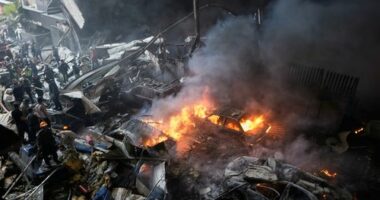
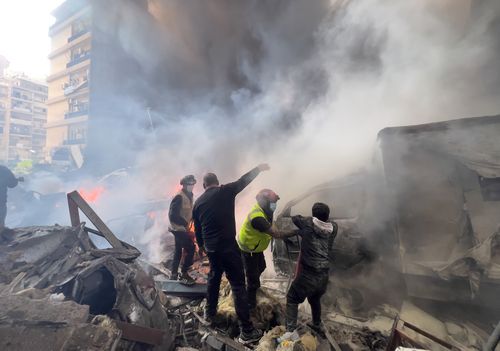
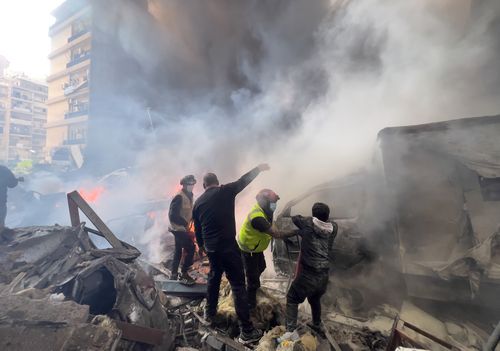
In Lebanon, Israel ramped up its strikes, targeting several areas in Beirut, both commercial and residential, without prior notice. The attacks resulted in at least 112 fatalities and left hundreds injured, marking one of the bloodiest days in the ongoing conflict between Israel and Hezbollah.
The resurgence of violence put at risk what US Vice President JD Vance described as a “delicate” peace agreement.
“Any aggression towards Lebanon is an attack on Iran,” declared Gen. Seyed Majid Mousavi, the aerospace commander of Iran’s Revolutionary Guard, on X. He hinted at a forthcoming “heavy response” from Iranian forces, though specifics were not disclosed.
Meanwhile, US Defense Secretary Pete Hegseth remarked that American and Israeli forces had achieved a “capital V military victory,” asserting that the Iranian military no longer represented a major threat to US interests or the regional stability.
The Iranian military said the country forced Israel and the US to accept its “proposed conditions and surrender”.