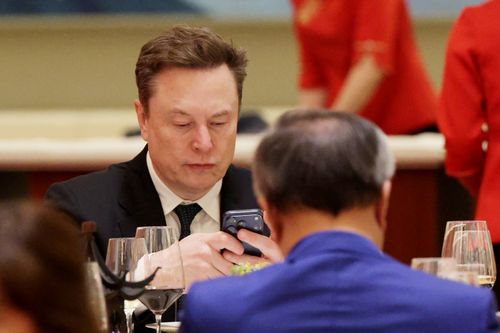

Elon Musk’s lawsuit against OpenAI and its leaders was dismissed as the jury determined he had delayed too long to take legal action, resulting in the case being barred by the statute of limitations.
After approximately 90 minutes of deliberation, the jury reached a verdict, which, while advisory, was affirmed by Judge Yvonne Gonzalez Rogers.
“The court agrees with the jury’s findings and adopts them as its own,” stated Judge Rogers.
“There is ample evidence supporting the jury’s conclusion, which is why I was ready to dismiss the case immediately,” she added.
Musk was instrumental in cofounding and financing OpenAI, contributing $38 million (approximately $53 million) during its formative years.
In February 2024, he filed a lawsuit against CEO Sam Altman, company president Greg Brockman, and OpenAI, accusing them of “stealing a charity” and profiting unfairly when they transitioned to a model that included a for-profit division.
“I was a fool,” Musk told the court earlier this month. “I gave them free funding to create a start-up.”
Musk’s case threatened to derail the ChatGPT maker as it planned what could be a blockbuster IPO. The jury’s decision is a win for OpenAI and its founders, Altman and Brockman.
OpenAI’s attorneys argued the company’s mission had not changed, that it was still run by a non-profit foundation board, and that Musk waited to file the suit until after he founded his own competing artificial intelligence company, xAI.
The jury agreed, finding that Musk was aware of the behaviour discussed in the lawsuit as early as 2021.
“The finding of the jury confirms that what this lawsuit was was a hypocritical attempt to sabotage a competitor,” William Savitt, OpenAI’s attorney, said after the verdict.
“The fact is that OpenAI is a not-for-profit, mission-driven organisation that has been and will continue to be faithful to that mission.”
OpenAI’s attorneys also argued during the trial that Musk’s donations did not come with a commitment to stay a non-profit and that the Tesla chief executive at various points pushed for OpenAI to create a for-profit entity to compete with Google.
They also said Musk tried to gain control of the for-profit entity and left the company when he failed to do so.
Musk asked the court to force OpenAI to pay back more than $US130 billion to OpenAI’s non-profit arm, remove Altman and Brockman from their leadership roles and unwind the corporate restructuring that turned OpenAI into one of the world’s most valuable tech companies.
OpenAI co-founder Ilya Sutskever and Shivon Zilis, an executive at Musk’s companies, former OpenAI board member and mother of four of Musk’s children, were among the high-profile witnesses who testified.
Hundreds of pages worth of private emails, text messages and internal meeting notes were submitted as evidence, including Brockman’s personal diaries, and texts between Musk and Meta chief executive Mark Zuckerberg discussing possibly trying to buy OpenAI together.
The trial revealed Google’s role in OpenAI’s founding as the AI lab sought to surpass what was then considered the leader in the nascent AI race.
It also revealed the many fundraising options OpenAI considered to support its computing and infrastructure needs, including cryptocurrency.
Musk’s romantic relationship was also in the spotlight, as Zilis’ testimony revealed the two had been romantically connected far longer than was previously known.
Details about how she served as a conduit to Musk about OpenAI after his departure were also revealed in court.
Microsoft was also named as a codefendant for “aiding and abetting” the claims through its investments in OpenAI. Musk left OpenAI in 2018 and started his own AI company, xAI, in 2023.
“The facts and the timeline in this case have long been clear, and we welcome the jury’s decision to dismiss these claims as untimely,” a Microsoft spokesperson said in a statement after the jury’s decision.
“She just handed out a free license to loot charities if you can keep the looting quiet for a few years!” he wrote.
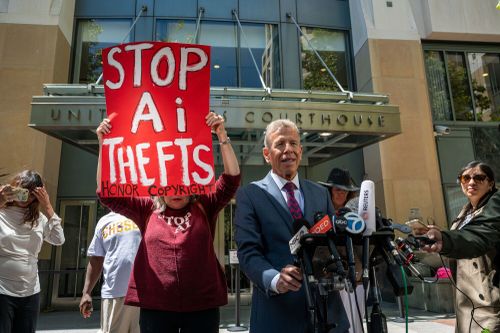
Musk’s lead attorney, Marc Toberoff, said at a press conference after the verdict that they planned to appeal.
“This at its core is a travesty, and but for Musk, they get away with it and they shouldn’t,” Toberoff said.


