
Share this @internewscast.com
Several Asian countries are ramping up airport screenings in an effort to curb the spread of the Nipah virus following a recent outbreak in India.
With no cure or approved treatments available, experts warn that the virus could pose significant risks if it crosses international borders.
India’s health ministry confirmed two cases earlier this week and reported that nearly 200 individuals who came into close contact with the patients are being tested and monitored.
In 2018, the World Health Organization identified the Nipah virus as a priority pathogen in need of urgent research and development. However, a vaccine has yet to be developed to combat this deadly virus.
The Nipah virus is zoonotic, meaning it can be transmitted from animals to humans.
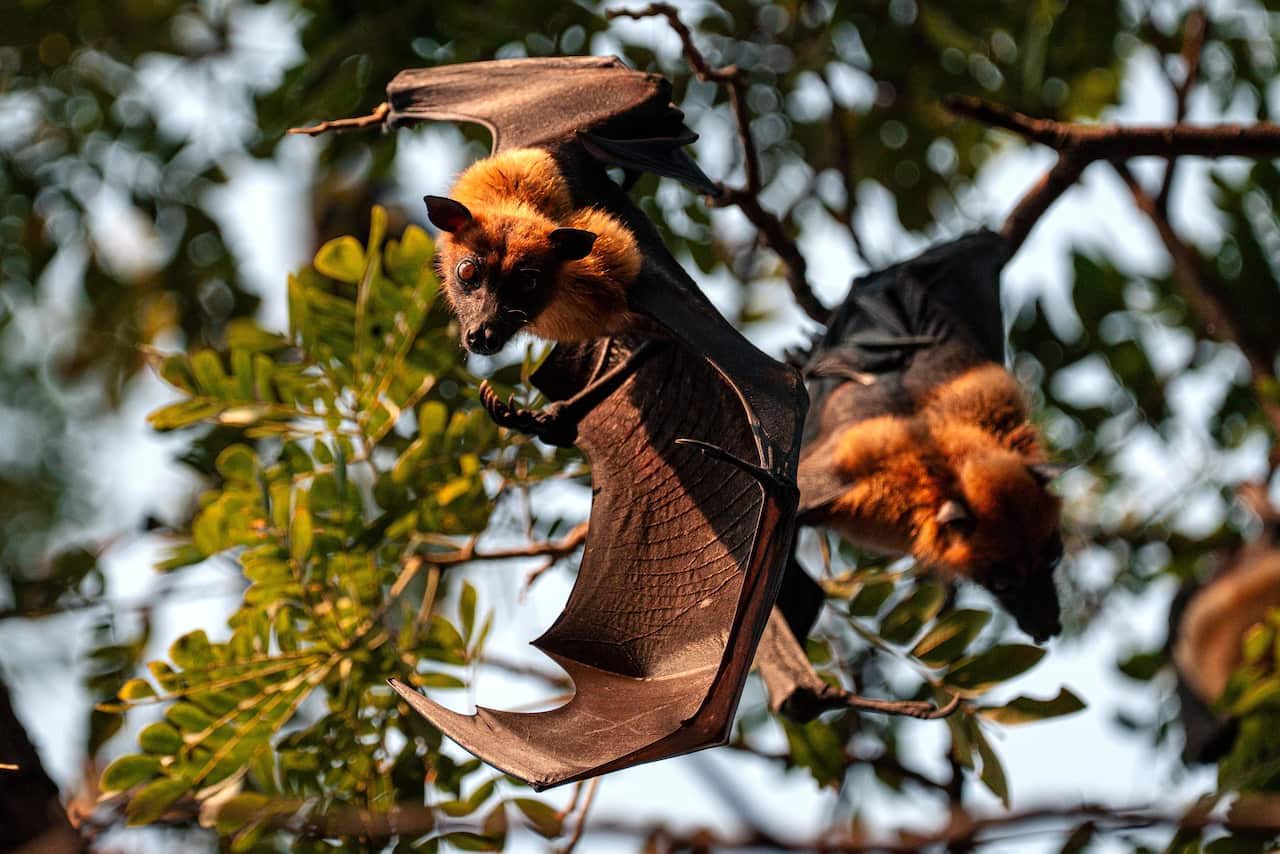
Infection typically occurs through direct contact with infected animals such as bats and pigs or through exposure to their bodily fluids or tissues.
Infection can occur through direct contact with infected animals — mainly bats and pigs — or through exposure to their bodily fluids or tissues.
People can also be infected by eating food contaminated by these animals, such as fruit.
In Bangladesh, outbreaks have been linked to raw date palm sap contaminated by fruit bats.
After spreading to humans, the virus can also be transmitted between people through close contact.
Experts say that, as with previous outbreaks, strict surveillance and travel screening will be essential in limiting the spread in India.
Dr Subarna Goswami from the Darjeeling Tuberculosis Hospital says Indian authorities are working to trace, test and quarantine all who’ve come in contact with the confirmed cases.
“The Nipah virus infection is very dangerous,” she said.
“There is no cure for it, there is no specific treatment and no medicine works. There is no vaccine or inoculation for it. And its morbidity rate — the fatality ratio — is very high.”
Between 40 and 75 per cent of people infected with Nipah virus die, according to the United States’ Centers for Disease Control and Prevention.
How contagious is Nipah virus?
Nipah was first identified in Malaysia in 1999.
Since then, there have been small outbreaks almost every year, mostly in Bangladesh, and India has experienced sporadic outbreaks.
According to the Coalition for Epidemic Preparedness Innovations, an international group that tracks emerging disease threats, 750 cases had been recorded since 1999, and 415 of those infected died as of December last year.
United Kingdom-based professor of medicine at Norwich Medical School Paul Hunter explained that while Nipah can spread from person to person, it doesn’t do so easily.
“The main risk of person-to-person transmission comes from fairly close contact, typically when you’re caring for somebody who’s quite ill,” he said.
“But there’s not a huge amount of evidence on which to base a lot of these judgements.”
What are the symptoms of Nipah virus?
Symptoms usually appear within days of infection and include fever, headache, cough, muscle aches and breathing difficulties.
Hunter said encephalitis is the deadliest aspect of contracting Nipah.
“When you get encephalitis, you start feeling very unwell,” he said.
“You have high fever, you have very severe headaches, and you can have photophobia, where the light hurts your eyes.”
Survivors of encephalitis may recover but can experience long-term effects, including seizure disorders.
Reducing your risk
With no effective drugs available, prevention is the main defence.
Hunter said travellers going to areas with a reported history of Nipah can reduce their risk of being exposed to the virus.
“In terms of the initial infections, it’s being careful about eating and drinking food that might be contaminated by fruit bats,” he said.
“Don’t drink unpasteurised or unheated drinks that haven’t been heated to a temperature that would kill viruses.”
Hunter said while Nipah is a dangerous virus with a high fatality rate, it hasn’t yet shown signs of becoming more transmissible among humans, making its global spread, at this stage, unlikely.
However, he said its long incubation period does pose potential challenges to tracking its movement across borders, as it’s also difficult to detect in the early stages.
“It’s actually very difficult to control at airports. If you’ve got a disease that’s got a two-week incubation period, for the first two weeks after somebody’s carrying the infection, there’s no way you can pick it up.”
— With additional reporting by the Reuters News Agency.
For the latest from SBS News, download our app and subscribe to our newsletter.