
Share this @internewscast.com
In recent years, South Korean television series, such as Netflix’s acclaimed Squid Game, have captivated audiences worldwide.

Defectors have painted a picture of a capricious and corrupt system where secretly consuming South Korean TV shows is common, yet punishments for breaching vaguely defined cultural laws heavily depend on one’s wealth and connections.
According to Amnesty International, the 2020 Anti-Reactionary Thought and Culture Act has facilitated the continuation of these harsh penalties.
This legislation brands South Korean media as “rotten ideology that paralyzes the people’s revolutionary spirit.”
Under the new law, individuals caught watching or possessing South Korean dramas, films, or music face five to 15 years of forced labor.
Severe penalties, including the death sentence, are imposed for distributing large volumes of content or organizing group viewings.
Interviewees described a society in which dramas and films are commonly smuggled in on USB drives from China, which young North Koreans watch on notebook computers with built-in televisions.
However, privilege plays a role in the application of the law.
Interviewees said people commonly watched South Korean TV knowing that they risked extreme punishment, but also that it was possible to escape the worst penalties if you were able to pay.
Kim Joonsik*, 28, said he was caught watching South Korean dramas three times before he left the country in 2019.
However, he avoided punishment because his family had connections to officials.
“Usually when high school students are caught, if their family has money, they just get warnings,” he told Amnesty International.
“I didn’t receive legal punishment because we had connections.”
Amnesty International said North Korea’s government has reportedly deployed a specialised law enforcement unit known as 109 Group to crack down on foreign media consumption for decades.
The organisation said the unit conducts warrantless home and street searches of bags and mobile phones.
Interviewees said workers watch it openly, party officials watch it proudly, security agents watch it secretly and police watch it safely.
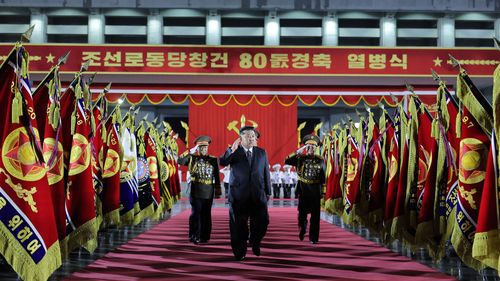
Interviewees described how North Korea uses public executions to terrorise entire communities into compliance.Â
Choi Suvin* witnessed a public execution in Sinuiju in the North Pyongan Province “in 2017 or 2018” of someone accused of distributing foreign media.
“Authorities told everyone to go, and tens of thousands of people from Sinuiju city gathered to watch,” she said.Â
“They execute people to brainwash and educate us.”
Some interviewees described schools systematically forcing students to attend public executions as part of “ideological education”.Â
In one case, a squad of 10 people fired about 30 rounds at the condemned person.Â
Amnesty International was also told in some cases a substance is placed in victims’ mouths to prevent them from speaking before execution.Â
“When we were 16, 17, in middle school, they took us to executions and showed us everything,” said Kim Eunju*, 40, who fled in 2019.Â
“People were executed for watching or distributing South Korean media.
“It’s ideological education: if you watch, this happens to you too.”
Amnesty International’s deputy regional director Sarah Brooks called on the law to be abolished.
“People who strive to learn more about the world outside North Korea, or seek simple entertainment from overseas, face the harshest of punishments,” Sarah Brooks said.
“This completely arbitrary system, built on fear and corruption, violates fundamental principles of justice and internationally recognised human rights.Â
*All names are pseudonyms
NEVER MISS A STORY: Get your breaking news and exclusive stories first by following us across all platforms.