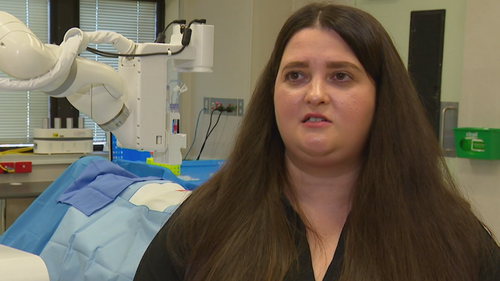

A world-first breakthrough at a major Sydney hospital could soon change the lives of burns patients.
The first clinical trial to apply 3D-printed skin onto a patient has been successful.
One patient, Rebecca Torbruege, was left seriously burned after her first ride on a go-kart.
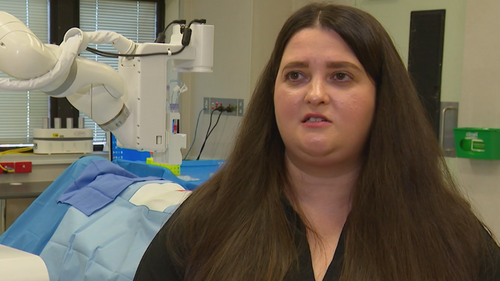
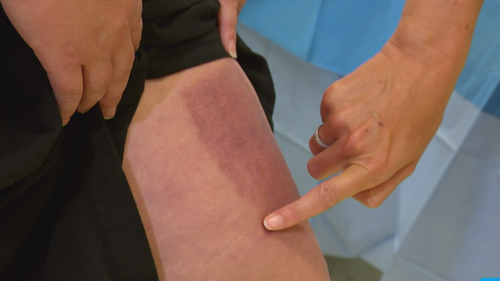
“We tried just doing dressings, but it wasn’t healing the way it should have, and that’s when we discussed getting a skin graft,” she told 9News.
She agreed to be the first patient in the world to receive 3D-printed skin to repair her graft site.
“I didn’t have any pain really, it was more like a one out of 10,” she said.
“I feel like the wound healed quite quickly and quite fast.
“The colour is still quite purple, pinkish purple, but that will eventually fade away, that is normal,” Dr Joanneke Maitz said.
A biopsy of Torbruege’s skin was taken, recreated by a 3D printer, and then sprayed onto her wound during surgery in the Concord Hospital burns unit.
“We use a patient’s own skin cells as building blocks and then we use the highly specialised printer to build skin cell by cell,” Maitz said.
“We are reconstructing layer by layer, so we can replace what is lost with like and enable regeneration,” she said.
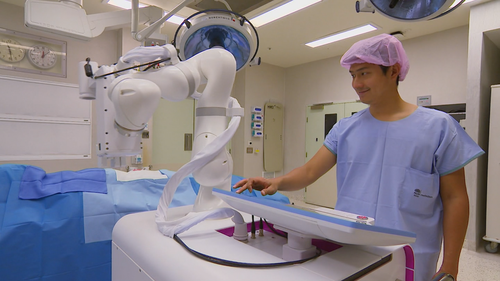
On a dummy, a demonstration shows the red-coloured substance being applied, as 3D skin would in surgery, controlled by clinical specialists.
Five patients have already been treated with 3D-printed skin, while an additional five are scheduled to receive the treatment in the upcoming months. The results will undergo evaluation before the trial progresses to its subsequent phase.
“As surgeons, we’ll be able to use this kind of technology to help us become faster, more consistent, and more reliable,” Maitz said.


