Share this @internewscast.com
A spokesperson highlighted several reasons why the risk level is elevated, citing factors such as limited access to safe swimming areas, language and cultural challenges, origins from landlocked regions, and a general fear of water.
Masaki Shibata, who specializes in intercultural studies at Monash University and spearheaded these investigations, pointed out that the issue partly lies in how beach safety messages are conveyed on signage.
These safety signs are designed to alert beach visitors about both ongoing and sporadic dangers present at the beach.
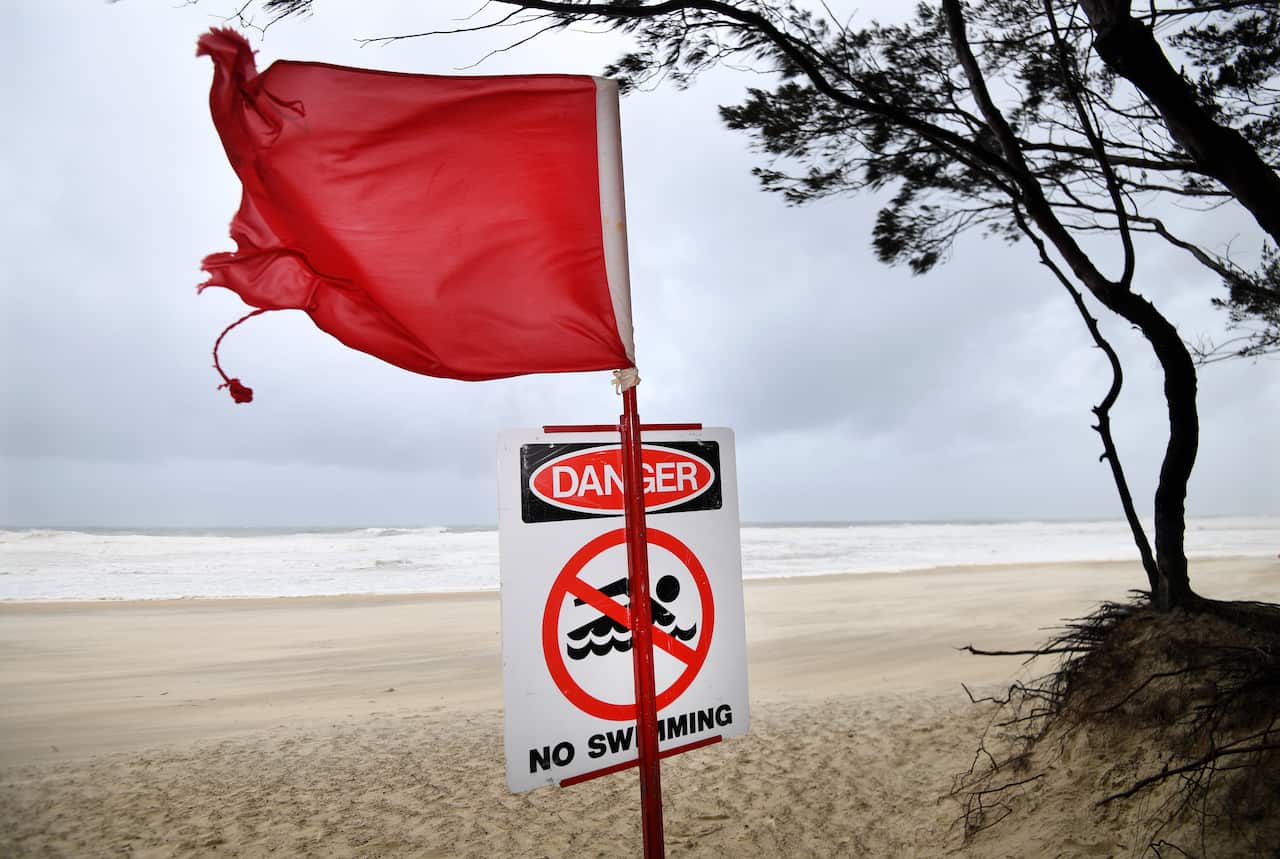
“The language used can be somewhat complex,” Shibata explained to SBS News. “Due to the color coding, some misunderstandings can arise.”
A related study conducted in 2024 focused on Japanese students and revealed that three out of five had limited comprehension of safety flags, with approximately 60% struggling to grasp warning terms.
“In translations to Chinese and Korean, ‘shore’ sometimes mistakenly refers to a designated area for disposing of waste,” Shibata noted.
“In Chinese and Korean, it comes out as a place to put rubbish on the shore.”
“Life Saving Victoria has a dedicated multicultural department that delivers water safety activities daily throughout the year.”
Improving translatability
Shibata said that some of the terms should be “revised in English first” to make them more comprehensible to culturally and linguistically diverse communities (CALD).
But Shibata warns that no matter what the signs say, some people do not read them.
Beach education while studying English
Shibata said the exercise was created to “educate those who are not interested in water safety or who just ignore our message”.