
Share this @internewscast.com
Warning: This story contains content that some readers may find disturbing.
It was therefore no surprise that Islamist militant group Hamas chose Gaza City as its de facto capital when it seized control of the strip in 2007.
The persistent conflict, restrictive blockade, and Hamas’ authoritative governance have made life challenging for Palestinians. Despite these difficulties, the militant-led institutions, supported by regional allies like Qatar and a strong United Nations aid network, provided some stability to the weary population of the area.
An underground smuggling network allowed Gaza City glimpses of the world beyond, even amidst a blockade by neighboring Israel and Egypt, both of whom classify Hamas as a terrorist group.
Life in Gaza City was difficult, with half of its citizens unemployed and Hamas’ police force vigilantly monitoring the streets. However, residents could still enjoy a matcha latte on their way to yoga sessions or spend time in a park.
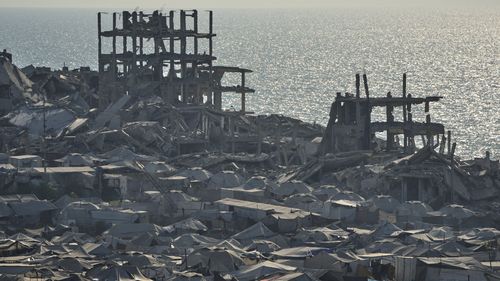
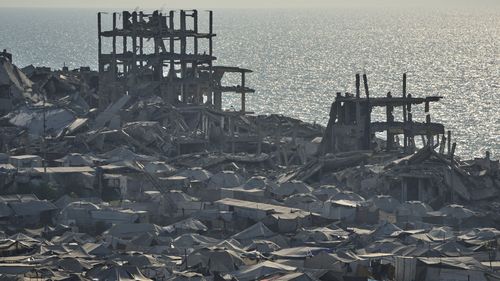
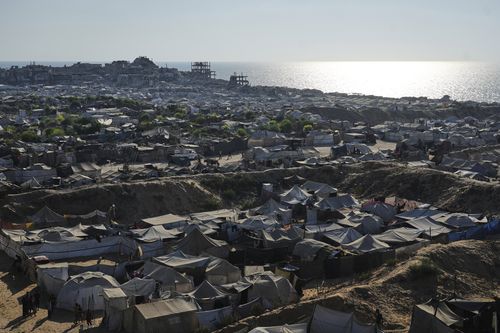
Currently, what used to be a vibrant cultural and financial center now lies in chaos, ravaged by months of intense Israeli military actions following Hamas’ severe attack on Israel nearly two years prior.
With Israel’s plans to initiate a new offensive in the overcrowded region to root out Hamas militants taking refuge underground, the inhabitants of Gaza’s historic city face escalating fears about their survival once more.
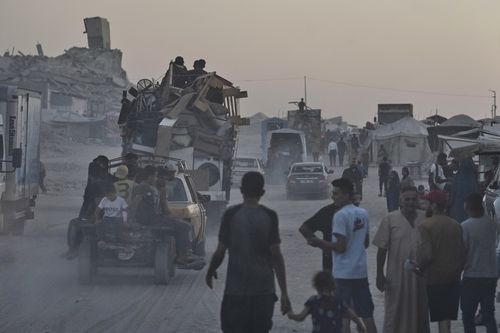
Normal life in the coastal enclave collapsed after Israel’s brutal retaliation to Hamas’ attack.
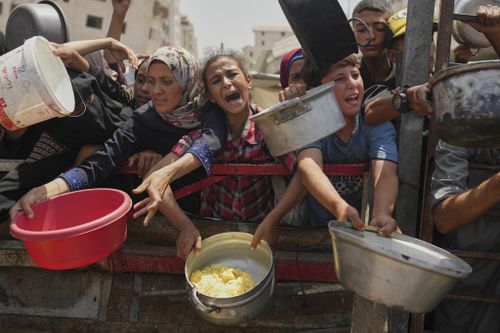
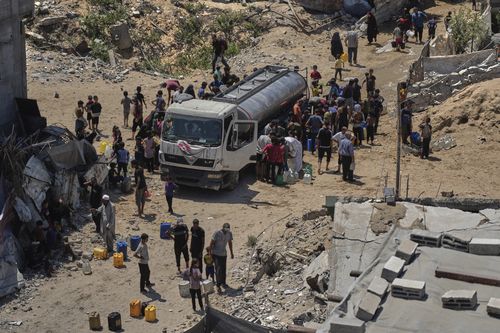
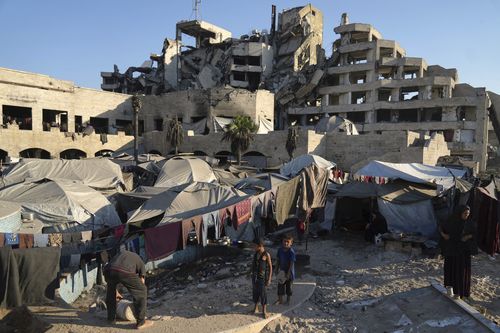
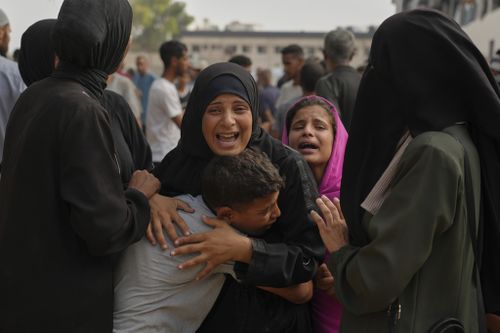
After the collapse of Hamas’ policing system, hundreds of thousands seeking refuge in the city’s damaged structures are left to look after themselves. Uncertain about what lies ahead, Gaza City residents anxiously await news of the next food delivery or the unexpected sound of water trickling from bathroom pipes—providing a rare opportunity for a shower.
Israel does not allow journalists into Gaza. CNN spoke to several of Gaza City’s residents to paint a picture of how the city looks amidst the war.
Tens of thousands of Israeli strikes have left the city’s many towers lying in rubble as garbage and sewage water flood the streets. Black smoke from burning plastic and wood, used by residents for fuel, fill the skies and the sounds of overhead Israeli drones buzz non-stop amid sporadic blasts from airstrikes nearby.
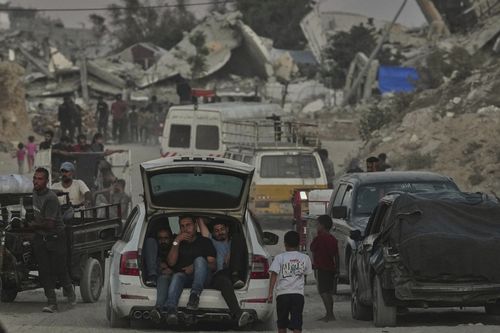
A chaotic web of wires from street generators supply power to those who can afford to pay. Markets display a random assortment of exorbitantly priced food items, possibly looted by criminal gangs from the few aid trucks Israel allows into the strip.
Hospitals and pharmacies no longer function, and hygiene products remain a scarcity for Palestinians, who say infestations of lice, a lack of vitamins, with no food have left them ill and weak.
As night falls, armed thugs roam the streets and families pick up guns to protect themselves. Cash can be transferred to Gaza through an informal banking system â but those seeking to withdraw it are forced to pay up to 50 per cent in commission to individuals and groups controlling the money supply.
Dogs ‘eating so many bodies’
Majdi Abu Hamdi, 40, a father of four, said dust from the explosions chokes the streets and seeps into the homes that are still standing, where blown-out windows make it hard to breathe.
Even stray dogs have changed their behaviour, he told CNN.
“At night, we hear dogs howling. They have turned wild from eating so many bodies. Their barking has changed, becoming fierce,” he said.
“They are even dangerous to people, attacking residents savagely. Two days ago, by mistake, a cat walked near them. More than 20 dogs attacked and tore it apart.
He continued, “People may be 30 years old, but the exhaustion of war makes them look 70”.
“Hunger and poor food wear them down. We only use the bathroom every three days because of lack of food and high prices,” he said.
Hamas, once so visible on the streets of Gaza City, is now absent. Its political offices, organisational municipalities and police stations are destroyed, and its militants stay hidden.
“The sons of bitches have no control, it’s not like old times ⦠but sometimes you find them appearing suddenly, you don’t know where from,” said Abu Mohamed, a resident of Gaza City who opposes Hamas.
The resident, who didn’t provide his full name out of fear of Hamas’ retaliation, said the group has no forces visibly present, and civilians do not know how the group organises itself.
“They don’t have specific places where they gather. They have their own special ways on how they communicate or how they organise⦠we don’t know how they do that,” Abu Mohamed said of Hamas.
Bashar Taleb, a journalist in Gaza City, questioned the purpose of Hamas’ weapons if they fail to protect Palestinians.
“What is the use of the weaponry if it has not protected a single civilian, and has not prevented the hunger and the continuous death that has lasted for nearly seven hundred days among innocent civilians who have no power in this war,” Taleb wrote on Facebook.
“I want one reasonable person to answer me or to give me just one benefit, even a single benefit, of Hamas’s weapons.”
Hamas isn’t a ‘static institution’
When an agreement was reached with Israel for a ceasefire and the release of some hostages in January, armed members of Hamas emerged en masse wearing their full uniform at a public square in Gaza City. It was Hamas’ reminder that the group was still alive months after Israel set out to destroy it.
In the weeks that followed, Hamas choreographed ceremonies to parade its strength during scheduled releases of Israeli hostages captured on October 7. The ceremonies were so infuriating to Israel that it threatened to withdraw from the agreement.
In one of the most recent videos circulating on social media and geolocated by CNN, an armed group of masked men chanted for Hamas’ armed wing â Al Qassam Brigades â while carrying automatic weapons. The video, released in August, showed masked militants setting fire to a vehicle and threatening “thieves and businessmen” who steal aid.
Self-styled as ‘Al Rade’a, or “The Deterring”, the subgroup said in its first statement that it was formed by Hamas’ security apparatus to “deter monopolising businessmen” and gangs who collaborate with Israel in Gaza.
Al Rade’a claimed that it executed people who belong to gangs that collaborate with Israel, including six people last month in the southern city of Khan Younis.
“Let’s not forget Hamas is not a static institution or figure. They started out with a certain number of fighters on October 7, and then given the destruction and deaths inside Gaza, they’ve also gone on a recruiting spree and replaced folks that were there,” Alex Plitsas, a military expert and senior non-resident fellow for the Atlantic Council, told CNN.
It is near-impossible to establish an accurate picture of the number of Hamas militants remaining in Gaza City.
“Hamas is not a uniform force, while their government was elected in Gaza and they have institutions that they’re responsible for, their military wing doesn’t operate like a uniform military⦠they effectively act like an insurgent force for an elected government that is in the middle of a war, and they don’t play by the rules,” Plitsas said.
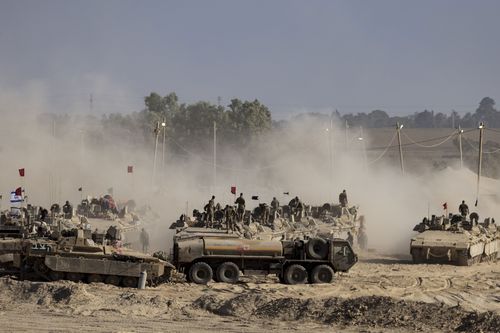
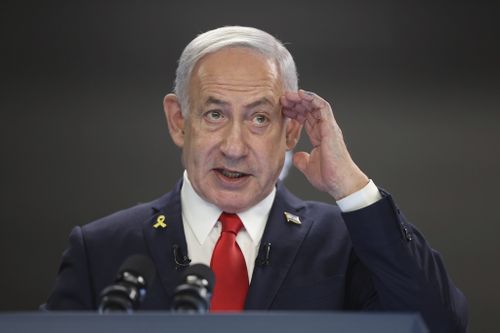
The takeover and occupation of the largest city in northern Gaza, which Netanyahu said is one of the last Hamas strongholds, will require the Israeli military to bring in 60,000 more reserve troops and extend the service of another 20,000, in addition to those already called up.
An Israeli source said this week that the military will give Palestinians approximately two months to evacuate the densely populated area before the assault begins, setting a symbolic deadline of October 7, the two-year mark of the war.
Another Israeli military official could not provide a figure on how many Hamas forces are in Gaza City, but the official said the Israel Defense Forces (IDF) has not ventured deep into the area in nearly two years of war.
The expectation is that troops will face an enemy that has had time to dig in, using its extensive tunnel network under Gaza City.
“They know we’re coming, so they prepare for that,” the official said.
The Hamas “metro”, as Israel calls it, is more than just a system of uniform tunnels, the official explained. It’s far more complex than the IDF anticipated, with larger strategic hubs and branches, as well as smaller tactical tunnels for quick movement and surprise attacks.
Once Gaza City is evacuated, the IDF will likely strike an expanded set of targets in the dense urban area, the official added, including sites that weren’t struck before because of the density of the civilian population.
But Israel’s incoming operation is drawing warning from governments and aid groups, who remain concerned about the Israeli military’s conduct over the past two years amid a high civilian casualty rate, reports of war crimes, human rights abuses and aid blockades.
“The Israeli military would probably take a couple of months to go into every single building, clear it up and hit all the tunnels. Is it possible? Yes,” Plitsas said.
“Is it extremely difficult and will it take a lot of troops to clear and take all the territory? Also yes.”