
In July, Tim Abbott left Sydney for a remote property more than 700km from Brisbane.
Now, his workday starts at 5.30am and ends by late afternoon. He spends the day logging pine trees — a skill he picked up when he moved there — accompanied by only two other people.
The work, he says, is more physical and repetitive than the Zoom meetings and quarterly planning sessions he left behind when he quit his digital marketing role in Sydney. And for the next year, until he returns to Sydney, this will be his life.
The town? “It’s as small as you could possibly imagine,” he told the Feed. “There’s one of everything.”
One supermarket, one petrol station, one primary school. But Tim is enjoying the simplicity and the quiet, and the new lifestyle brings one big selling point.

“The money I earn used to go straight to bills, tolls, petrol, dining out, groceries, and so on,” says Tim, a 31-year-old who recently made a life-altering move to inland Queensland.
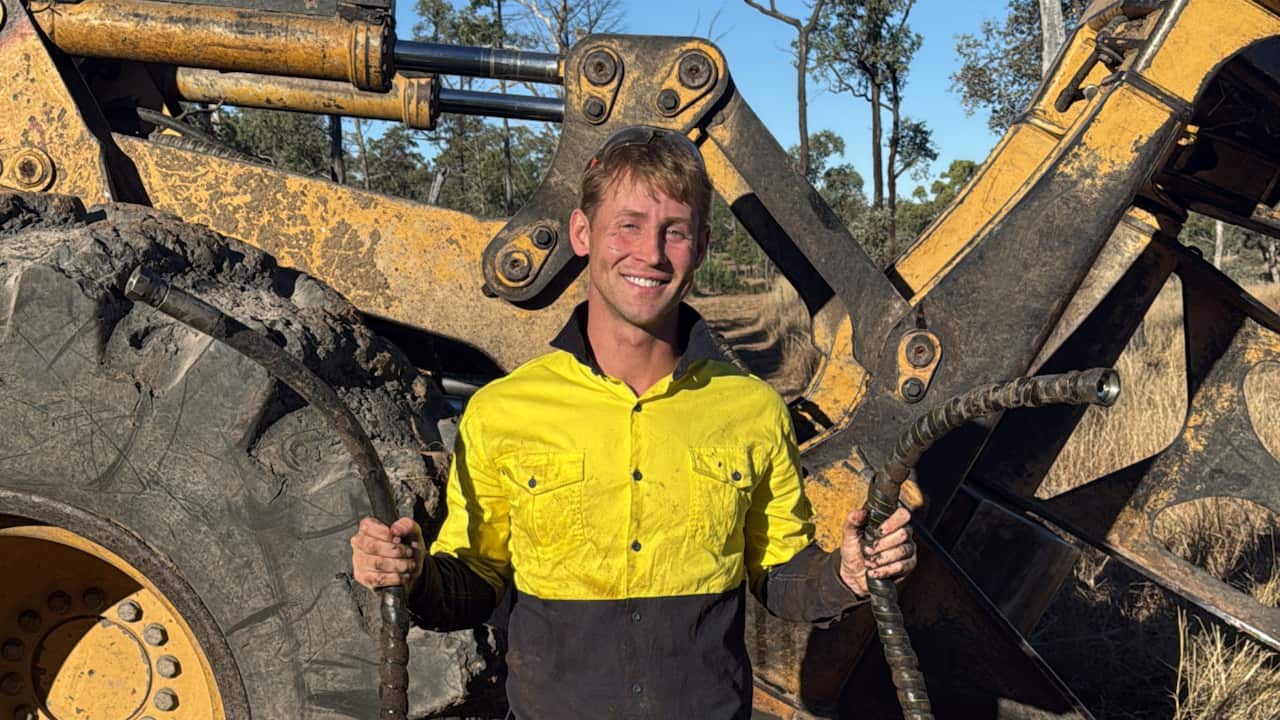
A smiling man wearing a yellow hi-vis shirt and holding a hose in each hand, standing in front of earth-moving machinery.

Since relocating, Tim has experienced an astounding 75 percent decrease in his living expenses. He notes with relief, “Now, when money comes in, I can actually keep it for myself,” appreciating the newfound financial freedom.

Tim shares a striking comparison of his rent expenses. In Sydney, he shelled out a hefty $600 weekly, whereas now, in western Queensland, he pays a mere $220 a month. This dramatic reduction has allowed him to rethink his financial priorities.

Abbott estimates that his living costs have dropped by more than 75 per cent, and his income has seen a modest increase.
His goal: to save $100,000 in a year and eventually buy a little, sustainable hobby farm with goats, ducks, a veggie garden. Somewhere warm, quiet, and just out of reach of the city.
“I feel like it’s delayed gratification. I feel like instead of missing out, I feel like I’m excited to build something for the future,” he says.
“It’s the first time in probably pre-COVID that I’m really excited for the future again.”
Four months into the gap year, Tim shared an update on Instagram, describing the outcome as “mixed.”
He said he’d managed to save roughly $30,000. While he’s happy with the result, it’s less than he’d hoped for at this point.
Tim explained that in 2022, he used his life savings to purchase a one-bedroom apartment. This quarter, he was hit with an $8,500 strata bill in special levies for building works.
“A bill like that would have been catastrophic for me if I were still living in Sydney,” he said.
But he said the financial gap year has softened the blow, and he’s been able to absorb it more easily.

Despite the significant savings, Tim candidly admits, “I’m trying to stay positive about the change, but it’s a bit of a struggle,” he chuckles. Nevertheless, he acknowledges that the decision to move is proving financially rewarding in the long run.

‘Regional cities holding onto more people’

KPMG urban economist Terry Rawnsley says the trend of younger Australians moving to regional areas has accelerated since the pandemic — driven by remote work opportunities, housing affordability and changing local economies.

“We’ve always had people shifting around the country for short-term contracts, spending a couple of years in a regional town. So that’s definitely continuous, people churn from the big cities and then back,” Rawnsley says.

“While we’ve always seen this, I think those regional cities are probably holding onto more people than they did in the past.”
Trends change depending on the location, he says, but overall, people in their late 20s and early 30s are the big cohort leaving cities like Sydney and Melbourne for “affordability and livability”.
The latest Regional Movers Index (RMI), which tracks migration from capital cities to regional areas, found a 10.5 per cent increase in the March quarter of 2025.
This is in line with an overall trend out of Australia’s capitals and into the regions after the onset of the pandemic. Current figures are 20.5 per cent higher than the pre-COVID average level of quarterly migration.

“Housing affordability is going to be more of a barrier going back into the big cities,” Rawnsley says.

Along with affordability in the regions, Rawnsley says white-collar workers are increasingly taking advantage of the ability to work remotely.
“Architects, engineers who previously were really tied to the CBDs in Sydney and Melbourne, they’re now able to live and work remotely and dial into those major meetings.”
But while rents and mortgages remain significantly cheaper outside the capitals, housing supply in many regional centres has tightened in the past few years with the boom.
“Pre-COVID vacancy rates might’ve been three or 4 per cent … now they’re kind of one and a half, 1 per cent,” he says.
Even though some places are churning out housing supply, he says others just aren’t.

“While they’ve had this big influx of people, they’ve also brought the big city housing problems with them, and everyone’s trying to work out how do we get more supply coming out of the ground.”

Looking forward without financial anxiety

For Sarah Brown, 29, and her partner, Will Ridley, 30, the move from Sydney to Forster wasn’t a leap of faith — it was planned in a spreadsheet.
After the pair bought a property in the NSW mid-north coast town, which they had initially planned to keep as an investment, they decided to move into it for a “financial gap year”.

Now, the pair are saving the rent they’d have spent in Sydney, saved on stamp duty with first home buyer assistance, and have cut down on their living expenses. When the year is up, they’ll make an assessment based on finances about what they’ll do next.
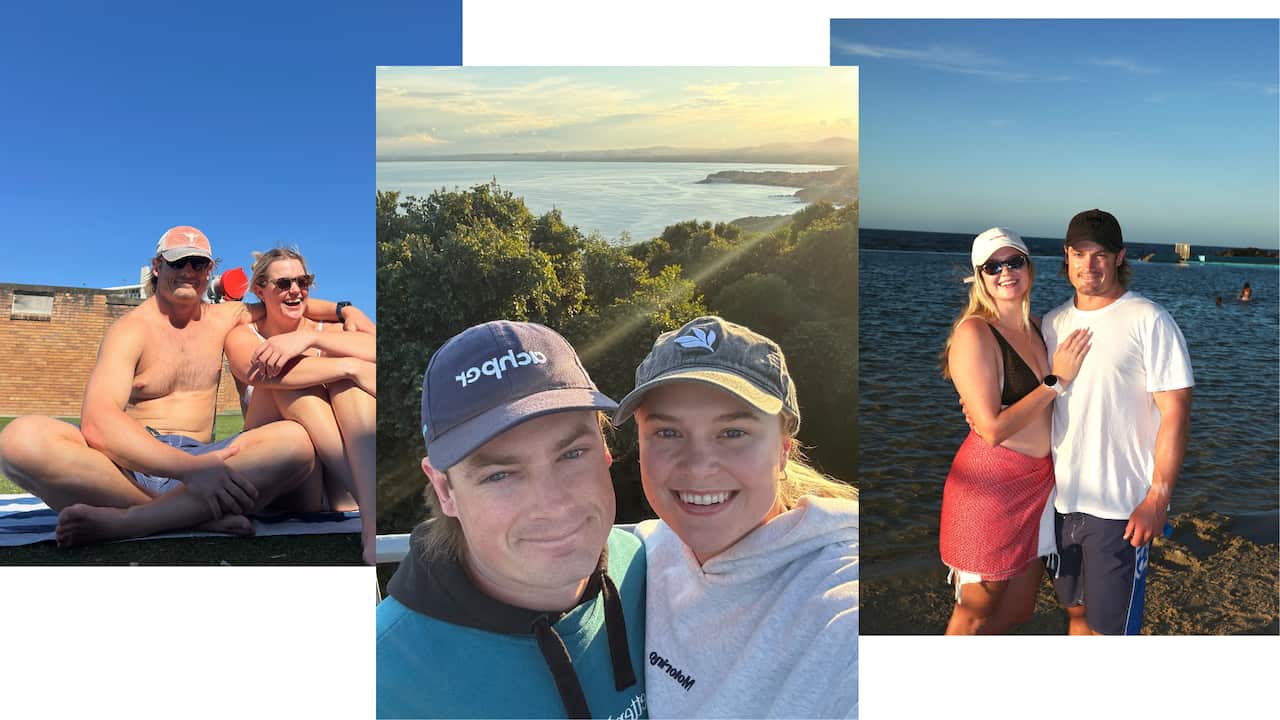
A collage of a couple in front of a beach.

Will and Sarah made the move from Sydney to the coastal NSW town of Forster earlier this year. They say when their “financial gap year” is up, they will reassess their options. Source: Supplied

“We were paying $820 a week [in rent] in Sydney — all of that has gone into savings,” she said.

The move has made them “the most financially secure we’ve ever been,” Brown said, describing a new ease in their relationship and more freedom to imagine milestones down the line without financial anxiety.
The trade-offs, though, are real. Friends are a four-hour drive away, and she spends a lot of time shuttling between Forster and Sydney for work, which still requires her to be on location for half of her working days.
But for now, the benefits are outweighing the sacrifices.
“I just wish I could pick all my friends up and dump them here and then I would never leave.”

[This article was originally published in August 2025]

You May Also Like

US Poised to Resume Military Action Against Iran Amid Ceasefire Deal Uncertainty

IN BRIEF The draft agreement will extend the ceasefire and allow shipping…

Trump to Take Center Stage at US Celebration After Artists Withdraw

IN BRIEF The concerts were planned as the opening ceremony of the…

Unveiling the Legacy: Why Football Tracksuits Transcend Fashion and Define Eras

Neal Corcoran arrived from Ireland in 1991 wearing an Ireland O’Neills ‘Italia…

Australians Ditch Swipe Culture: Exploring New Dating Trends Amid Swipe Fatigue

Frustrated with the dating scene, Lilian James decided to go on a…
Rugby legend Howlett – a member of the Munster team that won the 2007/2008 Heineken Cup and the All Blacks’ top try scorer – held the post as the club’s head of commercial and marketing for two years before returning to New Zealand in 2019

Doug Howlett’s Charity Funds Under Scrutiny: Uncovering Connections to His Business and a Limerick Social Media Platform

The Irish Mail on Sunday has exposed that Doug Howlett, a celebrated…
The fight began after spectators entered the field of play at Amour Park.

Individual Faces Charges Following Intense Altercation at Sydney Soccer Match

A man has been charged following a chaotic altercation at a soccer…
President Donald Trump dances at an event at a charter school in The Villages, Fla., Friday, May 1, 2026.

Trump Steps In as Headliner After Artists Withdraw from Festival

An upcoming celebration of America’s 250th anniversary – “The Great American State…

Melbourne Police Hunt for Suspect in Double Stabbing Incident

A man is currently evading authorities following a dramatic series of events…
Professor Richard Scolyer's wife Dr Katie Nicholl shared this photo alongside an update as he continues to battle brain cancer.

Heartfelt Update: Professor Richard Scolyer’s Wife Shares Emotional Insights on His Ongoing Brain Cancer Fight

The renowned melanoma specialist and former Australian of the Year received a…
Hundreds arrested as shops and cars burned in wild football celebrations

Mass Arrests and Destruction Mark Chaotic Football Victory Celebrations

Police have detained 780 people involved in violent clashes in Paris and…
One Nation Australia's most popular party in new poll

New Poll Reveals One Nation as Australia’s Leading Political Party

In a surprising political shake-up, recent polling data indicates that One Nation…

Socceroos Stumble in Pre-World Cup Friendly: Mexico Clinches Narrow 1-0 Victory

Stay informed about global happenings with our reliable updates. Receive complimentary daily…