Share this @internewscast.com
Key Points
- United States President Donald Trump has rejected the latest Iranian proposal for talks on the Middle East war.
- Iran said it was ready to pursue diplomacy if the US changed its approach.
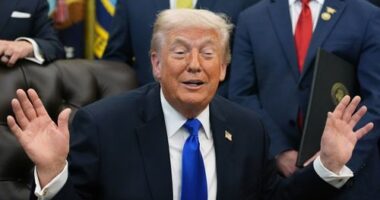
President Donald Trump has turned down Iran’s recent offer to engage in talks aimed at resolving the ongoing Middle East conflict, suggesting that tensions are likely to continue. He emphasized that the United States is unwilling to prematurely end its standoff with Iran, only to face the same issues again in the future.
Trump’s statements suggest that the impasse over the two-month-long war may persist, despite his efforts to conclude a conflict that remains unpopular with the American public. Although the U.S. and Iran have observed a ceasefire since April 8, the nations remain divided on several matters, notably Iran’s nuclear program and the control of the strategic Strait of Hormuz.
Despite an initial summit of senior officials in Islamabad last month, no agreement has been reached to hold a follow-up meeting. The details of Iran’s latest proposal are not clear, and Iran’s foreign ministry has advised against expecting swift outcomes.
Though the US and Iran have suspended hostilities since an April 8 ceasefire, the two countries remained at odds over a range of issues, including Iran’s nuclear ambitions and control over the Strait of Hormuz.
Both sides have yet to agree to a second meeting, following a brief summit of senior officials in Islamabad last month.
It was unclear what the Iranians had submitted in their fresh proposal. Iran’s foreign ministry has cautioned against expecting quick results.
“They want to make a deal, but … I’m not satisfied with it,” Trump told reporters at the White House on Friday, adding that the Iranian leadership was “very disjointed” and split into two or three groups.
“They’re asking for things that I can’t agree to.”
Negotiations by phone were continuing, he added.
Iran’s foreign minister Abbas Araqchi said his country was ready to pursue diplomacy if the US changed its approach, which he described as “excessive approach, threatening rhetoric and provocative actions.”
However, Araqchi added in a post on his Telegram channel that “Iran’s armed forces remained ready to defend the country against any threat”.
Separately, Trump told leaders in the US congress that he did not need their permission to extend the war beyond a Friday deadline set by law because the ceasefire had “terminated” hostilities.
“Do we want to go and just blast the hell out of them and finish them forever? Or do we want to try and make a deal?” Trump said when asked about his options.
He added that “on a human basis,” he did not prefer the military course of action.
Global pain continues
The war, which began with US and Israeli strikes on Iran on February 28, has led to the deaths of thousands of people. The closure of the Strait of Hormuz has increased concerns about the possibility of a wider global economic downturn.
Trump is under pressure to break Iran’s hold on the strait, which has choked off 20 per cent of the world’s oil and gas supplies.
Global oil prices, which remain well above US$100 a barrel, had eased following news of the Iranian proposal. By Friday afternoon, Brent crude was at US$110, down two per cent.
The US navy was blockading exports of Iranian crude oil and as of Friday afternoon, 45 commercial vessels had been stopped, the US said.
The US treasury warned that any shipper paying tolls to Iran for passage, including charitable donations to organisations such as the Iranian Red Crescent Society, would be at risk of punitive sanctions.
The conflict has aggravated Iran’s economic plight, but it looks able to survive a standoff for now, despite the US blockade that has curtailed its energy exports.
In a written message, Iran’s Supreme Leader Mojtaba Khamenei called on businesses damaged in the war to avoid layoffs as much as possible, Iranian news agencies reported.
Trump this week floated a new plan to reopen the critical passageway used by US’ Gulf allies to export their oil and gas.
Araqchi held a flurry of calls on Friday with many of his regional counterparts, including from Turkey, Egypt, Qatar, Saudi Arabia, Iraq and Azerbaijan, to brief them on his country’s latest initiatives to end the war, according to his social media.
European Union foreign policy chief Kaja Kallas also spoke over phone Friday with Araqchi. They discussed ongoing diplomatic efforts to reopen the Strait of Hormuz and long-term security arrangements, Kallas’ office said in a statement. Kallas also has been in contact with the EU’s Gulf partners.
Since the war began on February 28, at least 3375 people have been killed in Iran, and more than 2600 people in Lebanon, where new fighting between Israel and the Iran-backed militant group Hezbollah broke out two days after the war started, according to authorities.
Additionally, 24 people have died in Israel and more than 20 in Gulf Arab states. Seventeen Israeli soldiers in Lebanon and 13 US service members throughout the region have also been killed.
US, NATO tensions deepen
In the interim, according to the Pentagon, the US is withdrawing 5,000 troops from NATO ally Germany as a rift over the Iran war widens between Trump and Europe.
Trump had threatened a drawdown in forces earlier this week after sparring with German Chancellor Friedrich Merz, who said on Monday the Iranians were humiliating the US in talks to end the two-month-old war.
A senior Pentagon official, speaking on condition of anonymity, said recent German rhetoric had been “inappropriate and unhelpful.”
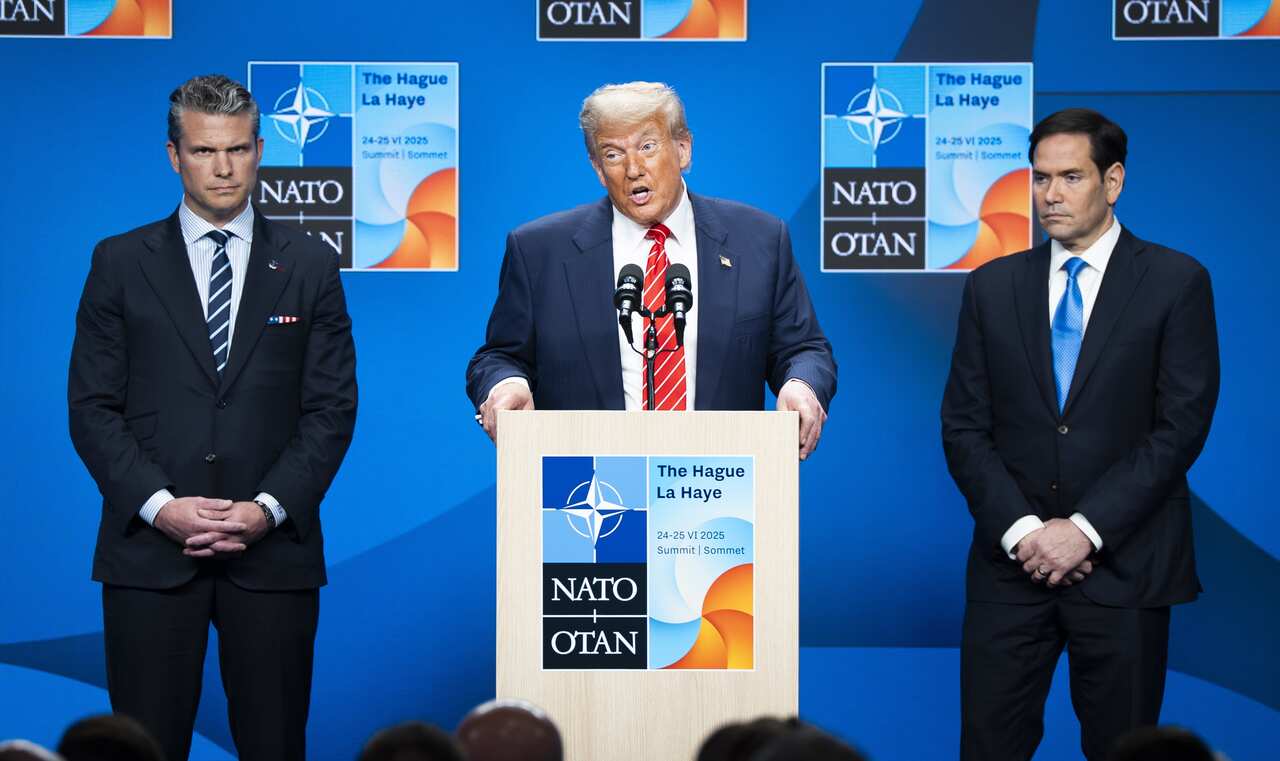
“The president is rightly reacting to these counterproductive remarks,” the official said.
The Pentagon said the withdrawal was expected to be completed over the next six to 12 months.
The official said the drawdown would bring US troop levels in Europe back to roughly pre-2022 levels, before Russia’s invasion of Ukraine triggered a build-up by then US president Joe Biden.
A brigade combat team now in Germany will be pulled out of the country and a long-range fires battalion that the Biden administration had planned to begin deploying to Germany later this year will no longer deploy, the official said.
Germany is the US military’s biggest basing location in Europe, with some 36,000 active duty military personnel, and serves as a key training hub.
Trump has singled out Germany even as he has harshly criticised other NATO allies for not sending their navies to help open the Strait of Hormuz during the conflict.
Merz said Germans and Europeans were not consulted before the US and Israel started attacking Iran on 28 February, and that he had conveyed his scepticism about the conflict directly to Trump afterwards.
“The president has been very clear about his frustrations about our allies’ rhetoric and failure to provide support for US operations that benefit them,” the senior Pentagon official said.
For the latest from SBS News, download our app and subscribe to our newsletter.