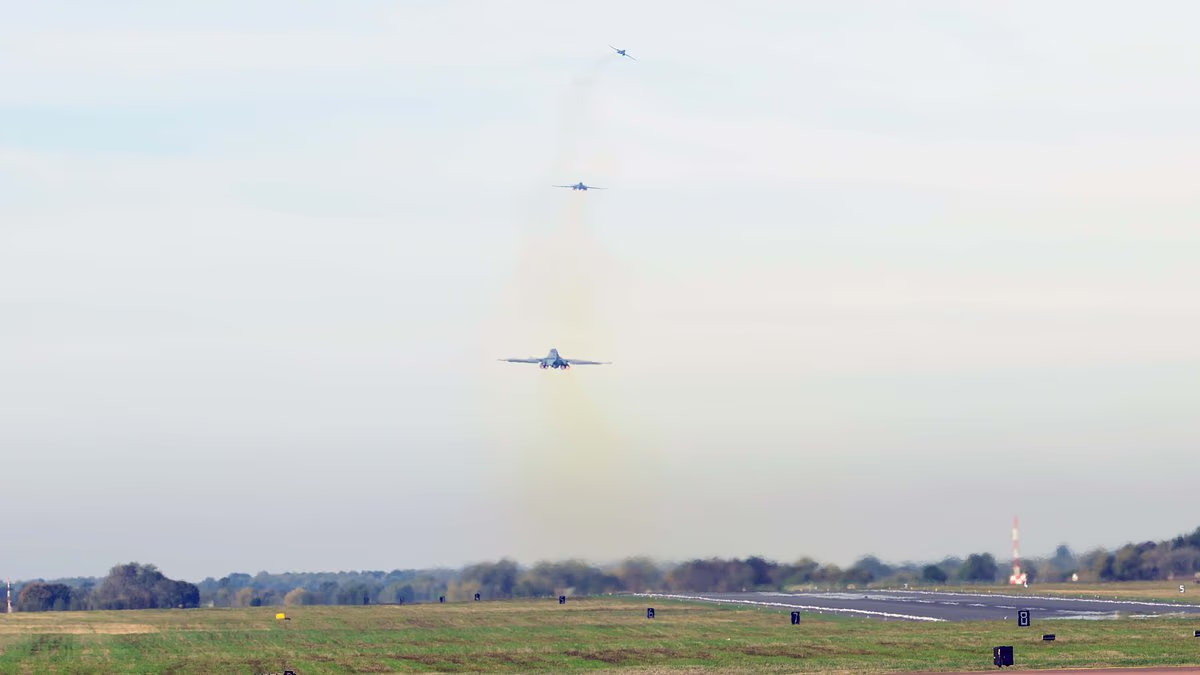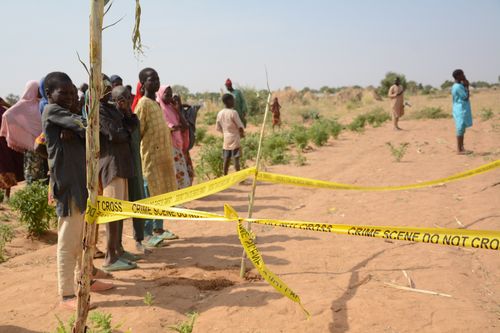

Nigerian Information Minister Mohammed Idris announced on Friday that the military had successfully conducted strikes in the Bauni forest, located in the Tangaza region. These operations targeted and neutralized key ISIS strongholds in the area.
This development has sparked reactions, particularly among segments of the Christian evangelical community in the United States. The narrative of Christians being targeted by extremist groups has gained attention, yet it overlooks a more complex reality.
What about Muslim victims?
In fact, Muslims have also suffered greatly at the hands of these extremist factions, who aim to enforce their rigid interpretation of Islamic law. These groups indiscriminately attack, inflicting violence on any who oppose their ideology.
Nigerian human rights advocate Bulama Bukarti, an expert in security and development, highlighted this issue, stating, “Yes, these extremist groups have tragically taken the lives of many Christians. However, they have also massacred tens of thousands of Muslims.”
He further emphasized that attacks in public areas tend to disproportionately affect Muslims, as these violent groups predominantly operate within Muslim-majority regions.
He added that attacks in public spaces disproportionately harm Muslims, as these radical groups operate in predominantly Muslim states.
What little data exists also does not support Trump’s claims that Christians are being disproportionately targeted.
Out of more than 20,400 civilians killed in attacks between January 2020 and September 2025, 317 deaths were from attacks targeting Christians while 417 were from attacks targeting Muslims, according to crisis monitoring group Armed Conflict Location & Event Data.
The organisation did not include the religious affiliation of the vast majority of the civilians killed.
Oyewale said that Trump’s “binary framing of the issue as attacks targeting Christians does not resonate with the reality on the ground.”
Nigeria is already divided along political and religious lines, Oyewale said, who added that the US president’s rhetoric “goes a long way to actually open the fault lines of division that already exist in the country.”
What have authorities said?
But the Nigerian government rejected claims that it was not doing enough to protect Christians from violence. At the time, Nigerian President Bola Tinubu said that “the characterisation of Nigeria as religiously intolerant does not reflect our national reality.”
However, several experts and analysts told CNN they believed the government needed to better protect all citizens – as people are being impacted by mass killings regardless of their religion or background.
Encapsulating the voices of other prominent politicians and leaders across Nigeria on Friday, former Senator Shehu Sani said on X: “The narrative that the evil terrorists only target one faith remains absolutely false and misleading,” before adding: “The ultimate security and peace in our country lies with ourselves and not with the US or any foreign power.”
Tinubu has not yet publicly commented on Thursday’s strike, but earlier in the day, had shared a Christmas message on social media.
“I stand committed to doing everything within my power to enshrine religious freedom in Nigeria and to protect Christians, Muslims, and all Nigerians from violence,” he wrote.