

Share this @internewscast.com
Tom Brooks, a 20-year-old plumbing apprentice from a small town in Western Australia, earns roughly $650 a week and is already considering other income opportunities.

A significant portion of his earnings, about one-third, goes towards fueling his vehicle, a cost he anticipates will increase soon.
“I travel approximately 70 kilometers daily for work, and the expenses add up quickly,” Brooks shared with nine.com.au.
“This makes it challenging to budget for other essentials, like food,” he added.
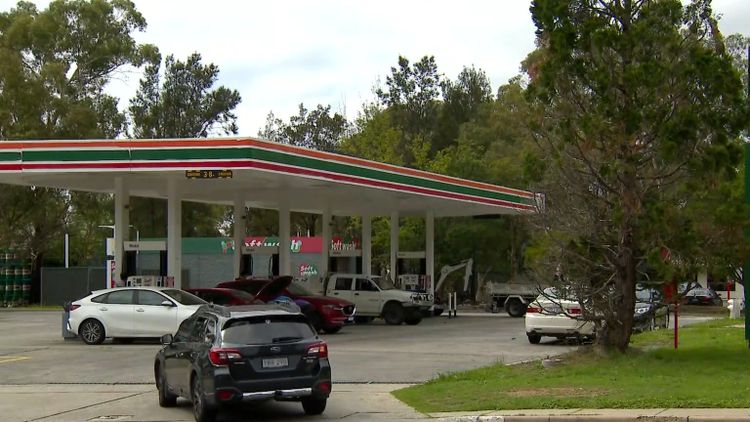
The nearest service station to his home sells diesel at $3.15 per liter.
If he drives a bit further to the town where he’s employed, he can find it slightly cheaper at $3 per liter.
Brooks expects those prices to keep rising, even with local diesel limits in place.
Most servos in his area have a limit of 40 litres per person, but it can be as low as 20 litres per person at locations where supplies are running out.
He hasn’t been able to get a full tank in weeks.
“It’s been a bit of a ‘buy where you can, when you can’ thing,” he said.
Nearly 60 per cent of plumbing apprentices need help with the cost of getting to work or TAFE, according to a Rheem Australia survey conducted before the fuel crisis hit.
Three in five also struggle to cover living expenses such as rent, groceries and bills.
Those figures are likely higher now that petrol has surpassed $2.50 a litre and diesel is over $3 a litre in parts of Australia.
“Everyone this crisis is probably thinking, ‘I can’t afford to be an apprentice anymore, so I’m just going to have to find another job to pay the bills,’” Brooks said.
“A lot of apprentices, I think, will just pack it in.”
That could spell disaster for Australia’s construction industry.
The construction industry is facing a critical shortage of workers, especially carpenters, electricians and plumbers.
That’s concerning when the federal government has set a target to build 1.2 million homes over five years under the National Housing Accord.
The Housing Industry Association (HIA) said Australia needed more tradespeople for there to be any hope of hitting that ambitious construction target.
But the current shortage may actually worsen if the fuel crisis drags on much longer.
There is support available to keep struggling apprentices in trades.
Apprentices working in clean energy or housing construction are eligible for the Key Apprenticeship Program (KAP) Apprentice Incentive, which pays up to $10,000 for full-time apprentices or $5000 for part-timers.
Those training in a priority occupation may be eligible for the Australian Apprentice Training Support Payment (AATSP) of up to $2500.
The payments are spread out in instalments across three to four years.
Apprentices can also apply for Australian Apprenticeship Support Loans of up to $25,983, paid in monthly instalments.
There are also industry-specific options such as the Rheem Apprentice Plumber Grant, which Brooks received.

Even with financial support, some apprentices still struggle to make ends meet when the price of rent, groceries, bills and now fuel just keeps rising.
“I think all apprentices really feel a shitload of stress [about] cost of living at the moment,” Brooks said.
“At some stage it just becomes impossible to be an apprentice and afford to live.”
Some will push through with financial support from friends and family, while others – Brooks included – look for side hustles to supplement their wages.
Others will leave trades altogether to pursue higher-paying jobs.
NEVER MISS A STORY: Get your breaking news and exclusive stories first by following us across all platforms.