
Share this @internewscast.com
An ancient human species known as “hobbits” for their petite stature disappeared about 50,000 years ago. Recent findings might shed light on the reason behind their extinction.
Researchers from the University of Wollongong, working with an international science team, have been delving into the mystery of why Homo floresiensis suddenly vanished from the fossil record.
The initial discovery of these “hobbits” occurred in 2003 on the Indonesian island of Flores, where evidence revealed that Homo floresiensis had inhabited the Liang Bua cave for a remarkable 140,000 years.
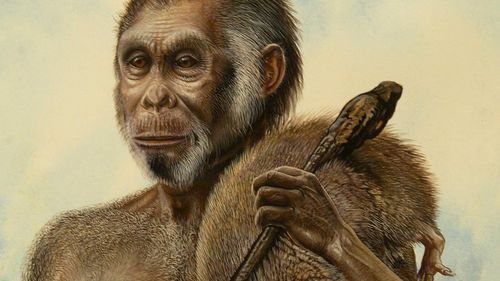
Their small size posed a significant challenge to pre-existing human evolutionary theories.
Scientists now believe a prolonged drought lasting several millennia was the catalyst that forced these hobbits to leave their ancient dwelling.
By analyzing chemical traces in cave stalagmites and fossilized teeth of a pygmy elephant species that the hobbits hunted, researchers identified a severe drought in the region occurring between 61,000 and 55,000 years ago.

“The ecosystem around Liang Bua became dramatically drier around the time Homo floresiensis vanished,” UOW Honorary Professor Mike Gagan, the lead author of the study, said.
“Summer rainfall fell and river-beds became seasonally dry, placing stress on both hobbits and their prey.”
And when hobbits, faced with dwindling prey and shrinking water sources, struck out on their own, they may have met an even more implacable enemy.

While the hobbits predate the earliest evidence of modern humans on Flores, homo sapiens were travelling the Indonesian archipelago around the time their smaller cousins vanished.
“It’s possible that as the hobbits moved in search of water and prey, they encountered modern humans,” Gagan said.
“In that sense, climate change may have set the stage for their final disappearance.”