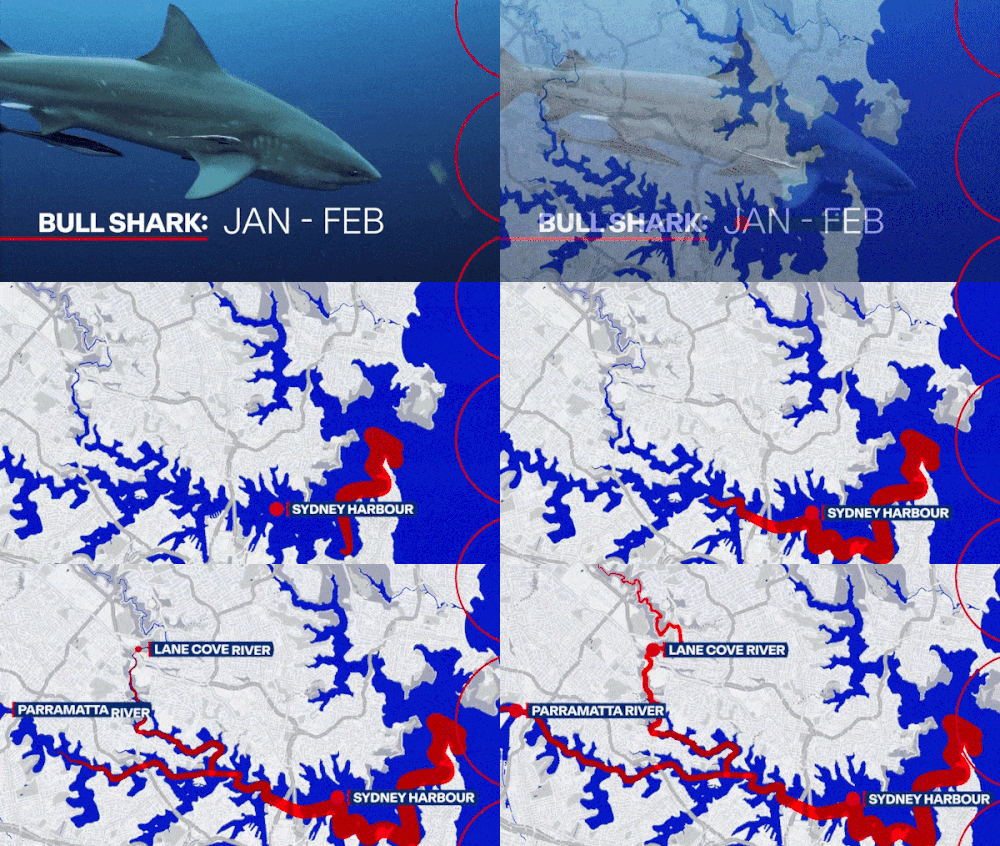

Shark bites seem to be on the rise, but Aussies don't know the whole story
Share this @internewscast.com
For nearly 60 years, Sydney did not record a single fatal shark attack.

In recent years, the city has experienced a troubling pattern, with three fatal incidents occurring over the past three years and two severe attacks just in the last couple of days.
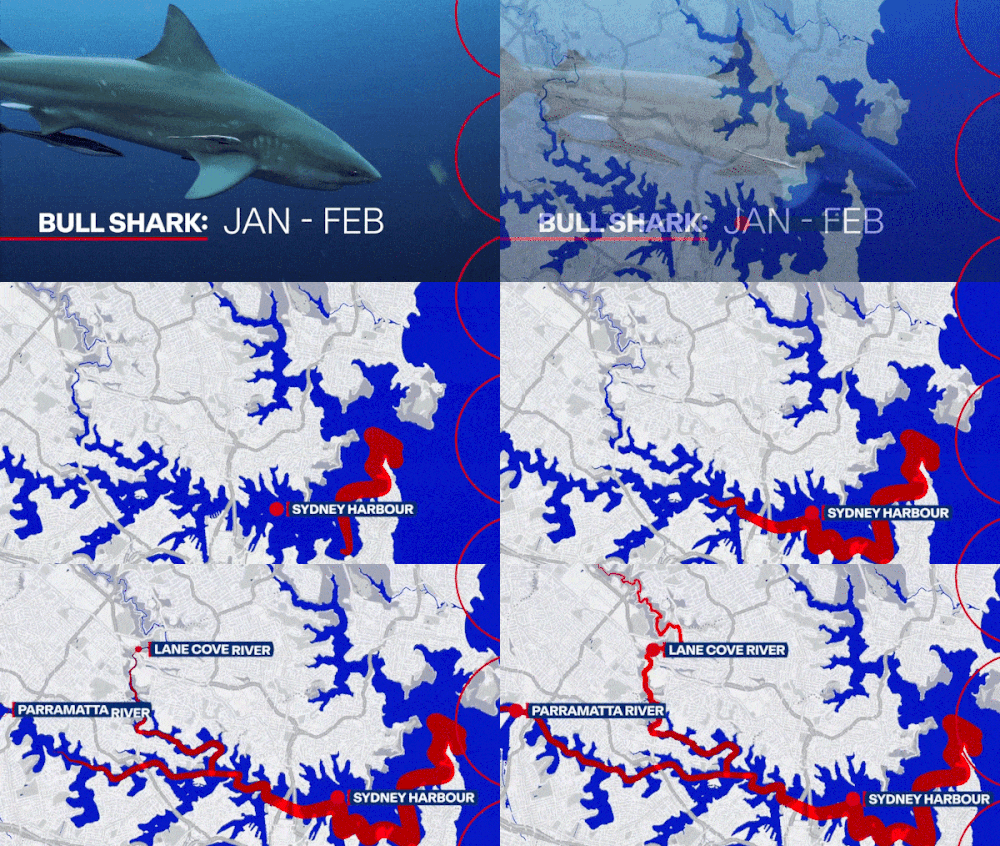
Sydney just witnessed three shark encounters in two days, leaving many scared to even enter the water. (9News)

These alarming encounters seem to be increasing across New South Wales and beyond, causing fear among Australians and deterring many from enjoying the ocean.

Since the beginning of 2020, Australia has witnessed 23 fatal shark attacks spanning New South Wales, Queensland, South Australia, and Western Australia.

To put this in perspective, the decade from 2010 to 2019 saw 22 fatal shark encounters, while each decade from 1960 to 2009 reported fewer than 15 such incidents.

The statistics suggest a worrying rise in deadly shark attacks.

However, these figures don’t capture the entire picture.

“Even though it sounds like a lot, it’s still a very, very low number,” Emeritus Professor of Marine Ecology at Macquarie University Robert Harcourt told 9news.com.au.

“It’s only a handful per year, and we have a lot of other factors that are changing much more rapidly.”

Climate change is making the weather and water temperatures warmer, so people are spending more time in the ocean.

That increases the likelihood of humans and sharks crossing paths.

Warmer waters are also bringing tropical inhabiting sharks like tiger and bull sharks further south for longer periods of time.

“White sharks are a cool water shark, but they are also relatively tolerant of warm water and they do go up into the north,” Harcourt said.

“So we’re getting a greater overlap of these three large predatory sharks.”
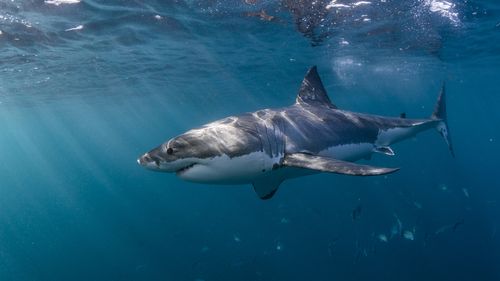
Great White Shark
Great white sharks usually stick to cooler waters but have been known to venture north into warmer climates. (Getty)

A string of La Niñas has caused major rainfall events across Australia’s east coast, which can trigger changes in fish behaviour.

Bait fish may cluster in areas like creek and river mouths, near rocks, or in the shallows after rainfall, which can attract sharks to swimming areas.

“When there’s a lot of food around, you’re going to get predators,” Harcourt said.

“We get clusters of bites when conditions are suited for them to be feeding in the same areas as people, and so that’s like a perfect storm.”

But most shark bites aren’t premeditated, malicious attacks, despite what films like Jaws would have people believe.

Conservationist and filmmaker Valerie Taylor AM, 90, spent the better part of her life in the water with sharks.

What she learned is that sharks don’t bite humans because they want to kill them.
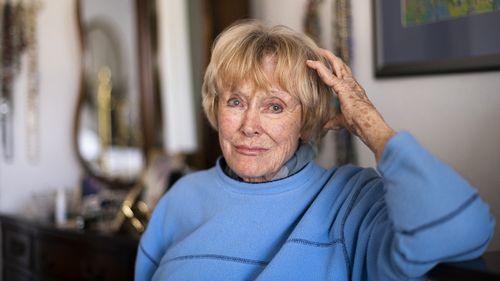
Valerie Taylor for an SMH feature, 2022.
Valerie Taylor, now 90, spent decades diving and swimming with sharks in the wild. (Rhett Wyman/SMH)

”We are not their natural prey,” she told 9news.com.au.

“When you get bitten, it’s because they lack hands, they can’t feel you, so they’re feeling with their teeth.”

(Taylor also filmed the real great white shark sequences for Jaws with her late husband Ron Taylor. Both regretted that the film inspired such hatred and fear of sharks.)

Taylor was bitten multiple times, including once on the chin, but never blamed the sharks involved.

She accepted that she was taking a risk every time she entered their domain.

“If you go into the jungle, there’s always the possibility of meeting a tiger. If you go into desert bushland, you might meet a snake,” she said.

“It’s always been that way, and it’s not going to change.”
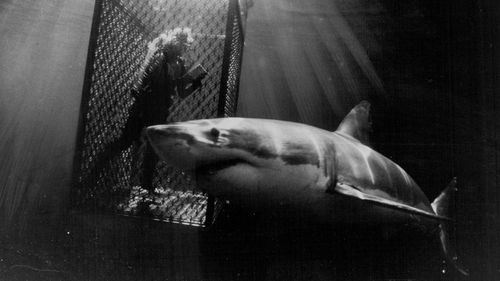
Underwater photographer and explorer Valerie Taylor takes no chances when she goes into shark-infested waters. December 6, 1985.
Taylor has been bitten by sharks but said they’re not all out to kill humans. (Fairfax Archive)

Just as there’s a risk of drowning when you swim in the ocean, there’s also the risk of encountering a shark.

Drowning is statistically the far more likely outcome (357 people drowned in Australian waterways between July 1, 2024 and June 30, 2025; four people were killed by sharks in the same period), shark deaths attract far more attention and outrage than drownings.

Every fatal encounter sparks calls for shark culls, or for the fish responsible to be hunted down and killed.

“I don’t know why they say, ‘Let’s kill all the sharks,’” she said.

“You’re never going to be able to do that, and they are very important in the ocean.”

Wiping out sharks, or even just dramatically reducing numbers, would devastate Australia’s already changing marine ecosystems.

Instead, the focus should be on education and prevention.
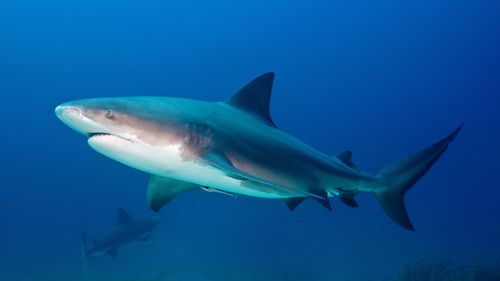
BULL SHARK, Carcharhinus leucas, Carcharhinidae, Bahamas, The Caribbean
Sharks are an important part of Australia’s marine ecosystems and can’t be culled without dramatic roll-on effects. (Getty)

It’s impossible to prevent all shark bites in Australian waters but existing deterrents and new technologies will continue to reduce the risk of fatalities.

“So long as there are large predatory fish in the ocean – and we need them, they’re very, very important components of the ecosystem – there will be a risk,” Harcourt said.

“But there are lots of ways in which things are improving already.”

Queensland is using drones to monitor beaches.

The Western Australian Government offers residents $200 rebates for personal shark deterrent devices.

Australia’s Integrated Marine Observing System (IMOS) collects data from tagged sharks which can be used to develop models that can help predict the risk of shark encounters in our waters.
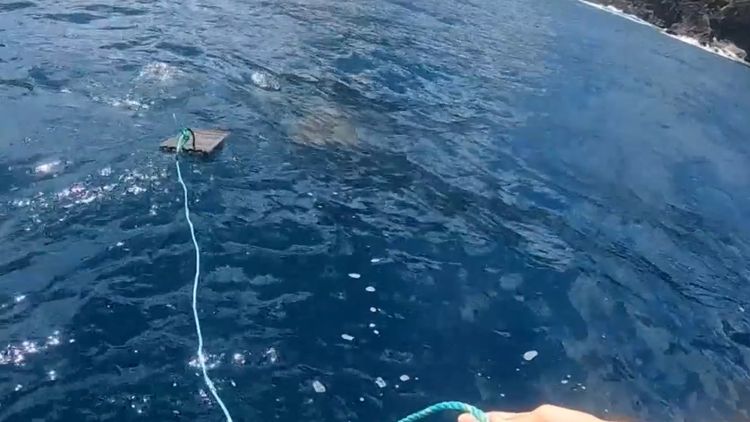
Researchers from Flinders University have also been testing bite-resistant wetsuits that could reduce the risk of serious injuries and death from shark bites.

Australians also have a better understanding of how to respond to shark bites now, which can be enough to save lives.

“That poor boy who was bitten [on Sunday], he would have almost certainly died in years gone past,” Harcourt said.

“But because of his incredibly brave friends, and the proximity of the police boat, and the fact that they put tourniquets on straight away, and they got him to the ambulance really quickly, he got the best possible chance [to survive].”

To reduce the risk of shark encounters, avoid being in the water at dawn and dusk, keep clear of schools of bait fish, and monitor shark warnings.

If in doubt, stick to public pools.
Share this @internewscast.com
You May Also Like
A landslide hit Mount Maunganui Beachside Holiday Park at 9.30am on Thursday

Two Bodies Found After Landslide Hits Popular New Zealand Campsite; Search Ongoing for Nine Missing Tourists, Including Children

A frantic overnight search is underway for up to nine tourists missing,…

Tragic Karachi Shopping Centre Fire Claims 40 Lives, Many Still Unaccounted For

Firefighters in Pakistan have uncovered the remains of approximately 25 individuals from…
Up to nine people are missing after a landslide hit campervans and a shower block at the Mount Maunganui Beachside Holiday Park in New Zealand's North Island on Thursday

Desperate Search Underway for Nine Missing, Including Children, After Devastating Landslide Strikes Popular Campsite

Authorities in New Zealand have cautioned that the operation to locate up…
Piper James, 19, was found dead on K'Gari, formerly known as Fraser Island, yesterday morning surrounded by a pack of about 10 dingoes.

Further Investigation Required to Ascertain Cause of Death for Canadian Backpacker on K’gari

Earlier this week, James was discovered in the company of approximately ten…

US Finalizes Withdrawal from WHO: Implications for Global Health and Policy

In a significant move, the United States has officially withdrawn from the…
In this image from a video, a police officer with dog searches people near the site of a landslide at the base of Mount Maunganui on New Zealands North Island Thursday, Jan. 22, 2026.

Tragic Landslide Strikes Popular Vacation Destination: Two Dead, Children Missing

In a tragic event early Thursday morning, two bodies were discovered following…
Melbourne Magistrates Court in Melbourne, Victoria.

Swim Coach Secures Bail Amid Allegations of Grooming Teenage Girl

A former high school swimming coach accused of sexually assaulting a 13-year-old…
Iranian students in Australia facing 'darkest days' as economy hits record low

Iranian Students in Australia Grapple with Economic Crisis: Navigating Their ‘Darkest Days

Exclusive: Ongoing turmoil in Iran has had a ripple effect on Iranian…
A woman who warned others of a landslide just moments before she was buried in rubble is being hailed a hero as desperate search efforts continue. Multiple children are among those unaccounted for after a big landslide destroyed the popular Mount Maunganui Beachside Holiday Park on New Zealand's North Island. The woman is being praised by locals after she frantically pulled campers from their beds at 5am and warned them of danger so they could start packing up to leave. In a tragic twist, the same woman later became trapped in a toilet block along with several others when the hillside completely collapsed a few hours later, at about 9.30am on Thursday. The amenities block was buried in the landslip, with rescuers hearing terrified screams for help, but being unable to hear further cries after about 15 minutes. 'I just want you to know that one of the women that's in that shower block, she was a hero,' a witness, who didn't want to be named, told the New Zealand Herald. 'She went around at 5 o'clock this morning and she got us all out of bed and she woke us all up so that we could move out... and she's not out.'

Urgent Rescue Efforts Underway: Landslide Traps Children in New Zealand Campsite Catastrophe

A woman is being celebrated as a hero after she warned fellow…

Court Declares Melbourne Police’s Warrantless Search Powers Unlawful and Invalid

A recent court ruling has deemed a police directive allowing warrantless searches…

Debating Financial Compensation for Surrogates in Australia: An Emerging Conversation

Exploring the intersection of commerce and life creation, the Insight episode “Baby…
Temperatures could surpass the mid 40s in parts of Victoria on Tuesday.

Brace for the Heat: International Firefighters Called to Combat Victoria’s Blazing Infernos

A “dome of heat” set to loom over south-eastern parts of Australia…