
Share this @internewscast.com
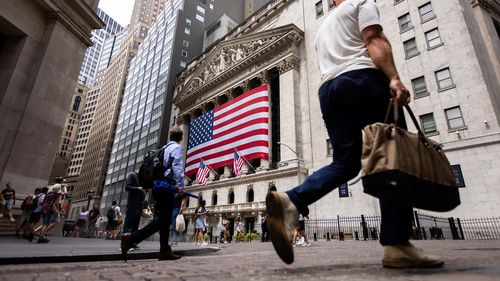
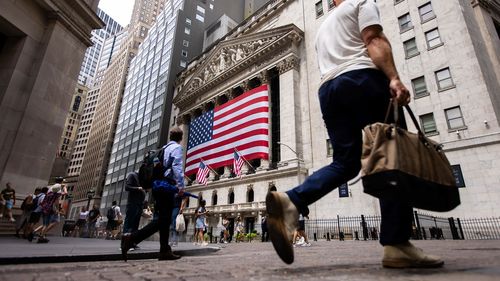
The Dow closed lower by 422 points, or 0.94 per cent. The S&P 500 fell 0.79 per cent and the tech-heavy Nasdaq Composite fell 0.92 per cent. The three major indexes posted their worst day in about three weeks.
Stocks dropped lower midday local time after Trump announced 25 per cent tariffs on Japan and South Korea, set to go into effect August 1. Stocks continued to fall in the afternoon as Trump announced tariffs of varying rates from 25 per cent to 40 per cent on countries including Myanmar, Malaysia, Kazakhstan, Laos and South Africa.
The Japan-focused, South Korea-focused and Malaysia-focused ETFs posted their worst day since early April.
Ross Mayfield, an investment strategist at Baird, told CNN that the proposed tariff rates were higher than the market was expecting, leading to a sell-off in stocks.
US government bonds also slid as investors digested the tariff developments. The 10-year Treasury yield rose to 4.39 per cent and the 30-year yield rose to 4.92 per cent. Yields and prices trade in opposite directions.
The US dollar index, which measures the dollar’s strength against six major foreign currencies, gained 0.3 per cent. The Japanese yen, South Korean won and South African rand all weakened against the dollar.
Wall Street’s fear gauge, the CBOE Volatility Index, jumped 8.4 per cent. Gold prices dipped lower in the morning before gaining 0.1 per cent.

US military confirms it has taken possession of ‘flying disc’
Tariff test at record highs
US stocks rallied in recent weeks as investors bet the worst of the tariff confusion was in the past. As Trump’s self-imposed July 9 deadline for trade deals – the conclusion of a 90-day pause that began April 9 – approached, Wall Street was cautiously optimistic.
Mohit Kumar, chief strategist and economist for Europe at Jefferies, said in a note he does not think the original July 9 deadline will have a “material impact” on markets.
“It will create near-term uncertainty and prompt some profit-taking given current valuations and positioning. But the letters are meant as an incentive for other countries to agree to come to a deal quickly and we see more trade deals being signed in the coming weeks,” Kumar said.
A dip in stocks should be seen as a buying opportunity, Kumar said.
The S&P 500 has notched four record highs since June 27. Stocks have pushed higher as economic data has been stronger than expected, helping assuage concerns about the impact of the early stages of Trump’s tariff campaign.
“The renewed optimism appears to have been buoyed by a series of data points that have seemingly quelled some of the worst investor fears,” Brian Belski, chief investment strategist at BMO Capital Markets, said in a July 3 note.
“For instance, cooler-than-anticipated CPI numbers continue to suggest a muted tariff impact, for now at least.”
Belski said he thinks trade deals will be announced in the coming weeks, providing “more clarity for both investors and businesses and likely keep[ing] the uptrend in stocks intact.”
Treasury Secretary Scott Bessent told CNBC on Monday he expects “several announcements in the next 48 hours.” Bessent had told CNN’s Dana Bash on Sunday that tariff rates would “boomerang” higher on August 1 if trade deals were not completed.
“If we’ve learned anything over the last three months, it’s that the situation is very fluid and can change with very little notice,” Jim Baird, chief investment officer at Plante Moran Financial Advisors, said.
While many investors expect stocks to grind higher, others warn that there is complacency in markets.
Scott Wren, global market strategist at Wells Fargo Investment Institute, said in a note he thinks the Wall Street consensus is “overly optimistic on the tariff outlook.”
Wren said there is concern that as tariff rates settle, the economy will begin to slow and consumer spending might pull back.
“Our feeling is that stocks are ahead of themselves, and as a result, we are looking to trim positions in markets and sectors we find to be overvalued,” he said, mentioning US small-cap stocks and consumer discretionary sectors in the S&P 500 that have performed well in recent months.
Trump on Sunday also announced an additional 10 per cent tariff on any countries aligning with BRICS – an economic bloc including founding members Brazil, Russia, India, China and South Africa.
While the S&P 500 and Nasdaq hit record highs in recent weeks, the Dow is still about 608 points away from hitting an all-time high.
Wall Street this week will be fixated on any signs of more proposed tariff rates. Lukman Otunuga, senior market analyst at FXTM, said if tariff rates jump higher than expected and revive “recession fears and trade uncertainty,” then stocks “could be slammed while safe havens rally.”