
Australia has recorded its first confirmed case of the deadly H5N1 bird flu strain on the mainland, marking a significant moment after the country had remained the last continent without a detected case.
Agriculture Minister Julie Collins announced on Saturday that the virus was identified in a Brown Skua found on a beach in Western Australia on Friday. The seabird, a migratory species, was discovered ill in an isolated area near Esperance before testing confirmed the presence of H5N1 influenza.
Speaking at a press conference, Collins said the bird was a migratory seabird and described the detection as the first of the highly pathogenic strain on mainland Australia. She noted that this is the same strain that has been spreading internationally and raising concern among animal health authorities worldwide.
The H5N1 strain has devastated bird populations across the globe, killing millions of wild and domestic birds. Until this week, mainland Australia had avoided any confirmed detection of the virus, making the latest case a notable development for the country’s biosecurity and wildlife monitoring efforts.
‘It was found sick on an isolated area near Esperance in Western Australia.
‘As I said, this is the highly pathogenic strain of concern that has been circulating globally and this is its first detection on mainland Australia.’
It is understood samples from a sick giant petrel have also been tested, with a suspected positive result for H5 influenza.
The samples will be sent to CSIRO’s laboratory for confirmatory testing.
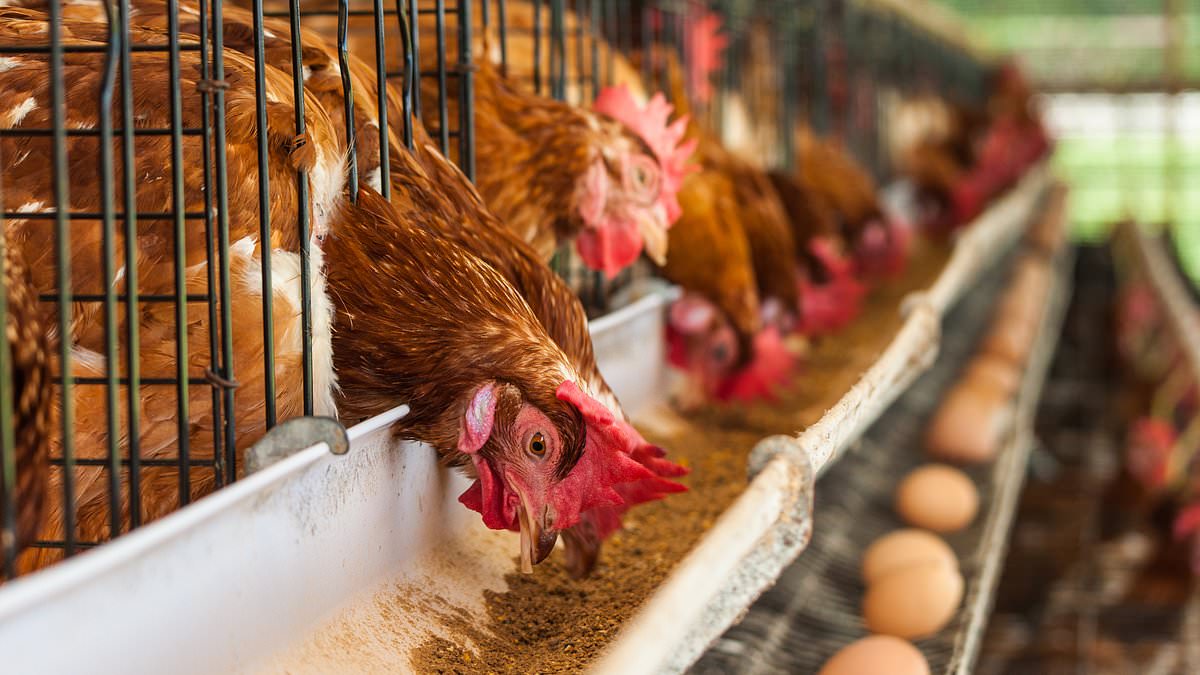
The first case of a deadly bird flu strain in Australia has been confirmed (stock image)
Agriculture Minister Julie Collins (pictured) said a Brown Skua was found sick in WA
The bird washed up on a beach in an isolated area near Esperance in Western Australia
‘I can confirm that there’s still no evidence of any mass mortalities at this time, nor is there any evidence of infection in any poultry,’ Collins said.
‘We have looked at what has happened overseas we have learnt from that, which is why we have invested early.
‘I have been talking about our investments in bird flu preparedness now for almost two years.
‘We all knew that we couldn’t be bird flu free forever and that we are the only continent that was bird flu free.’
The deadly strain of bird flu is understood to have an exceptionally small risk to human health.
It was detected for the first time on Australian soil in October on the World Heritage-listed Heard Island, which sits some 4,000km southwest of Perth.
Scientists who visited Heard Island estimated 13,359 southern elephant seal pups had died from the disease out of a total population of 17,364 – more than three-quarters of the total.
States and territory representatives and industry experts met on Friday to discuss planning after the first reports that the Brown Skua could return positive H5 strain results.

Government officials said only one case had been confirmed so far and the strain is not ‘widespread’ in Australia
Chief Veterinary Officer Beth Cookson told reporters on Saturday that Australians should not touch dead birds.
‘If you encounter sick or dead birds, we are asking that you avoid contact with them, that you record information about the location of the dead bird, as well as take any information that might be helpful to us, like videos or photographs, and report that to our Emergency Animal Disease hotline,’ she said.
Threatened species commissioner Dr Fiona Fraser highlighted that the case is Australia’s first detection and that the strain is not widespread.
‘We will know within a few days about whether or not this has established itself in any populations in Australia or whether it’s migratory birds that have come up from the sub-Antarctic, for instance,’ she said.
‘So we’ll know a bit more detail within a few days of this investigation on how bird flu got into Australia.
‘If it arrives in Australia, there’s over 31 threatened species which are now being protected as part of these measures.
‘The most important thing we can do for our native species is to actually take efforts to build their resilience to this disease in the wild, because we can’t stop the disease itself, so that is well underway.’