
The Prime Minister has vowed that any UK social media ban for under-16s would go even further than Australia’s, describing the approach as “Australia plus”.
However, six months on from the launch of the world’s first policy of its kind in Australia, opinion remains divided over how well it is working.
Under the Australian rules, children are barred from using 10 major platforms: TikTok, YouTube, Instagram, Reddit, Facebook, X, Threads, Snapchat, Twitch and Kick.
The policy resulted in almost five million social media accounts being shut down, yet many young people have said they were still able to get onto the platforms.
“I wasn’t banned and none of my friends were,” 15-year-old Australian schoolgirl Hannah Chalmers told the BBC in March. Another student said that in her year group of 180 pupils, only three had been blocked.
Harry Dyer, a professor of education at the University of East Anglia, said the Australian crackdown had failed to properly prevent young people from using social media.
‘Meanwhile, the platforms are less incentivised to actually protect young people, who will still be there regardless.’
Under Australia’s scheme, social media companies have responsibility for checking age, and face fines of up to £25 million if they fail to keep under-16s off.

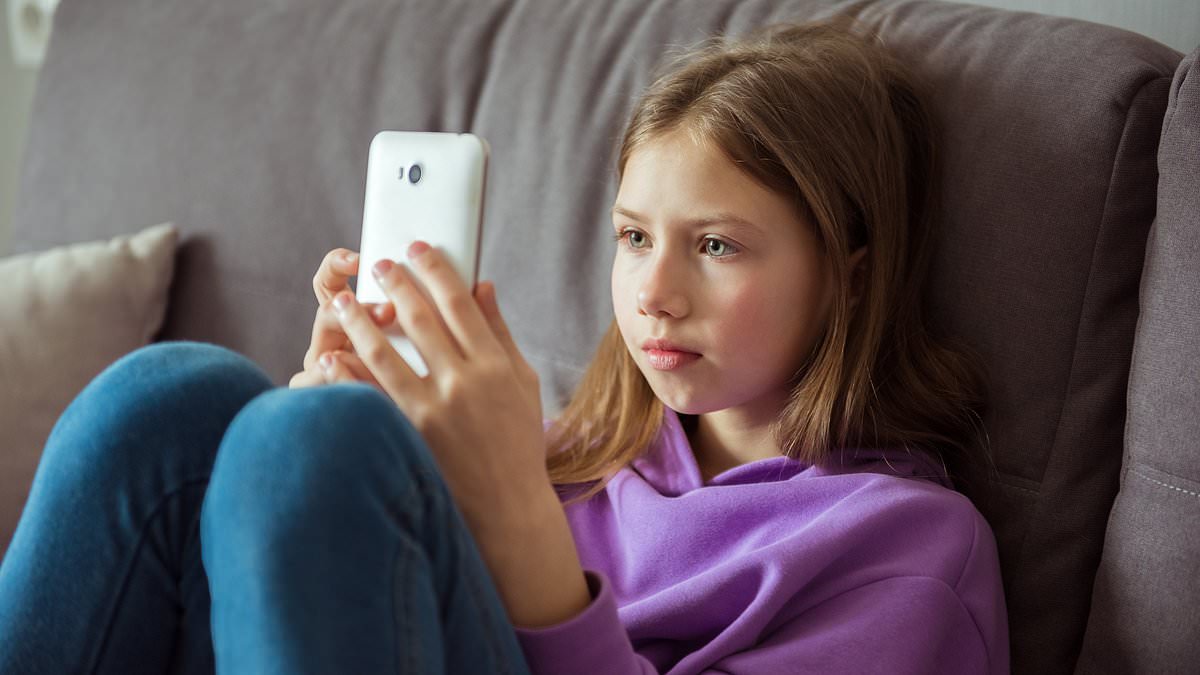
Six months after the world’s first ever social media ban was launched for under-16s in Australia, reviews of its success are mixed (file picture)
However, checking relies on either facial recognition technology, uploading identification documents or ‘age estimation’ – artificial intelligence analysis of a user’s online behaviour.
Facial recognition has emerged as one of the most popular options, and requires a user to upload a photo so that it can be analysed for an estimated age.
Pupils have reported being able to circumvent such checks by using photos of family members or even masks.
‘I just asked my mum to scan her face,’ Cruz Condren, 14, told the Sydney Morning Herald of the Snapchat verification process. ‘It just let me back on.’
Another 14-year-old told Australia’s ABC News his friend used an image of Michael Jackson to circumvent checking on another platform.
Even when someone is using their own face, their age can still be overestimated if they look older than they are.
Many children are also using Virtual Private Networks (VPNs) – which allow their location to appear as another country – meaning they can circumvent Australia’s rules when accessing a platform.
In addition, many are simply moving their activities to other sites which are not banned.
The Australian Government selects sites based on whether their main purpose is online social interaction, and whether they allow users to post material.
For this reason, YouTube Kids, Google Classroom, WhatsApp and gaming sites such as Roblox are not included. This is despite a number of grooming incidents on Roblox, including one in the UK where the perpetrator was jailed.
Under-16s are also still able to view most content on online platforms that do not require an account, meaning they can still watch adult YouTube.
In March, a survey by Australia’s internet regulator the eSafety Commission found 70 per cent of parents reported their children were still on the banned platforms.
It is investigating potential non-compliance by Facebook, Instagram, Snapchat, TikTok and YouTube.
The same month, a survey by the Molly Rose Foundation found 61 per cent of 12–15 year-olds in Australia who previously held accounts on restricted platforms continue to access them.
However, separate YouGov polling has suggested 59 per cent of Australians say the ban has been effective in controlling online risks.
Dai Durbridge, partner specialising in safeguarding at UK law firm Browne Jacobson, said: ‘While Australia’s ban is still in its infancy, initial findings show broad support among parents and teachers despite teething problems.
‘It’s important that the UK Government anticipates these issues and works closely with technology companies to ensure restrictions are implemented effectively.’
Facebook, Instagram, Snapchat, TikTok and YouTube have been contacted for comment.


